
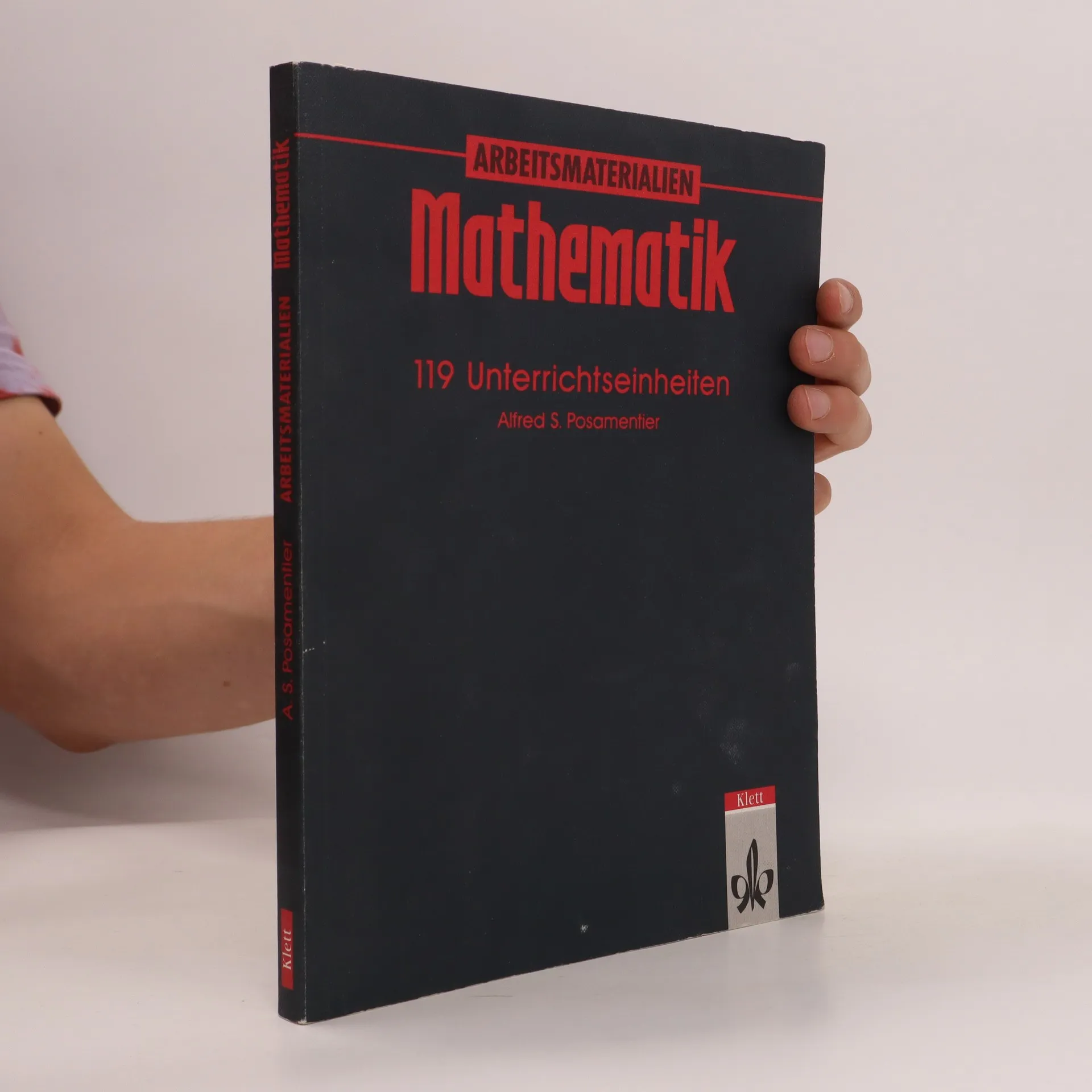

Alfred S. Posamentier je přední americký pedagog, který se zaměřuje na vzdělávání v oblasti matematiky a přírodních věd. Jeho práce zdůrazňuje potřebu kritického myšlení v matematice a inovativních přístupů k výuce. Posamentier se zasazuje o větší financování těchto oborů a o zapojení rodičů do vzdělávání. Je uznávaným komentátorem a autorem mnoha kurikulárních řešení, která formují současné vzdělávací postupy.
Exploring the fascinating world of plane geometry, this book delves into the circle and its unexpected curiosities, offering insights that go beyond typical school lessons. Presented in an accessible manner, it requires only basic geometric knowledge to appreciate the intriguing relationships and proofs. Aimed at a broad audience, it seeks to enhance the enjoyment of geometry for general readers and serves as a valuable resource for mathematics teachers looking to inspire their students with captivating circle properties.
Focusing on the triangle, this book reveals a vast array of geometric curiosities that extend beyond standard school teachings. It presents a rich collection of triangle-related wonders, explained in an accessible manner that requires only basic geometry knowledge. Aimed at a general audience, it seeks to deepen appreciation for geometry while also serving as a valuable resource for mathematics teachers, offering engaging properties to inspire students.
Ta książka to zabawna i intrygująca opowieść o matematycznych błędach, które -
wbrew temu, co moglibyśmy sądzić - przynoszą niekiedy całkiem interesujące
rezultaty, przyczyniając się do głębszego zrozumienia matematyki. Bywa również
inaczej - czasami nawet właściwe metody mogą prowadzić do absurdalnych,
aczkolwiek bardzo ciekawych wyników. Matematyka jest piękna, nawet wtedy, gdy
popełniamy błędy. Aby wybrać się w tę niezwykłą podróż przez matematyczne
omyłki wcale nie trzeba spełniać wygórowanych wymagań - wystarczy znajomość
podstaw! Mając Posamentiera i Lehmanna za przewodników, możemy być pewni, że
po jej zakończeniu będziemy o wiele lepiej rozumieli tę podstawową, niezwykle
ważną gałąź nauki - język, którym przemawia do nas rzeczywistość.
The most ubiquitous, and perhaps the most intriguing, number pattern in mathematics is the Fibonacci sequence. In this simple pattern beginning with two ones, each succeeding number is the sum of the two numbers immediately preceding it (1, 1, 2, 3, 5, 8, 13, 21, ad infinitum). Far from being just a curiosity, this sequence recurs in structures found throughout nature - from the arrangement of whorls on a pinecone to the branches of certain plant stems. All of which is astounding evidence for the deep mathematical basis of the natural world. With admirable clarity, two veteran math educators take us on a fascinating tour of the many ramifications of the Fibonacci numbers. They begin with a brief history of a distinguished Italian discoverer, who, among other accomplishments, was responsible for popularizing the use of Arabic numerals in the West. Turning to botany, the authors demonstrate, through illustrative diagrams, the unbelievable connections between Fibonacci numbers and natural forms (pineapples, sunflowers, and daisies are just a few examples). In art, architecture, the stock market, and other areas of society and culture, they point out numerous examples of the Fibonacci sequence as well as its derivative, the "golden ratio." And of course in mathematics, as the authors amply demonstrate, there are almost boundless applications in probability, number theory, geometry, algebra, and Pascal's triangle, to name a few. Accessible and appealing to even the most math-phobic individual, this fun and enlightening book allows the reader to appreciate the elegance of mathematics and its amazing applications in both natural and cultural settings
"The Secret Lives of Numbers takes readers on a journey through integers, considering their numerological assignments as well as their significance beyond mathematics and in the realm of popular culture"-- Provided by publisher
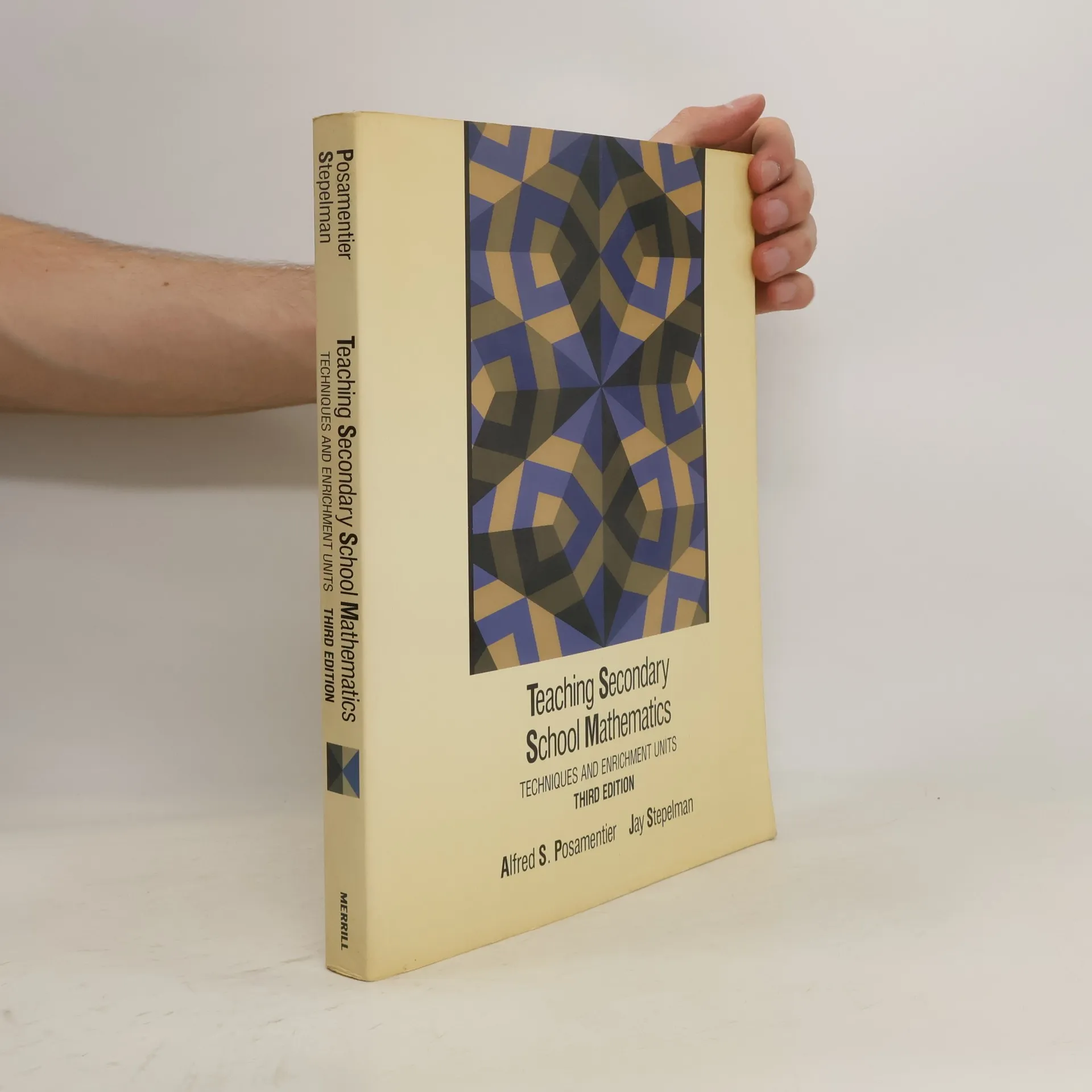
Focusing on enhancing the secondary school mathematics curriculum, this book offers 125 individual units designed for grades 7 through 12. Each unit includes a pre-assessment, instructional objectives, detailed topic descriptions, teaching suggestions, and a post-assessment. These motivational units aim to engage students and foster a love for mathematics, filling the gaps often left due to time constraints in traditional teaching methods.
In his latest book, mathematician Alfred S. Posamentier provides easily
understandable, easily presentable and easily replicated tricks that one can
do with mathematics.
The book reveals how mathematics can be engaging and enjoyable, challenging the negative perceptions shaped by uninspired educational methods. It aims to inspire readers by showcasing the entertaining aspects of math, encouraging a more positive and enriching approach to the subject.
If you remember anything about high school geometry class, it's probably doing
proofs. But geometry is more than axioms, postulates, theorems, and proofs.
It's the science of beautiful and extraordinary geometric relationships--most
of which is lost in high school classrooms w...
"Two veteran math educators concisely profile leading mathematicians throughout history highlighting their often unusual personalities and lives while giving average readers insights into the importance of their mathematical discoveries."--