

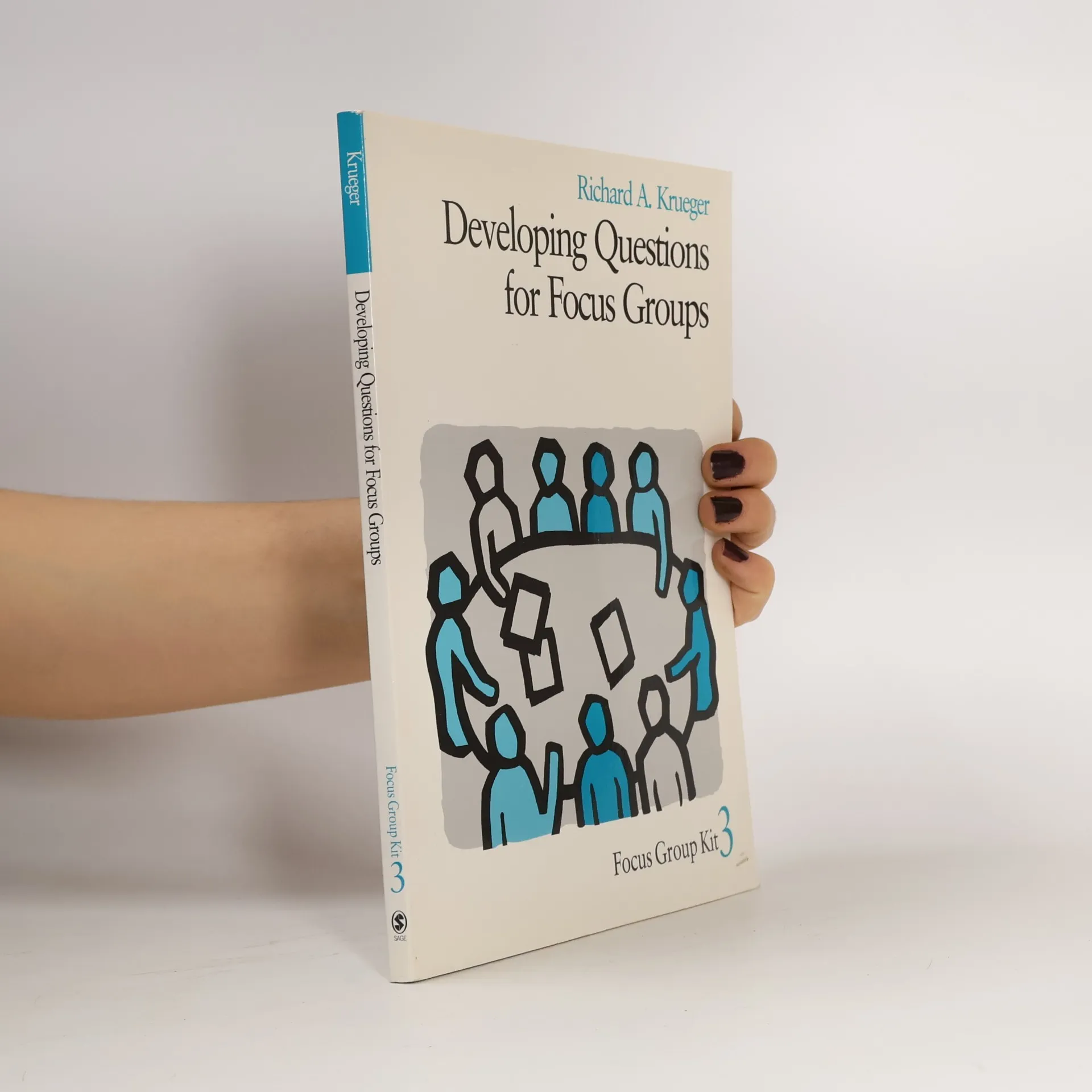
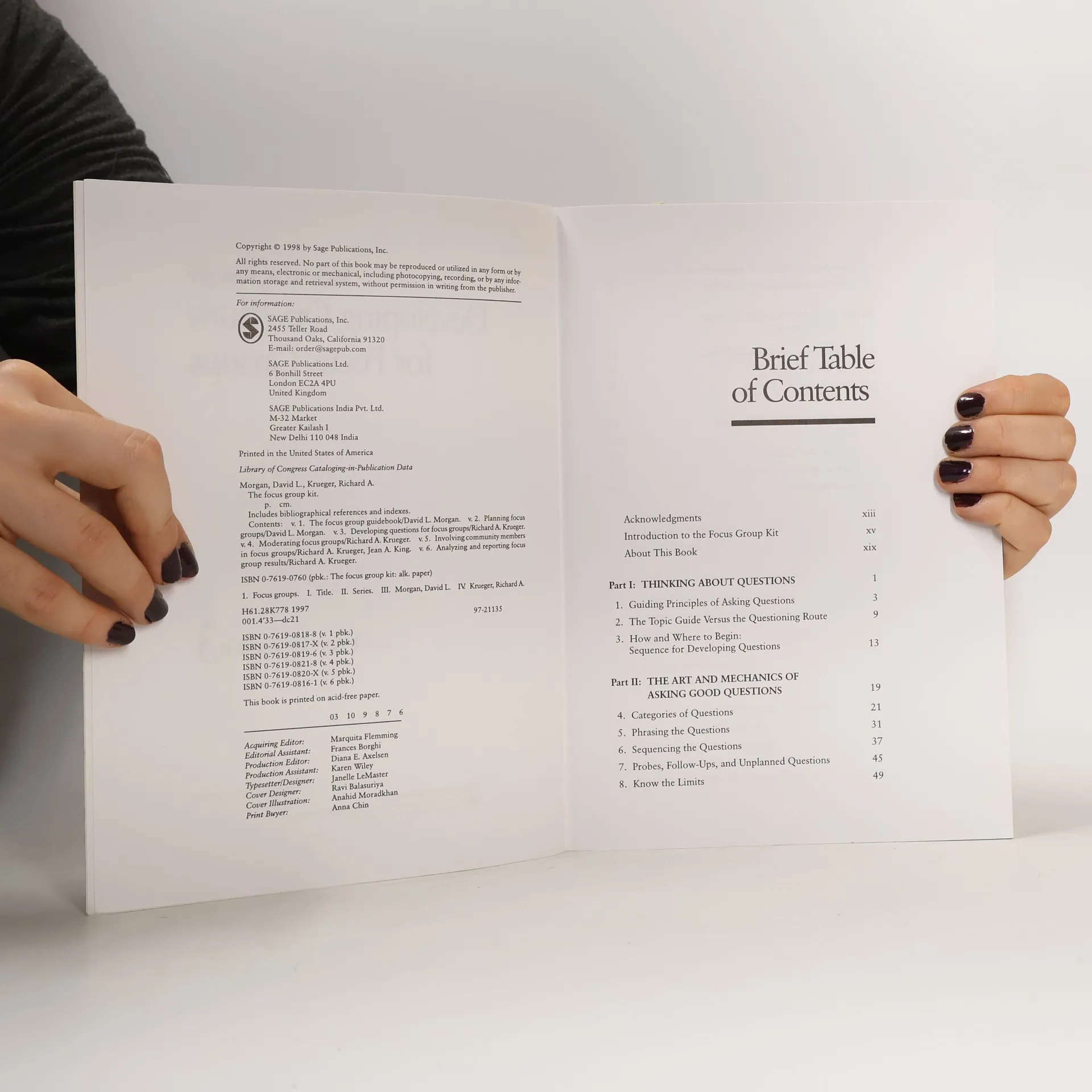
Focus Group Kit - 3: Developing Questions for Focus Groups
Více o knize
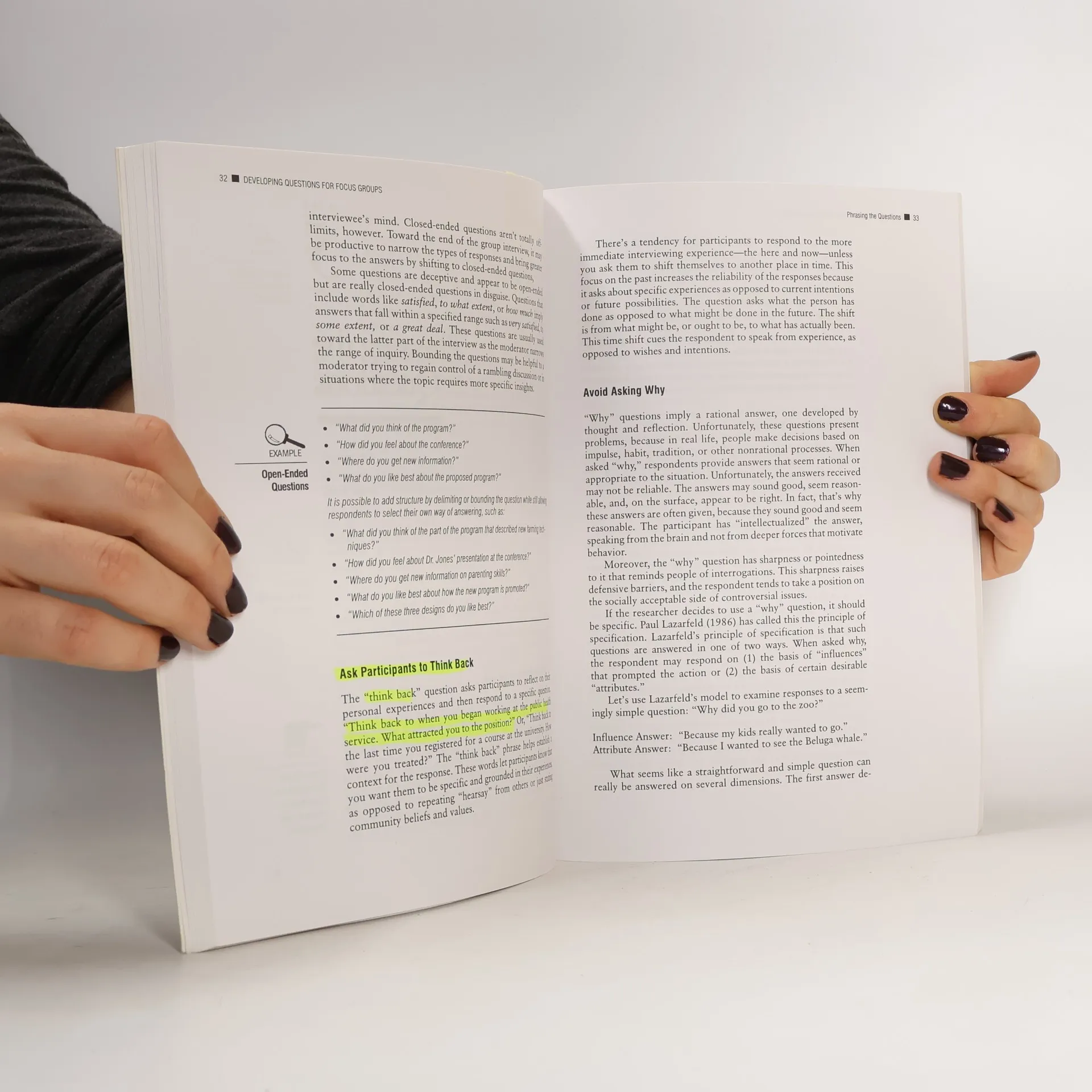
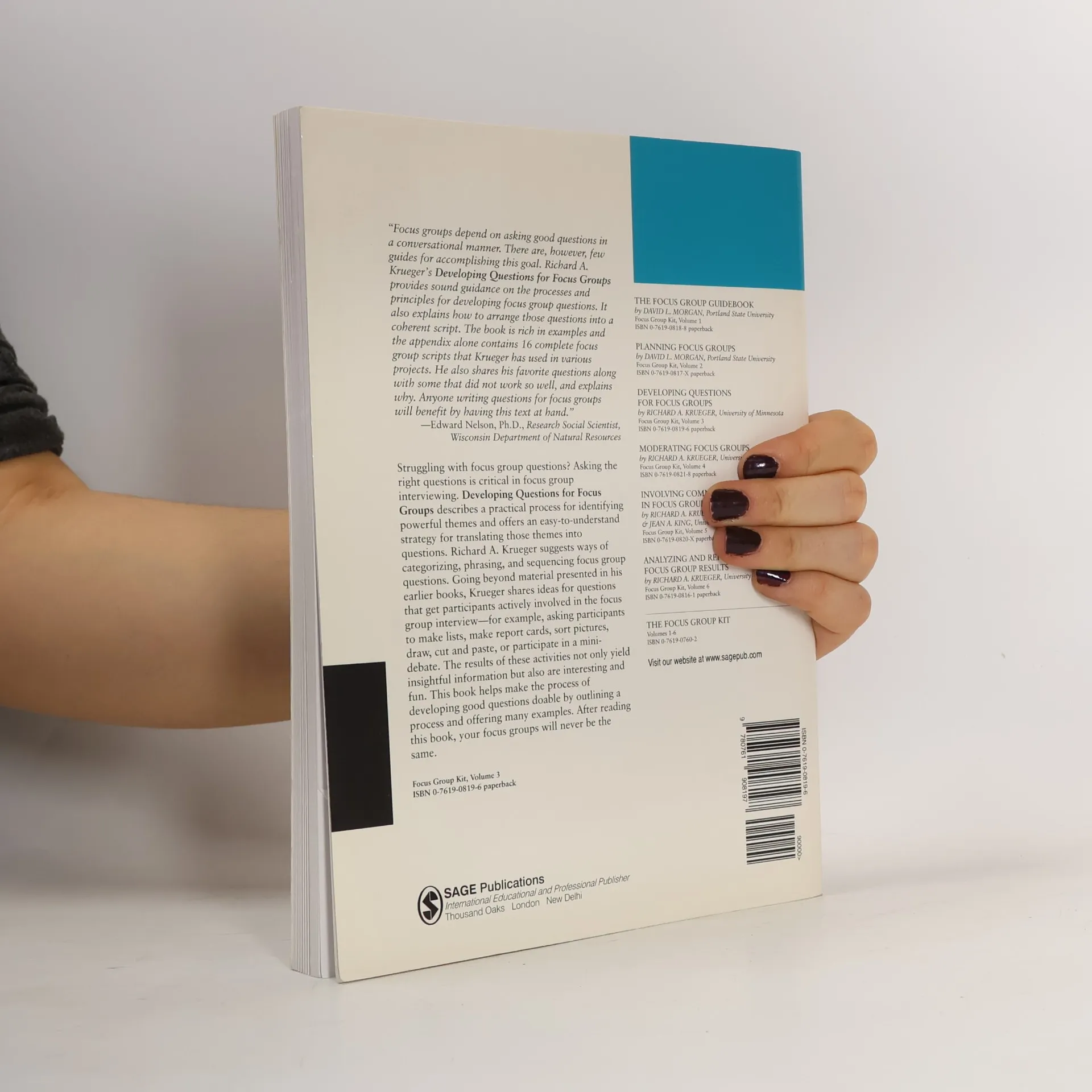
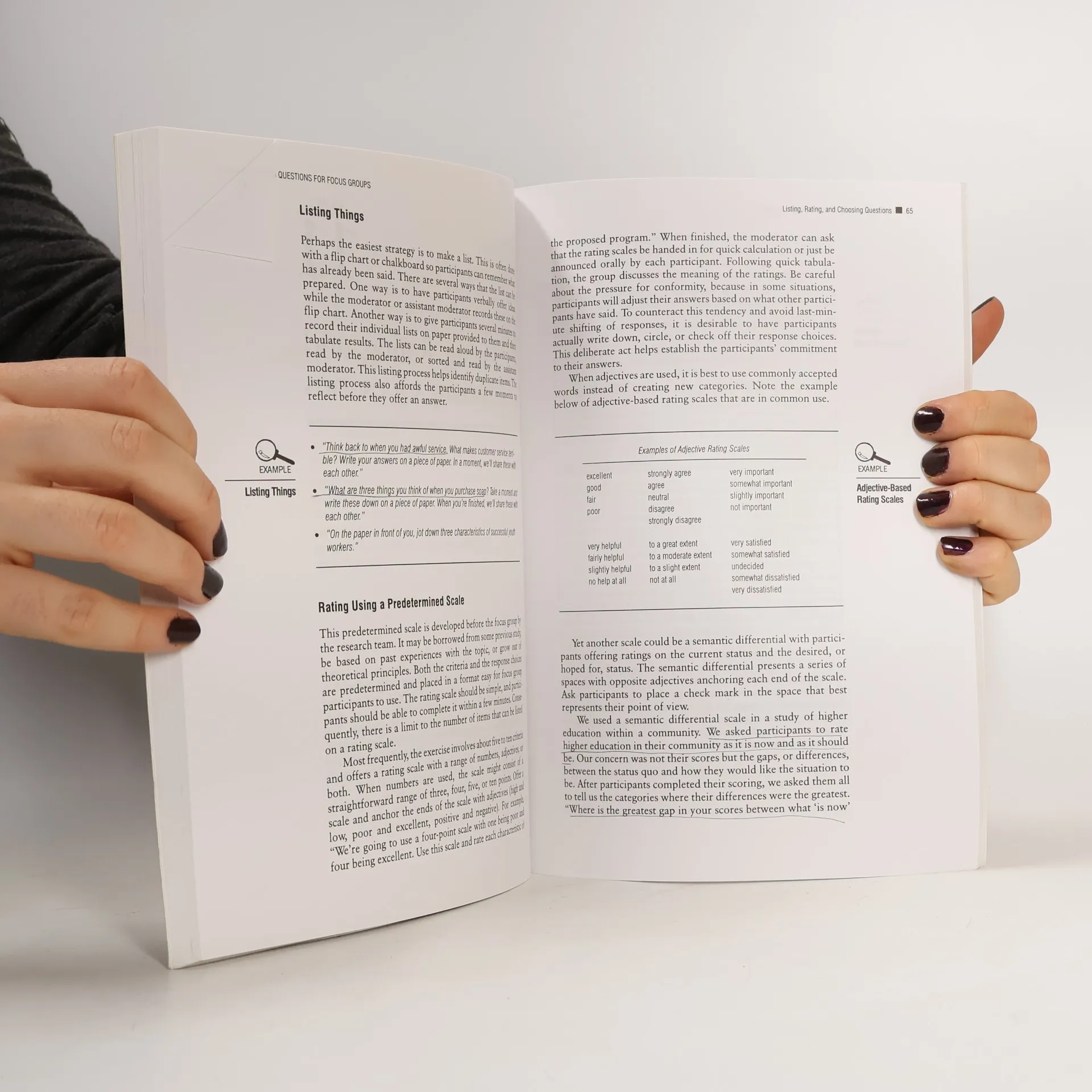
Asking the right questions is critical in focus group interviewing. This book describes a practical process for identifying powerful themes and then offers an easy-to-understand strategy for translating those themes into questions. Richard Krueger suggests ways of categorizing, phrasing and sequencing focus group questions. Going beyond material presented in his earlier books, Krueger shares ideas for questions that get participants actively involved in the focus group interview. For example, he suggests asking participants to make lists, create report cards, sort pictures, draw, cut and paste, or participate in a mini-debate. The results of these activities not only yield insightful information but are also interesting and fun. This book helps make the process of developing good questions easier by outlining a process and offering many examples.
Nákup knihy
Focus Group Kit - 3: Developing Questions for Focus Groups, David L. Morgan, Richard A. Krueger, Jean A. King
- Jazyk

- Rok vydání
- 2003
- Vazba
- (měkká),
- Stav knihy
- Poškozená
- Cena
- 289 Kč
Doručení
Platební metody
Nikdo zatím neohodnotil.
- Titul
- Focus Group Kit - 3: Developing Questions for Focus Groups
- Jazyk
- anglicky
- Vydavatel
- SAGE Publications Ltd
- Rok vydání
- 2003
- Vazba
- měkká
- Počet stran
- 128
- ISBN10
- 0761908196
- ISBN13
- 9780761908197
- Série
- Štítky
- Psychologická tématika, Příručky a návody, Lékařská tématika, Marketing a PR, Výzkum, Statistika, Sociální psychologie
- Anotace
- Asking the right questions is critical in focus group interviewing. This book describes a practical process for identifying powerful themes and then offers an easy-to-understand strategy for translating those themes into questions. Richard Krueger suggests ways of categorizing, phrasing and sequencing focus group questions. Going beyond material presented in his earlier books, Krueger shares ideas for questions that get participants actively involved in the focus group interview. For example, he suggests asking participants to make lists, create report cards, sort pictures, draw, cut and paste, or participate in a mini-debate. The results of these activities not only yield insightful information but are also interesting and fun. This book helps make the process of developing good questions easier by outlining a process and offering many examples.