

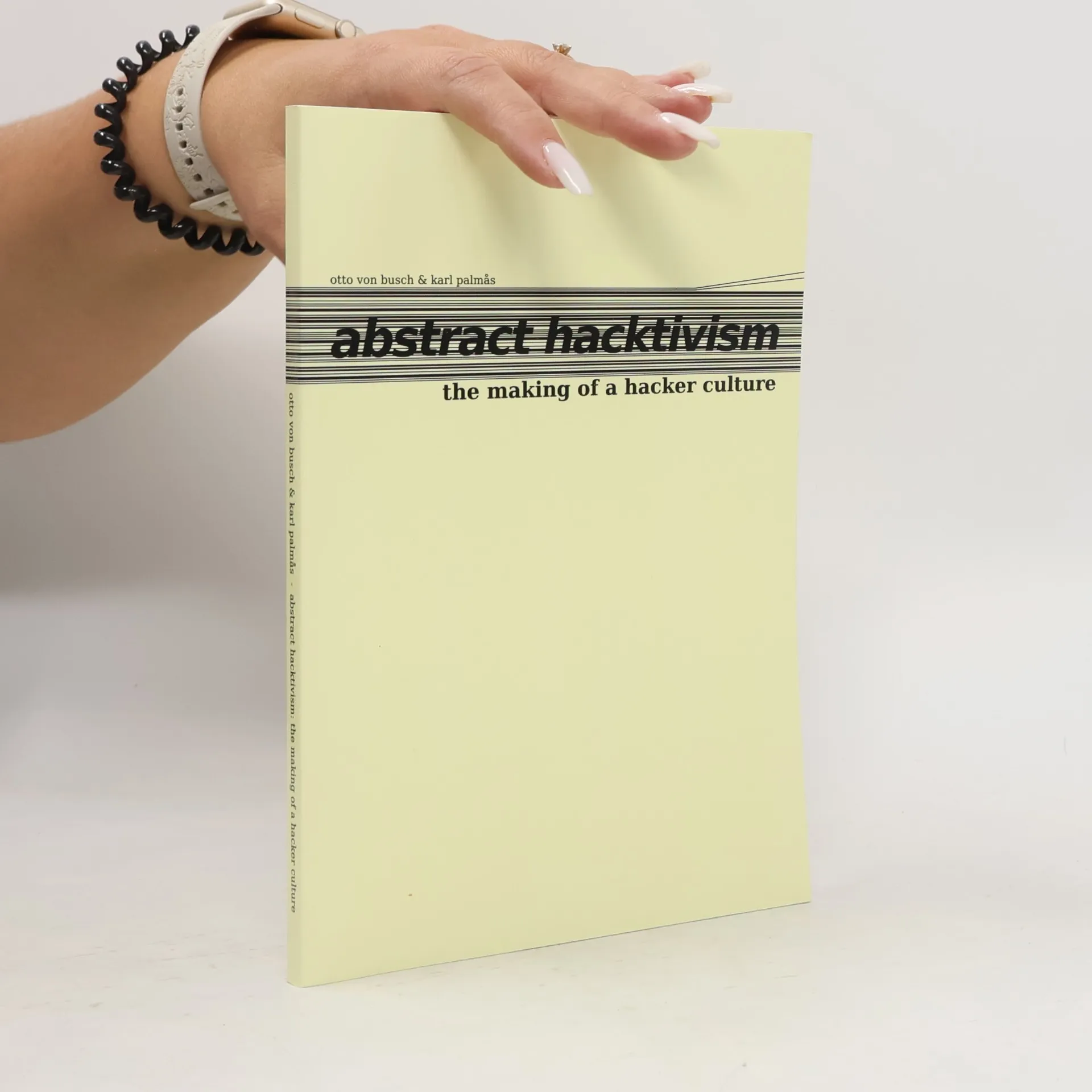


Abstract Hacktivism
The Making of a Hacker Culture
Více o knize
In recent years, designers, activists, and businesspeople have begun to navigate their social worlds using concepts from computers and new media technologies, marking a significant cultural shift, as noted by Otto von Busch and Karl Palmås. They argue that traditional models of social thought, particularly those stemming from the 1968 revolts, are being replaced by a new worldview. Drawing on thinkers like Michel Serres, Gilles Deleuze, and Manuel DeLanda, the authors illustrate how everyday technologies are deeply intertwined with prevailing modes of thought. They compare the transition from the clockwork to the motor in the nineteenth century to the current shift from the motor to new media technologies as the dominant conceptual framework in contemporary social thought. This evolution has led to novel interpretations of politics, activism, and innovation. Von Busch explores the connections between hacking and practices like shopdropping, craftivism, and liberation theology, while Palmås analyzes how publications like Adbusters Magazine and business theorists have embraced a computer-inspired worldview, linking it to the late 1990s dot.com boom. The text caters to designers, activists, and general readers interested in cultural studies.
Nákup knihy
Abstract Hacktivism, Karl Palmås, Otto von Busch
- Jazyk

- Rok vydání
- 2006
- Vazba
- (měkká),
- Stav knihy
- Velmi dobrá
- Cena
- 159 Kč
Doručení
Platební metody
Nikdo zatím neohodnotil.
- Titul
- Abstract Hacktivism
- Podtitul
- The Making of a Hacker Culture
- Jazyk
- anglicky
- Autoři
- Karl Palmås, Otto von Busch
- Vydavatel
- Skyscraper Digital Pub Ltd
- Rok vydání
- 2006
- Vazba
- měkká
- Počet stran
- 114
- ISBN10
- 0955479622
- ISBN13
- 9780955479625
- Série
- Štítky
- Kyberprostor
- Anotace
- In recent years, designers, activists, and businesspeople have begun to navigate their social worlds using concepts from computers and new media technologies, marking a significant cultural shift, as noted by Otto von Busch and Karl Palmås. They argue that traditional models of social thought, particularly those stemming from the 1968 revolts, are being replaced by a new worldview. Drawing on thinkers like Michel Serres, Gilles Deleuze, and Manuel DeLanda, the authors illustrate how everyday technologies are deeply intertwined with prevailing modes of thought. They compare the transition from the clockwork to the motor in the nineteenth century to the current shift from the motor to new media technologies as the dominant conceptual framework in contemporary social thought. This evolution has led to novel interpretations of politics, activism, and innovation. Von Busch explores the connections between hacking and practices like shopdropping, craftivism, and liberation theology, while Palmås analyzes how publications like Adbusters Magazine and business theorists have embraced a computer-inspired worldview, linking it to the late 1990s dot.com boom. The text caters to designers, activists, and general readers interested in cultural studies.