

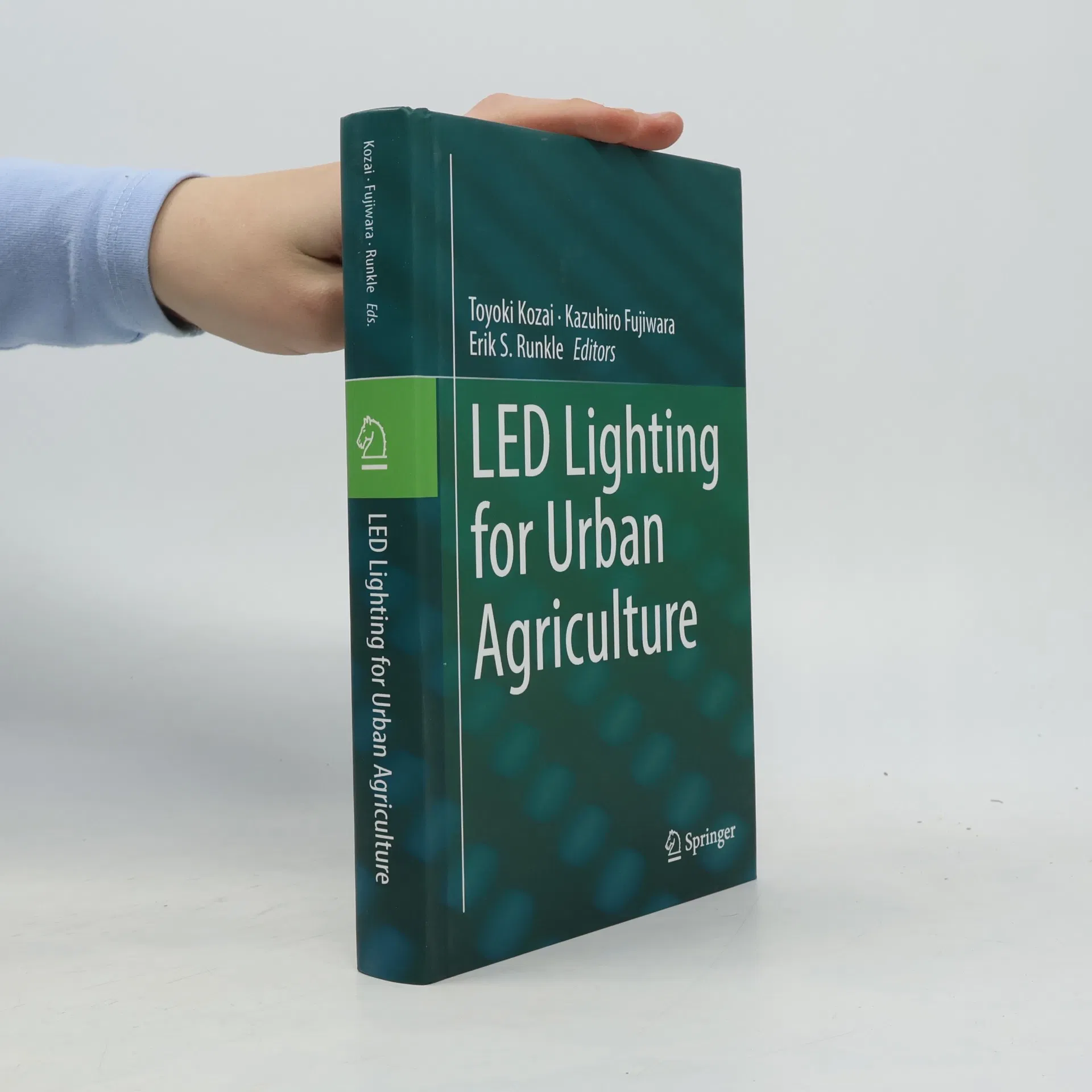

LED Lighting for Urban Agriculture
Více o knize
This book delves into light-emitting diode (LED) lighting, particularly for commercial horticultural crop production in controlled environments like plant factories and greenhouses. It emphasizes two main aspects: the impact of the light environment on plant growth and development, and the business and technological opportunities and challenges associated with LEDs. The text is organized into over 30 chapters across seven parts, covering topics such as the significance of controlled-environment agriculture, the influence of ambient light on plant growth, optical and physiological characteristics of plant leaves, greenhouse crop production with supplemental LED lighting, and the effects of light quality on plant physiology. Additionally, it discusses the current status of commercial plant factories using LED lighting and the fundamentals of LEDs for plant cultivation. Looking ahead, LED lighting for urban agriculture will evolve beyond current practices, driven by advancements in global technologies, information and communication technology, renewable energy, and foundational science that will remain relevant for decades. The potential of LED lighting is attracting interest from a diverse range of stakeholders, including researchers, businesspeople, policymakers, educators, and entrepreneurs. Readers will gain insights into the principles, design, operation, and social implications of LED lighting in urban agriculture, as well
Nákup knihy
LED Lighting for Urban Agriculture, Toyoki Kozai, Kazuhiro Fujiwara, Erik S. Runkle
- Jazyk

- Rok vydání
- 2016
- Vazba
- (pevná),
- Stav knihy
- Velmi dobrá
- Cena
- 3 259 Kč
Doručení
Platební metody
Nikdo zatím neohodnotil.
- Titul
- LED Lighting for Urban Agriculture
- Jazyk
- anglicky
- Vydavatel
- Springer
- Rok vydání
- 2016
- Vazba
- pevná
- Počet stran
- 464
- ISBN10
- 9811018464
- ISBN13
- 9789811018466
- Série
- Kategorie
- Štítky
- Věda, Rostliny, Technologie, Fyziologie, Potraviny, Elektřina, Optika, Singapur, Fyziologie rostlin
- Anotace
- This book delves into light-emitting diode (LED) lighting, particularly for commercial horticultural crop production in controlled environments like plant factories and greenhouses. It emphasizes two main aspects: the impact of the light environment on plant growth and development, and the business and technological opportunities and challenges associated with LEDs. The text is organized into over 30 chapters across seven parts, covering topics such as the significance of controlled-environment agriculture, the influence of ambient light on plant growth, optical and physiological characteristics of plant leaves, greenhouse crop production with supplemental LED lighting, and the effects of light quality on plant physiology. Additionally, it discusses the current status of commercial plant factories using LED lighting and the fundamentals of LEDs for plant cultivation. Looking ahead, LED lighting for urban agriculture will evolve beyond current practices, driven by advancements in global technologies, information and communication technology, renewable energy, and foundational science that will remain relevant for decades. The potential of LED lighting is attracting interest from a diverse range of stakeholders, including researchers, businesspeople, policymakers, educators, and entrepreneurs. Readers will gain insights into the principles, design, operation, and social implications of LED lighting in urban agriculture, as well