

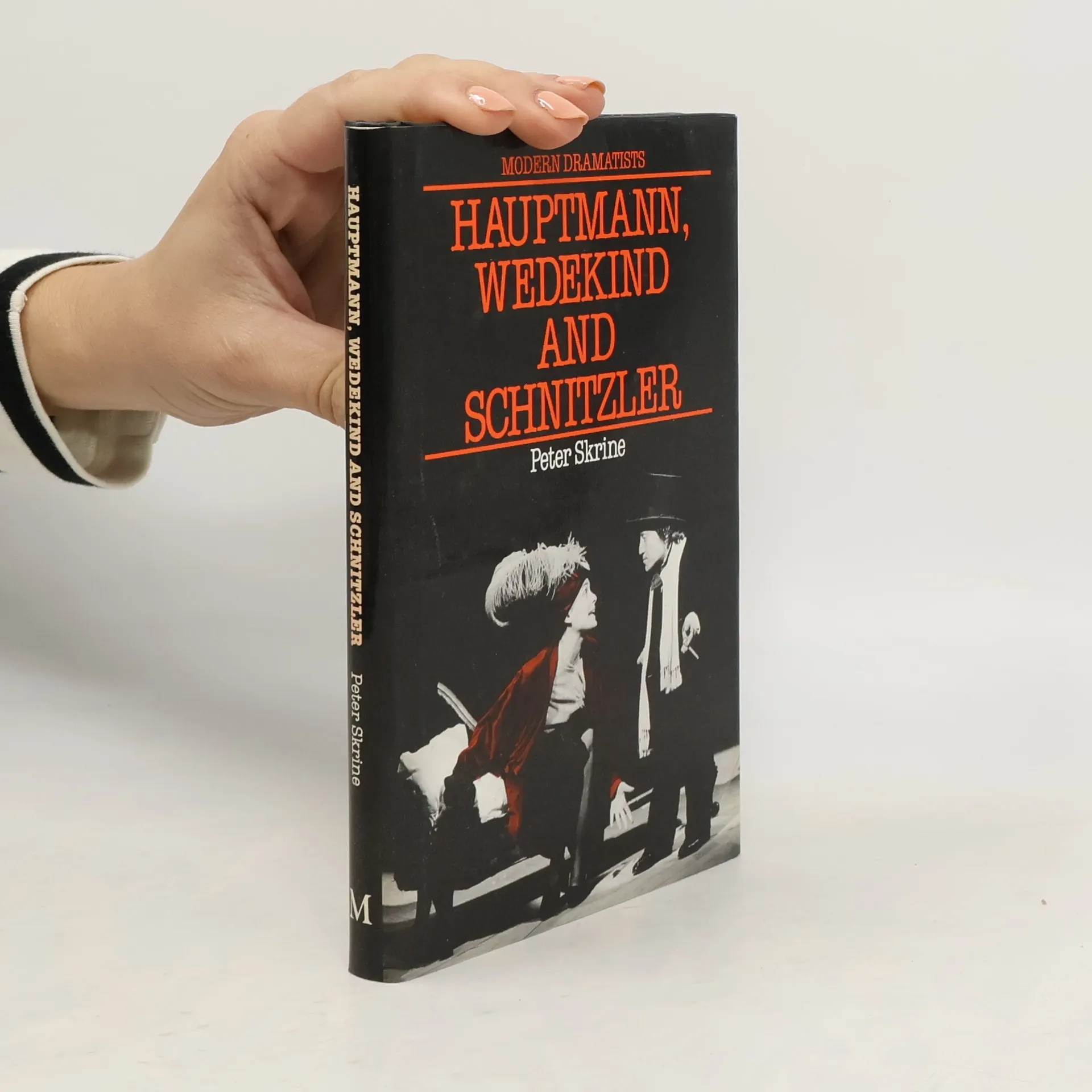


Hauptmann, Wedekind and Schnitzler
Autoři
Více o knize
This study looks at the work of three German language dramatists, Gerhart Hauptmann, Arthur Schnitzler and Frank Wedekind. These three figures are regarded as the most important German-language dramatists between Ibsen and Brecht. Together, their work provides a representative picture of drama in Germany/Austria in the period 1889-1914, when Vienna and Berlin enjoyed a heyday of literary and cultural activity. These dramatists dealt with the crucial social questions of the period, and in this study Peter Skrine looks at their treatment of youth, sex, marriage, communication, city life, technological change and the moral, social and personal choices facing the thinking person in the late 19th and early 20th century.
Nákup knihy
Hauptmann, Wedekind and Schnitzler, Peter N. Skrine
- Jazyk

- Rok vydání
- 1989
- Vazba
- (měkká)
Doručení
Platební metody
Nikdo zatím neohodnotil.
- Titul
- Hauptmann, Wedekind and Schnitzler
- Jazyk
- anglicky
- Autoři
- Peter N. Skrine
- Vydavatel
- Macmillan
- Rok vydání
- 1989
- Vazba
- měkká
- Počet stran
- 175
- ISBN10
- 033343529X
- ISBN13
- 9780333435298
- Série
- Kategorie
- Štítky
- Světová literatura
- Anotace
- This study looks at the work of three German language dramatists, Gerhart Hauptmann, Arthur Schnitzler and Frank Wedekind. These three figures are regarded as the most important German-language dramatists between Ibsen and Brecht. Together, their work provides a representative picture of drama in Germany/Austria in the period 1889-1914, when Vienna and Berlin enjoyed a heyday of literary and cultural activity. These dramatists dealt with the crucial social questions of the period, and in this study Peter Skrine looks at their treatment of youth, sex, marriage, communication, city life, technological change and the moral, social and personal choices facing the thinking person in the late 19th and early 20th century.