



Více o knize
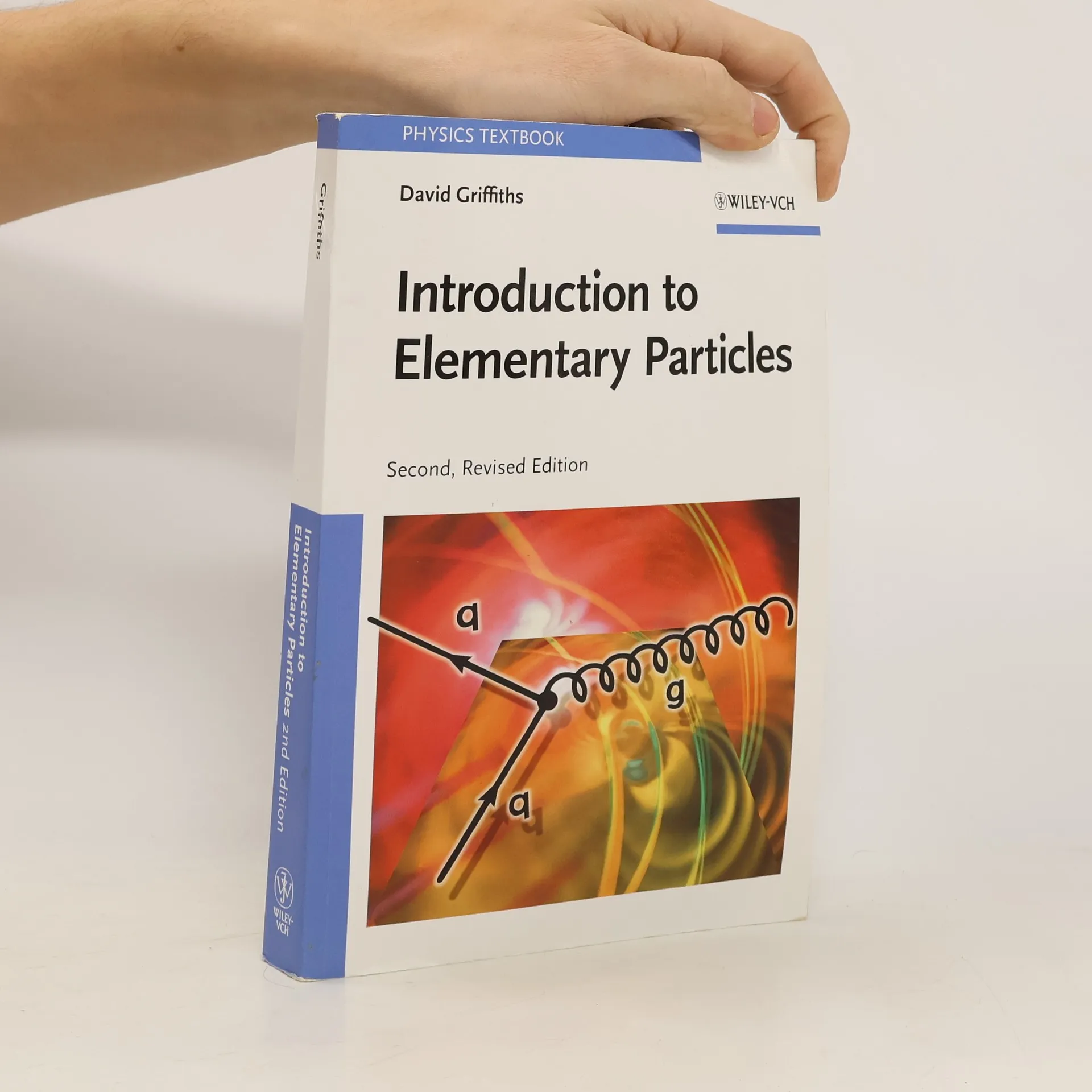
In the second, revised edition of a well-established textbook, the author strikes a balance between quantitative rigor and intuitive understanding, using a lively, informal style. The first chapter provides a detailed historical introduction to the subject, while subsequent chapters offer a quantitative presentation of the Standard Model. A simplified introduction to the Feynman rules, based on a „toy“ model, helps readers learn the calculational techniques without the complications of spin. It is followed by accessible treatments of quantum electrodynamics, the strong and weak interactions, and gauge theories. New chapters address neutrino oscillations and prospects for physics beyond the Standard Model. The book contains a number of worked examples and many end-of-chapter problems. A complete solution manual is available for instructors.
Nákup knihy
Introduction to elementary particles, David J. Griffiths
- Jazyk

- Rok vydání
- 2008
- Vazba
- (měkká)
Tady nám chybí tvá recenze.
- Titul
- Introduction to elementary particles
- Jazyk
- anglicky
- Autoři
- David J. Griffiths
- Vydavatel
- Wiley-VCH
- Rok vydání
- 2008
- Vazba
- měkká
- Počet stran
- 450
- ISBN10
- 3527406018
- ISBN13
- 9783527406012
- Série
- Hodnocení
- 4,2 z 5
- Anotace
- In the second, revised edition of a well-established textbook, the author strikes a balance between quantitative rigor and intuitive understanding, using a lively, informal style. The first chapter provides a detailed historical introduction to the subject, while subsequent chapters offer a quantitative presentation of the Standard Model. A simplified introduction to the Feynman rules, based on a „toy“ model, helps readers learn the calculational techniques without the complications of spin. It is followed by accessible treatments of quantum electrodynamics, the strong and weak interactions, and gauge theories. New chapters address neutrino oscillations and prospects for physics beyond the Standard Model. The book contains a number of worked examples and many end-of-chapter problems. A complete solution manual is available for instructors.