



Více o knize
Causal uncertainty is a wide-spread phenomenon. Courts are often unable to determine whether a defendant’s tortious conduct was a factual cause of a plaintiff’s harm. Yet, sometimes courts can determine the probability that the defendant caused the plaintiff’s harm, although often there is considerable variance in the probability estimate based on the available evidence. The conventional way to cope with this uncertainty has been to apply the evidentiary rule of ‘standard of proof’. The application of this ‘all or nothing’ rule can lead to unfairness by absolving defendants who acted tortiously and may also create undesirable incentives that result in greater wrongful conduct and injustice to victims. Some courts have decided that this ‘no-liability’ outcome is undesirable. They have adopted rules of proportional liability that compensate plaintiffs according to the probability that their harm was caused by the defendant’s tortious conduct. In 2005 the Principles of European Tort Law (PETL) made a breakthrough in this regard by embracing rules of proportional liability. This project, building on PETL, endeavours to make further inquiries into the desirable scope of proportional liability and to offer a more detailed view of its meaning, implications, and ramifications.
Nákup knihy
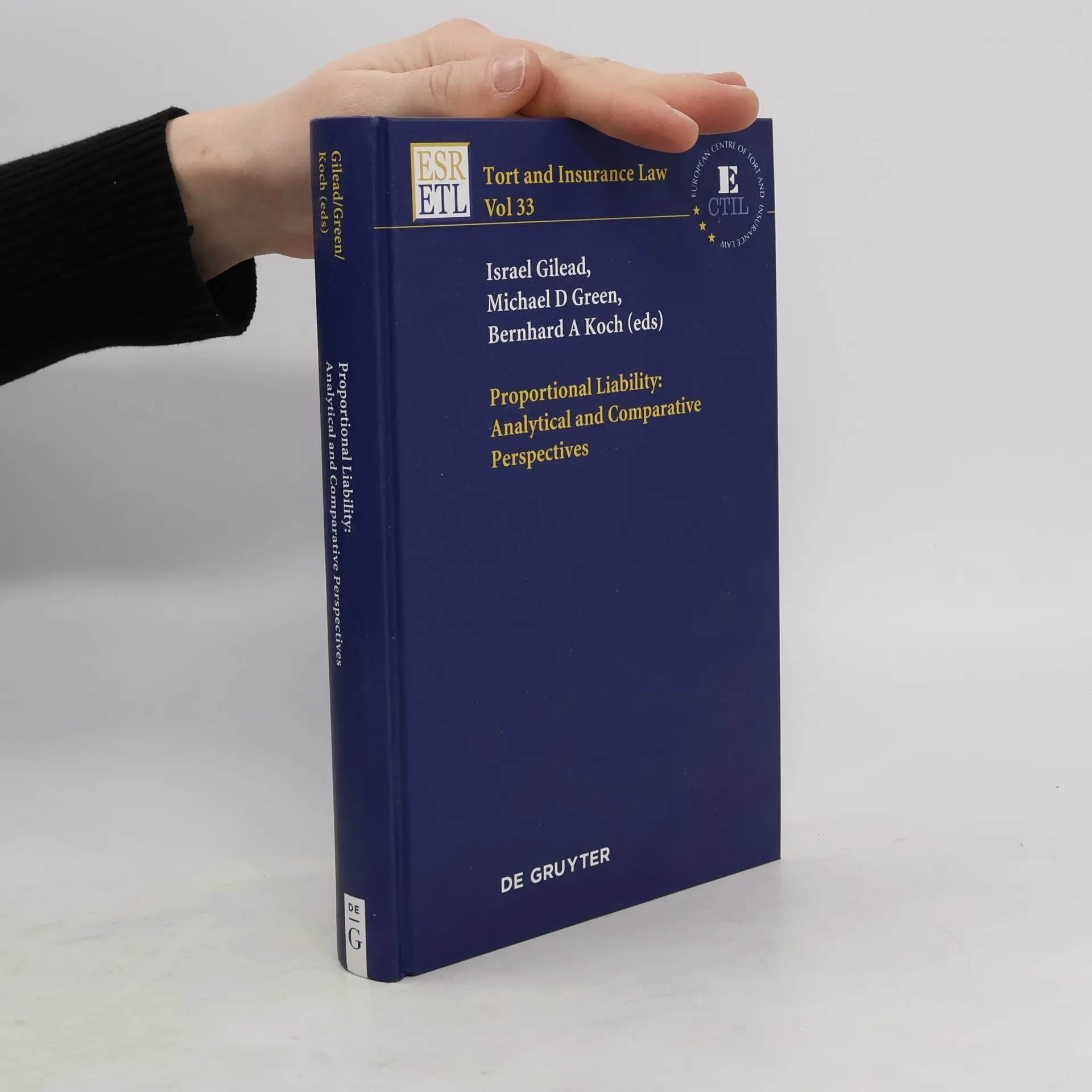
Proportional liability: analytical and comparative perspectives, Yiśraʼel Gilʻad
- Jazyk

- Rok vydání
- 2013
- Vazba
- (pevná)
Nikdo zatím neohodnotil.
- Titul
- Proportional liability: analytical and comparative perspectives
- Jazyk
- anglicky
- Autoři
- Yiśraʼel Gilʻad
- Vydavatel
- De Gruyter
- Rok vydání
- 2013
- Vazba
- pevná
- Počet stran
- 396
- ISBN10
- 3110282534
- ISBN13
- 9783110282535
- Série
- Kategorie
- Štítky
- Ostatní učebnice
- Anotace
- Causal uncertainty is a wide-spread phenomenon. Courts are often unable to determine whether a defendant’s tortious conduct was a factual cause of a plaintiff’s harm. Yet, sometimes courts can determine the probability that the defendant caused the plaintiff’s harm, although often there is considerable variance in the probability estimate based on the available evidence. The conventional way to cope with this uncertainty has been to apply the evidentiary rule of ‘standard of proof’. The application of this ‘all or nothing’ rule can lead to unfairness by absolving defendants who acted tortiously and may also create undesirable incentives that result in greater wrongful conduct and injustice to victims. Some courts have decided that this ‘no-liability’ outcome is undesirable. They have adopted rules of proportional liability that compensate plaintiffs according to the probability that their harm was caused by the defendant’s tortious conduct. In 2005 the Principles of European Tort Law (PETL) made a breakthrough in this regard by embracing rules of proportional liability. This project, building on PETL, endeavours to make further inquiries into the desirable scope of proportional liability and to offer a more detailed view of its meaning, implications, and ramifications.