

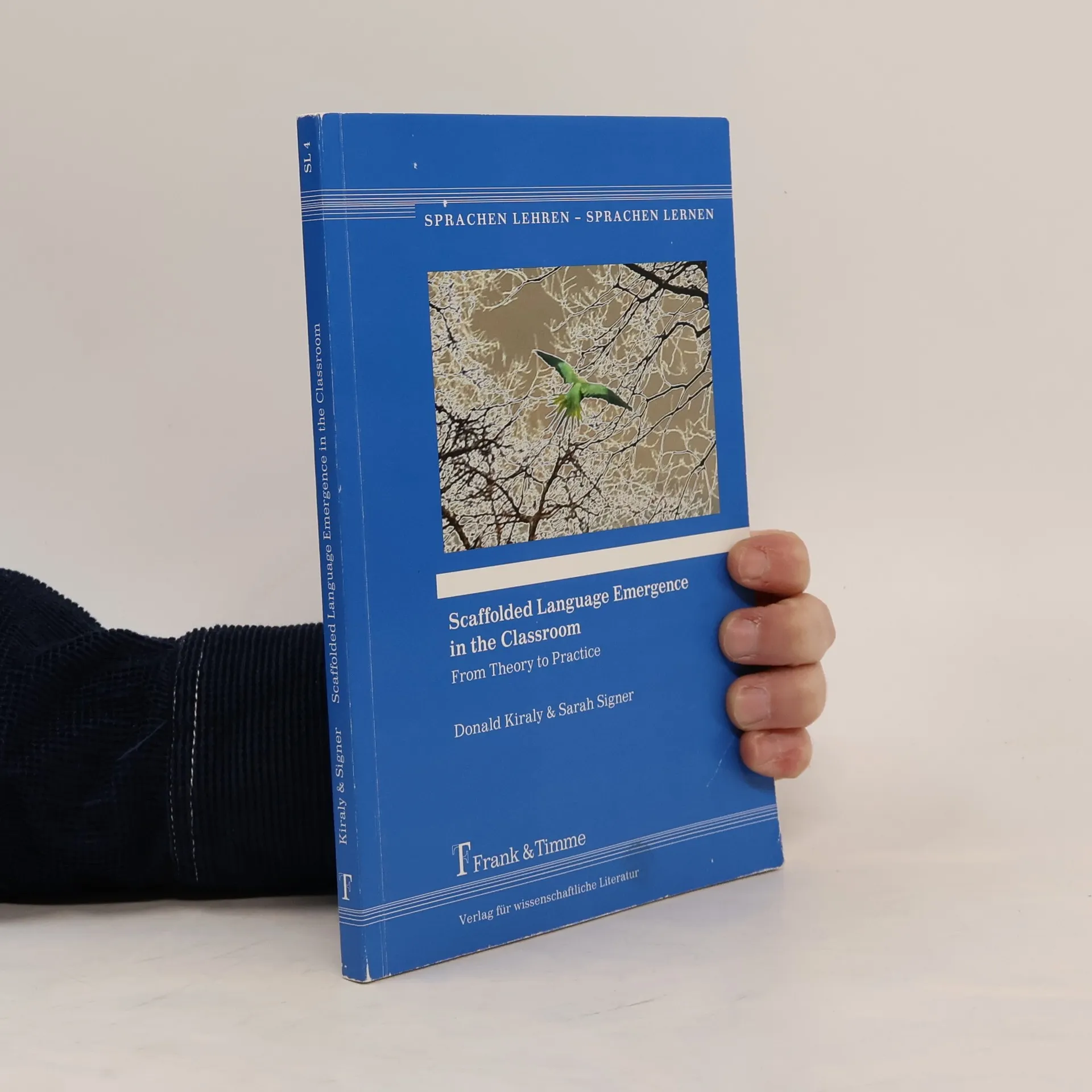


Scaffolded language emergence in the classroom
Autoři
Více o knize
This book introduces an approach to elementary adult foreign language learning that is based on theory (in particular, complexity thinking and social constructivism) on the one hand, and years of practice using various unconventional methods on the other. A key assumption of the Scaffolded Language Emergence (SLE) approach is that a language need not be taught or learned in the conventional sense of these terms. Instead, it is argued, language can ‘emerge’, that is generate and maintain itself through authentic use. The study and application of rules is considered most useful in later stages of learning, while intuition and abductive thinking can be used very effectively to initiate or bootstrap naturalistic learning processes – even in adults learning a foreign language.
Nákup knihy
Scaffolded language emergence in the classroom, Donald C. Kiraly
- Jazyk

- Rok vydání
- 2017
- Vazba
- (měkká)
Doručení
Platební metody
Nikdo zatím neohodnotil.
- Titul
- Scaffolded language emergence in the classroom
- Jazyk
- anglicky
- Autoři
- Donald C. Kiraly
- Vydavatel
- Frank & Timme
- Rok vydání
- 2017
- Vazba
- měkká
- Počet stran
- 144
- ISBN10
- 3732902595
- ISBN13
- 9783732902590
- Série
- Kategorie
- Anotace
- This book introduces an approach to elementary adult foreign language learning that is based on theory (in particular, complexity thinking and social constructivism) on the one hand, and years of practice using various unconventional methods on the other. A key assumption of the Scaffolded Language Emergence (SLE) approach is that a language need not be taught or learned in the conventional sense of these terms. Instead, it is argued, language can ‘emerge’, that is generate and maintain itself through authentic use. The study and application of rules is considered most useful in later stages of learning, while intuition and abductive thinking can be used very effectively to initiate or bootstrap naturalistic learning processes – even in adults learning a foreign language.