

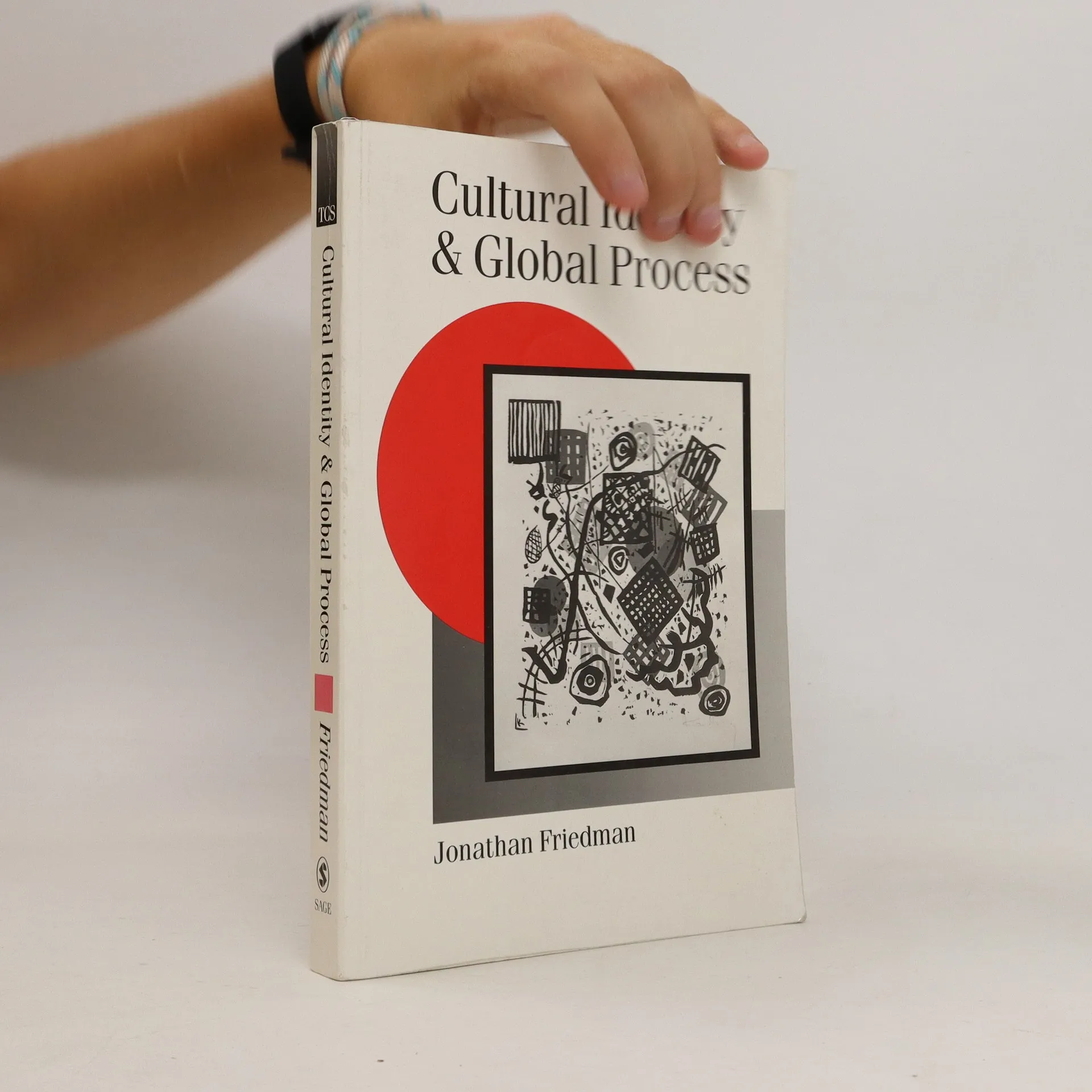
Cultural identity and global process
Autoři
Parametry
Více o knize
"Examining ideas ranging from world systems theory to postmodernism, Jonathan Friedman investigates the relations between the global and the local, to show how cultural fragmentation and modernist homogenization are equally constitutive trends of global reality. With examples taken from a rich variety of theoretical sources, ethnographic accounts and historical eras, the analysis ranges across the cultural formations of ancient Greece, contemporary processes of Hawaiian cultural identification and Congolese beauty cults. Throughout, the author examines the interdependency of the world market and local cultural transformations, and demonstrates the complex interrelations between globally structured social processes and the organization of identity." "Jonathan Friedman also documents the development and significance of a global perspective in an anthropology that illuminates a wide variety of domains from prehistory to world hegemony. In so doing, he interrogates the emergence of the concept of culture and suggests that anthropology itself is best understood within the trajectory of modernity."--Jacket
Nákup knihy
Cultural identity and global process, Jonathan Friedman
- Jazyk

- Rok vydání
- 1994
- Vazba
- (měkká)
Doručení
Platební metody
Nikdo zatím neohodnotil.
- Titul
- Cultural identity and global process
- Jazyk
- anglicky
- Autoři
- Jonathan Friedman
- Vydavatel
- SAGE Publications Ltd
- Rok vydání
- 1994
- Vazba
- měkká
- ISBN10
- 0803986378
- ISBN13
- 9780803986374
- Série
- Štítky
- Anotace
- "Examining ideas ranging from world systems theory to postmodernism, Jonathan Friedman investigates the relations between the global and the local, to show how cultural fragmentation and modernist homogenization are equally constitutive trends of global reality. With examples taken from a rich variety of theoretical sources, ethnographic accounts and historical eras, the analysis ranges across the cultural formations of ancient Greece, contemporary processes of Hawaiian cultural identification and Congolese beauty cults. Throughout, the author examines the interdependency of the world market and local cultural transformations, and demonstrates the complex interrelations between globally structured social processes and the organization of identity." "Jonathan Friedman also documents the development and significance of a global perspective in an anthropology that illuminates a wide variety of domains from prehistory to world hegemony. In so doing, he interrogates the emergence of the concept of culture and suggests that anthropology itself is best understood within the trajectory of modernity."--Jacket