

Parametry
Více o knize
Deferred tax is an accounting category that forms part of tax expense and affects the reported amounts of profit after tax for businesses. This book explores the issue of deferred taxes at both the theoretical and practical levels, and investigates the financial aspects of such deferred taxes and their economic function in companies. In practical terms, it discusses specific circumstances leading to the creation of deferred tax and their economic function. The first chapter deals with regulatory issues concerning deferred taxes and accounting, specifically noting the accrual principle and different policies for charging, as well as the valuation of fair-value accounting. The second concentrates on such problems as changes in value based on depreciation, and changes in asset revaluation changes in long-term tangible and financial assets. This is followed by a chapter focusing on the problem of an effective income tax rate. The fourth chapter traces the specific practical use and form of economic functions of deferred taxes, and solves the problem of the equitable tax burden, as well as the distribution of this burden when changing the tax rate. Overall, the book defines, analyses, synthesises and compares current methods and the role of deferred taxes in the management of companies.
Nákup knihy
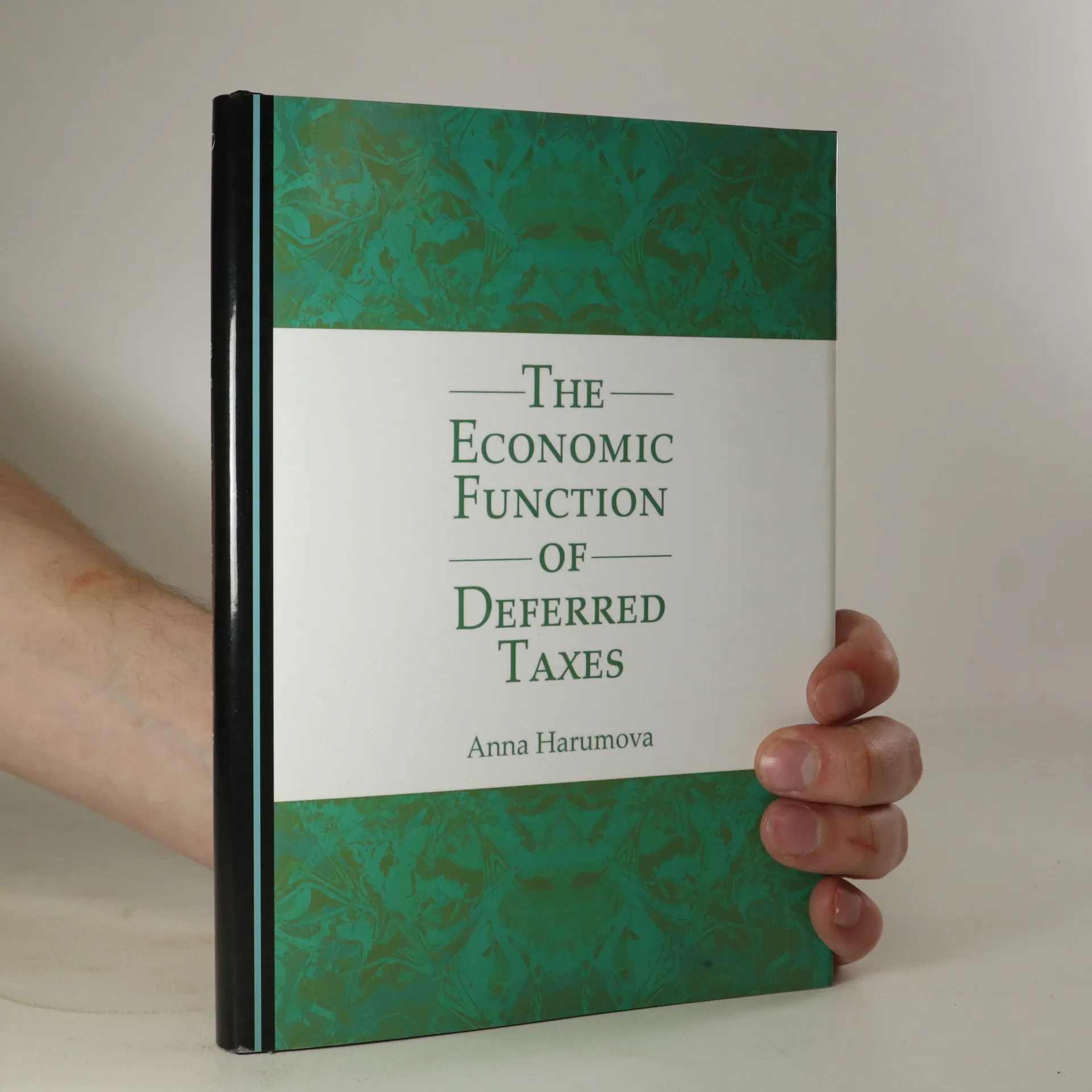
The Economic Function of Deferred Taxes, Anna Harumová
- Jazyk

- Rok vydání
- Vazba
- (pevná)
Nikdo zatím neohodnotil.
- Titul
- The Economic Function of Deferred Taxes
- Jazyk
- anglicky
- Autoři
- Anna Harumová
- Vazba
- pevná
- ISBN10
- 1443817082
- ISBN13
- 9781443817080
- Série
- Štítky
- Byznys, Účetnictví
- Anotace
- Deferred tax is an accounting category that forms part of tax expense and affects the reported amounts of profit after tax for businesses. This book explores the issue of deferred taxes at both the theoretical and practical levels, and investigates the financial aspects of such deferred taxes and their economic function in companies. In practical terms, it discusses specific circumstances leading to the creation of deferred tax and their economic function. The first chapter deals with regulatory issues concerning deferred taxes and accounting, specifically noting the accrual principle and different policies for charging, as well as the valuation of fair-value accounting. The second concentrates on such problems as changes in value based on depreciation, and changes in asset revaluation changes in long-term tangible and financial assets. This is followed by a chapter focusing on the problem of an effective income tax rate. The fourth chapter traces the specific practical use and form of economic functions of deferred taxes, and solves the problem of the equitable tax burden, as well as the distribution of this burden when changing the tax rate. Overall, the book defines, analyses, synthesises and compares current methods and the role of deferred taxes in the management of companies.