



Parametry
Více o knize
In this remarkable collection, internationally renowned Ethiopianist Donald Levine has assembled interpretive vignettes spanning more than half a century. Thanks to his unique experiences living among peasants, visiting historic monasteries, and enjoying personal connections with modernizing Ethiopians from all political viewpoints, these essays offer acute glimpses into local life-worlds and historic perspectives spanning two millennia. Catching diverse ways in which Ethiopians construct their own narratives is one of the distinctive features of this work. This includes interpretations of Ethiopia's national epic, different ways in which Oromos construct their own narratives, and the clash of perspectives among protagonists in the 2005 political crisis. The book also includes important political documents such as Levine's first-hand account of the December 1960 coup and his testimony for the U.S. Senate Subcommittee on Africa concerning the Derg. The book climaxes with broad interpretive sketches, including an essay on Ethiopia and Japan in comparative civilizational perspective, and Levine's interpretation of the evolution of Ethiopia as a historic multi-ethnic society. In addition to historic and cultural forays, it includes chapters devoted to current domestic challenges, such as chronic hunger, overpopulation, and the obstacles and opportunities faced by Ethiopians in their effort to create a national public.
Nákup knihy
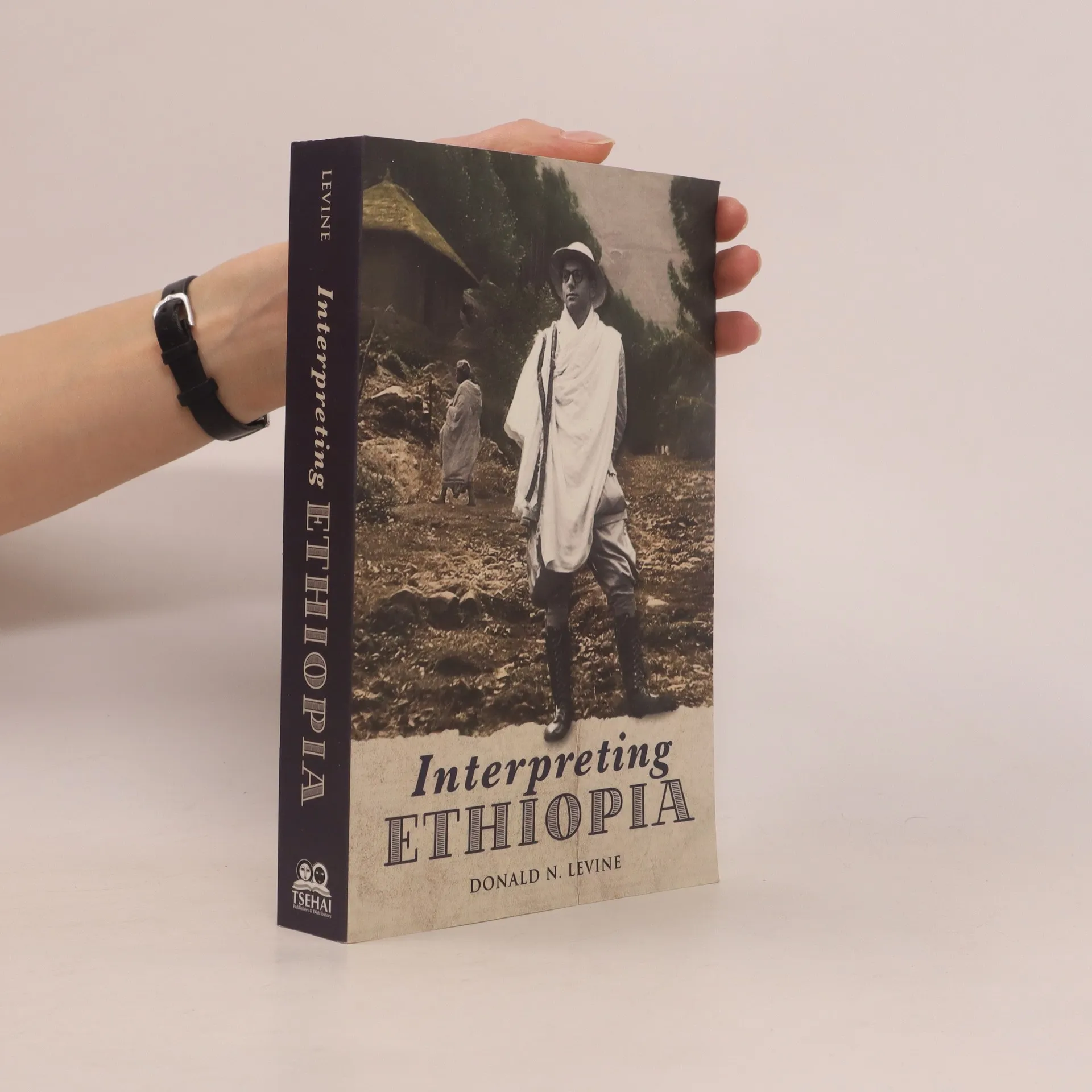
Interpreting Ethiopia, Donald N. Levine
- Jazyk

- Rok vydání
- 2014
- Vazba
- (měkká)
Doručení
Platební metody
Nikdo zatím neohodnotil.
- Titul
- Interpreting Ethiopia
- Jazyk
- anglicky
- Autoři
- Donald N. Levine
- Vydavatel
- Tsehai
- Rok vydání
- 2014
- Vazba
- měkká
- ISBN10
- 1599070960
- ISBN13
- 9781599070964
- Série
- Štítky
- Historické téma
- Anotace
- In this remarkable collection, internationally renowned Ethiopianist Donald Levine has assembled interpretive vignettes spanning more than half a century. Thanks to his unique experiences living among peasants, visiting historic monasteries, and enjoying personal connections with modernizing Ethiopians from all political viewpoints, these essays offer acute glimpses into local life-worlds and historic perspectives spanning two millennia. Catching diverse ways in which Ethiopians construct their own narratives is one of the distinctive features of this work. This includes interpretations of Ethiopia's national epic, different ways in which Oromos construct their own narratives, and the clash of perspectives among protagonists in the 2005 political crisis. The book also includes important political documents such as Levine's first-hand account of the December 1960 coup and his testimony for the U.S. Senate Subcommittee on Africa concerning the Derg. The book climaxes with broad interpretive sketches, including an essay on Ethiopia and Japan in comparative civilizational perspective, and Levine's interpretation of the evolution of Ethiopia as a historic multi-ethnic society. In addition to historic and cultural forays, it includes chapters devoted to current domestic challenges, such as chronic hunger, overpopulation, and the obstacles and opportunities faced by Ethiopians in their effort to create a national public.