

Parametry
- 136 stránek
- 5 hodin čtení
Více o knize
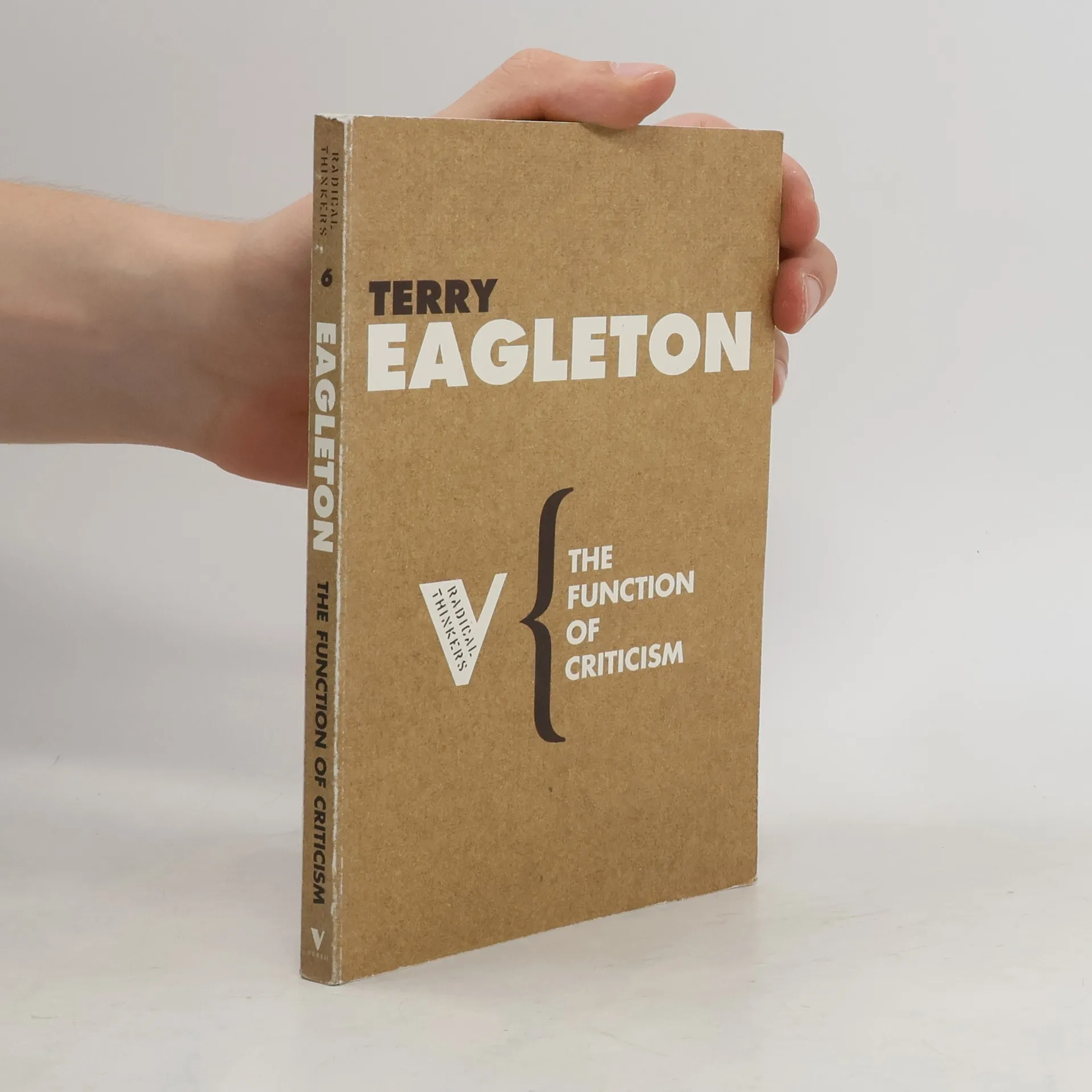
A history and critique of the last 200 years of cultural criticism, from Addison and Steele to Barthes and Derrida.This wide-ranging book argues that criticism emerged in early bourgeois society as a central feature of a “public sphere” in which political, ethical, and literary judgements could mingle under the benign rule of reason. The disintegration of this fragile culture brought on a crisis in criticism, whose history since the 18th century has been fraught with ambivalence and anxiety.Eagleton’s account embraces Addison and Steele, Johnson and the 19-century reviewers, such critics as Arnold and Stephen, the heyday of Scrutiny and New Criticism, and finally the proliferation of avant-garde literary theories such as deconstructionism. The Function of Criticism is nothing less than a history and critique of the “critical institution” itself. Eagleton’s judgements on individual critics are sharp and illuminating, which his general argument raises crucial questions about the relations between language, literature and politics.
Nákup knihy
The Function of Criticism, Terry Eagleton
- Jazyk

- Rok vydání
- 2005
- Vazba
- (měkká)
Doručení
Platební metody
Tady nám chybí tvá recenze.
- Titul
- The Function of Criticism
- Jazyk
- anglicky
- Autoři
- Terry Eagleton
- Vydavatel
- Verso Books
- Rok vydání
- 2005
- Vazba
- měkká
- Počet stran
- 136
- ISBN10
- 1844670554
- ISBN13
- 9781844670550
- Série
- Kategorie
- Hodnocení
- 3,7 z 5
- Anotace
- A history and critique of the last 200 years of cultural criticism, from Addison and Steele to Barthes and Derrida.This wide-ranging book argues that criticism emerged in early bourgeois society as a central feature of a “public sphere” in which political, ethical, and literary judgements could mingle under the benign rule of reason. The disintegration of this fragile culture brought on a crisis in criticism, whose history since the 18th century has been fraught with ambivalence and anxiety.Eagleton’s account embraces Addison and Steele, Johnson and the 19-century reviewers, such critics as Arnold and Stephen, the heyday of Scrutiny and New Criticism, and finally the proliferation of avant-garde literary theories such as deconstructionism. The Function of Criticism is nothing less than a history and critique of the “critical institution” itself. Eagleton’s judgements on individual critics are sharp and illuminating, which his general argument raises crucial questions about the relations between language, literature and politics.