



Více o knize
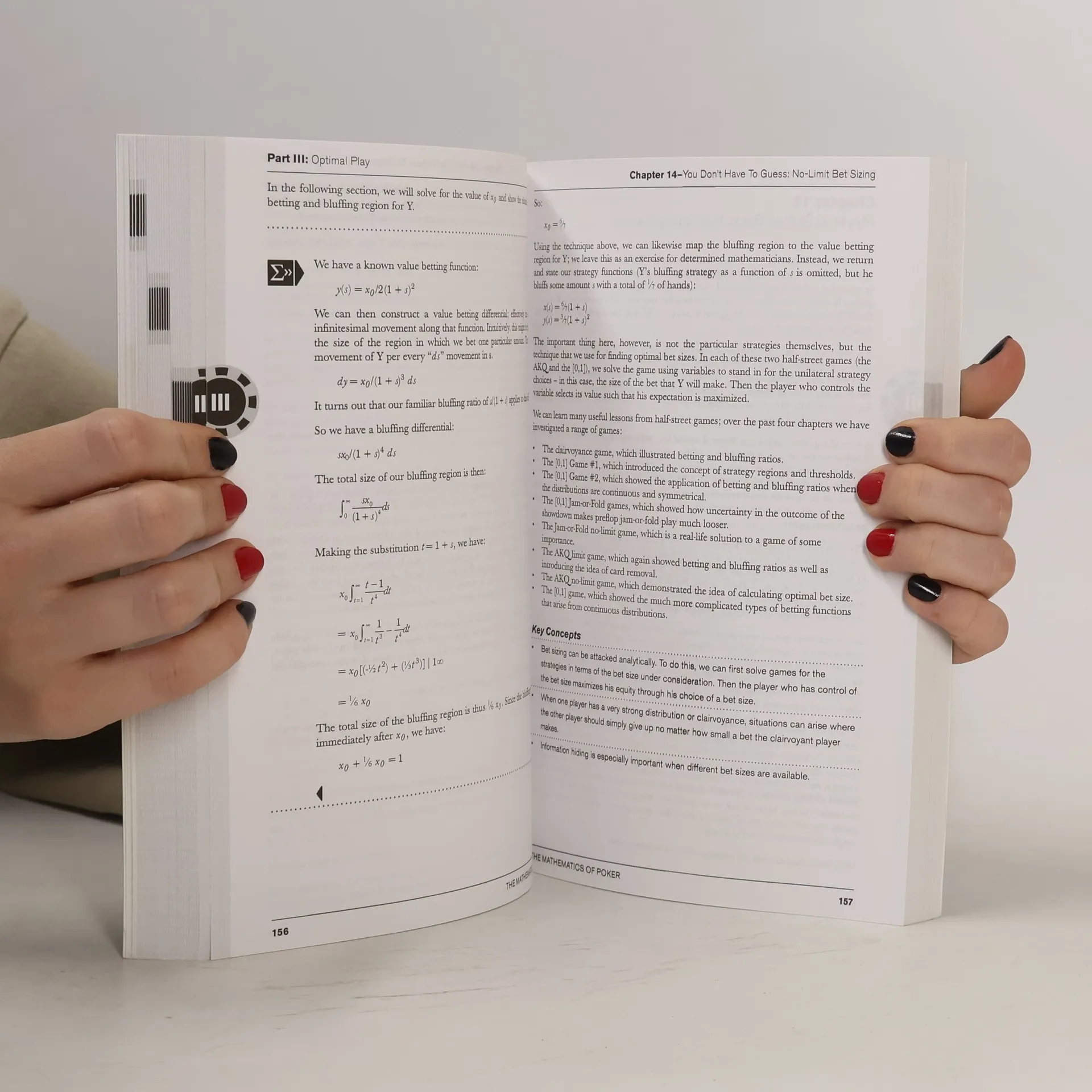
Thirty years ago the bond and option markets were dominated by traders who had learned their craft by experience. By the mid-1990s the old school grizzled traders had been replaced by a new breed of quantitative analysts, applying mathematics to the "art" of trading and making of it a science. A similar phenomenon is happening in poker. The grizzled "road gamblers" are being replaced by a new generation of players who have challenged many of the assumptions that underlie traditional approaches to the game. One of the most important features of this new approach is a reliance on quantitative analysis and the application of mathematics to the game. This book provides an introduction to quantitative techniques as applied to poker and to a branch of mathematics that is particularly applicable to poker, game theory, in a manner that makes seemingly difficult topics accessible to players without a strong mathematical background.
Nákup knihy
The mathematics of poker, Bill Chen, Jerrod Ankenman
- Jazyk

- Rok vydání
- 2006
- Vazba
- (měkká)
Doručení
Platební metody
Tady nám chybí tvá recenze.
- Titul
- The mathematics of poker
- Jazyk
- anglicky
- Autoři
- Bill Chen, Jerrod Ankenman
- Vydavatel
- ConJelCo, LLC
- Rok vydání
- 2006
- Vazba
- měkká
- Počet stran
- 382
- ISBN10
- 1886070253
- ISBN13
- 9781886070257
- Série
- Hodnocení
- 4,05 z 5
- Anotace
- Thirty years ago the bond and option markets were dominated by traders who had learned their craft by experience. By the mid-1990s the old school grizzled traders had been replaced by a new breed of quantitative analysts, applying mathematics to the "art" of trading and making of it a science. A similar phenomenon is happening in poker. The grizzled "road gamblers" are being replaced by a new generation of players who have challenged many of the assumptions that underlie traditional approaches to the game. One of the most important features of this new approach is a reliance on quantitative analysis and the application of mathematics to the game. This book provides an introduction to quantitative techniques as applied to poker and to a branch of mathematics that is particularly applicable to poker, game theory, in a manner that makes seemingly difficult topics accessible to players without a strong mathematical background.