



Více o knize
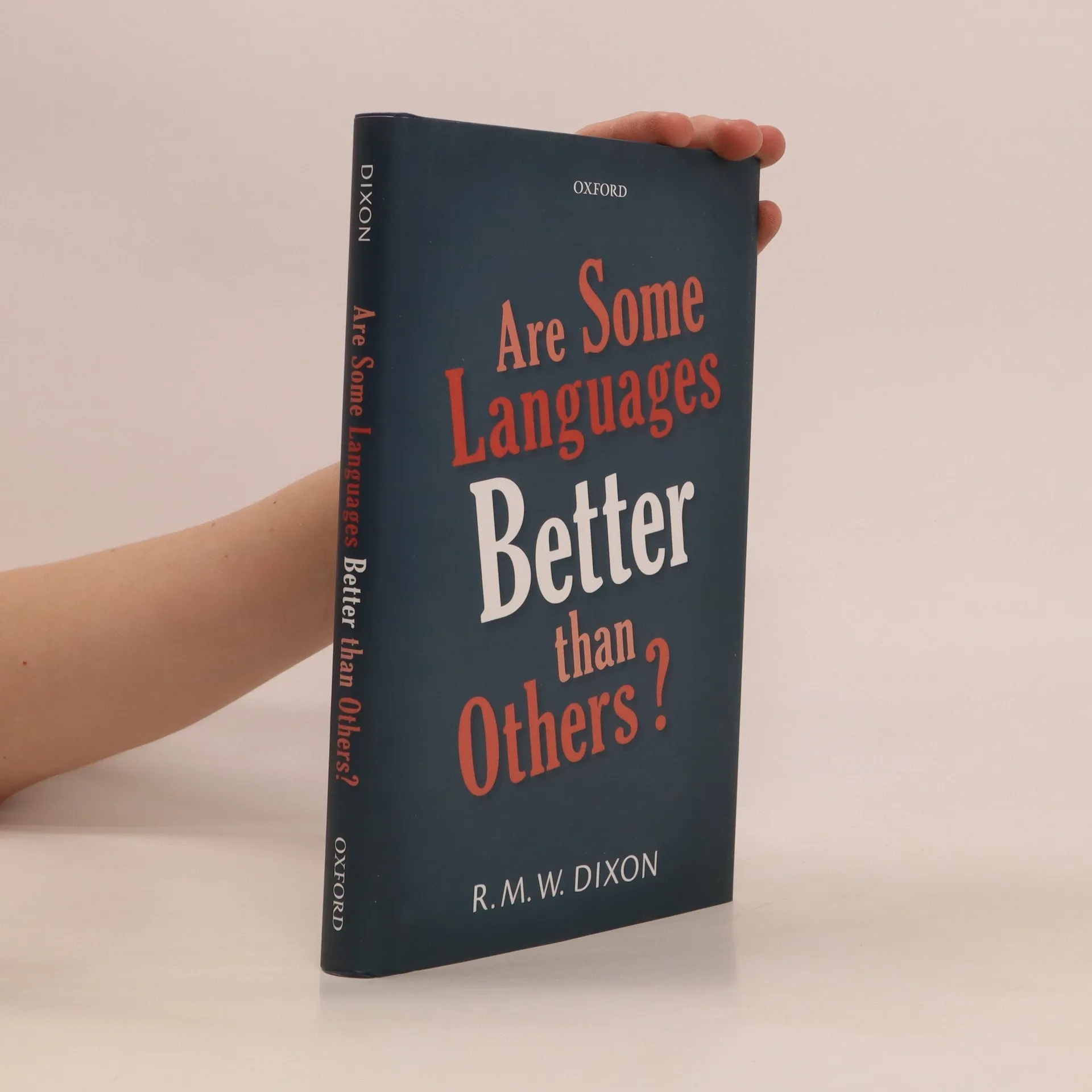
This book sets out to answer a question that many linguists have been hesitant to are some languages better than others? Can we say, for instance, that because German has three genders and French only two, German is a better language in this respect? Jarawara, spoken in the Amazonian jungle, has two ways of showing one for a part (e.g. 'Father's foot') and the other for something which is owned and can be given away or sold (e.g. 'Father's knife'); is it thus a better language, in this respect, than English, which marks all possession in the same way?R. M. W. Dixon begins by outlining what he feels are the essential components of any language, such as the ability to pose questions, command actions, and provide statements. He then discusses desirable features including gender agreement, tenses, and articles, before concluding with his view of what the ideal language would look like - and an explanation of why it does not and probably never will exist. Written in the author's usual accessible and engaging style, and full of personal anecdotes and unusual linguistic phenomena, the book will be of interest to all general language enthusiasts as well as to a linguistics student audience, and particularly to anyone with an interest in linguistic typology.
Nákup knihy
Are some languages better than others?, R. M. W. Dixon
- Jazyk

- Rok vydání
- 2016
- Vazba
- (pevná)
Doručení
Platební metody
Tady nám chybí tvá recenze.
- Titul
- Are some languages better than others?
- Jazyk
- anglicky
- Autoři
- R. M. W. Dixon
- Vydavatel
- Oxford University Press
- Rok vydání
- 2016
- Vazba
- pevná
- Počet stran
- 208
- ISBN10
- 0198766815
- ISBN13
- 9780198766810
- Série
- Štítky
- Lingvistika
- Hodnocení
- 3,75 z 5
- Anotace
- This book sets out to answer a question that many linguists have been hesitant to are some languages better than others? Can we say, for instance, that because German has three genders and French only two, German is a better language in this respect? Jarawara, spoken in the Amazonian jungle, has two ways of showing one for a part (e.g. 'Father's foot') and the other for something which is owned and can be given away or sold (e.g. 'Father's knife'); is it thus a better language, in this respect, than English, which marks all possession in the same way?R. M. W. Dixon begins by outlining what he feels are the essential components of any language, such as the ability to pose questions, command actions, and provide statements. He then discusses desirable features including gender agreement, tenses, and articles, before concluding with his view of what the ideal language would look like - and an explanation of why it does not and probably never will exist. Written in the author's usual accessible and engaging style, and full of personal anecdotes and unusual linguistic phenomena, the book will be of interest to all general language enthusiasts as well as to a linguistics student audience, and particularly to anyone with an interest in linguistic typology.