

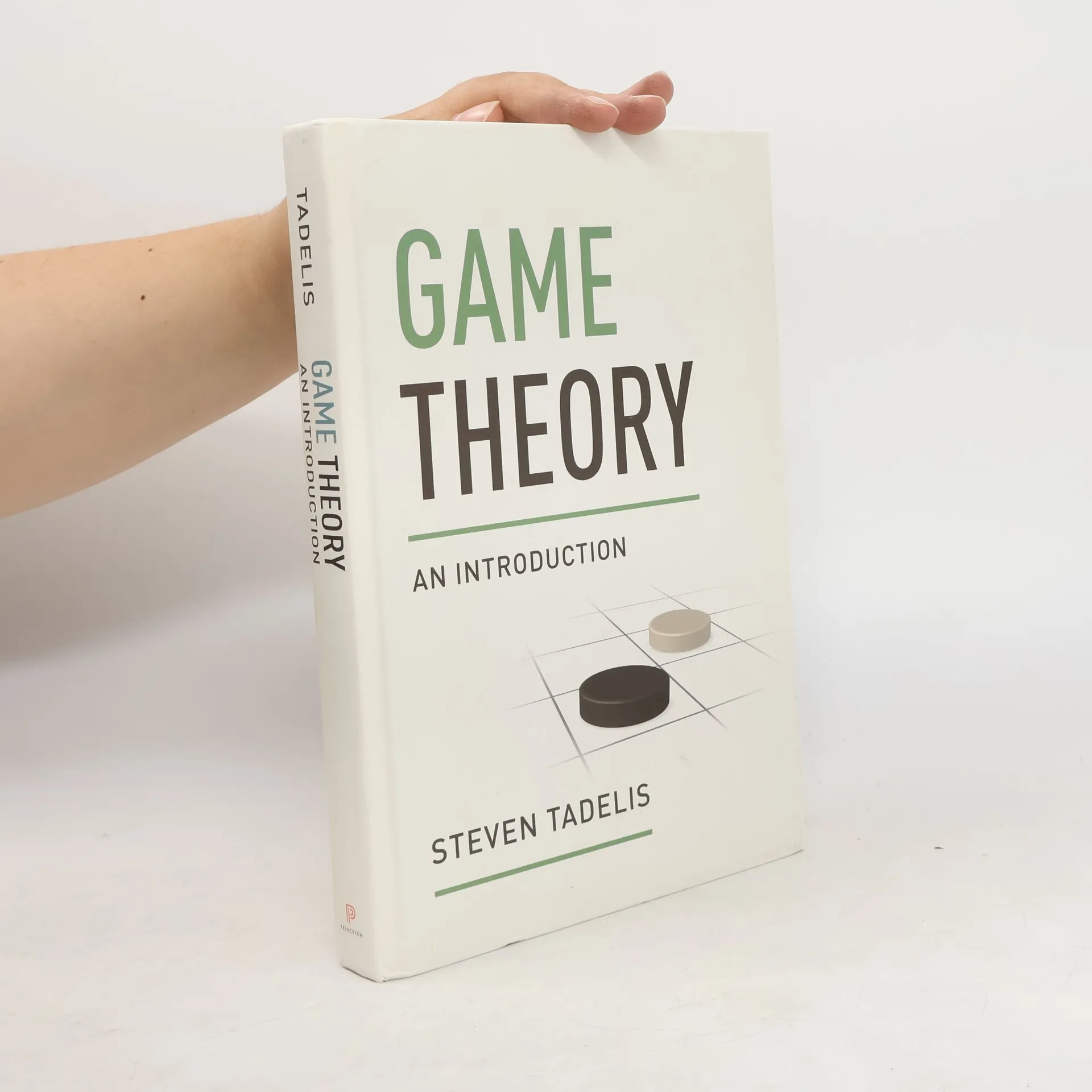


Game theory. An introduction
Autoři
Více o knize
This comprehensive textbook introduces the principal ideas and applications of game theory, blending rigor with accessibility. It begins with a concise overview of rational decision-making before delving into strategic and extensive form games with complete information, Bayesian games, and those with imperfect information. Key topics include multistage and repeated games, bargaining theory, auctions, rent-seeking games, mechanism design, signaling games, reputation building, and information transmission. Unlike other texts, it starts with rationality and its implications for multiperson decision problems, exploring concepts like dominated strategies and rationalizability before presenting Nash equilibrium and its derivatives. The book is ideal for advanced undergraduate and beginning graduate students, using real-world examples to clarify concepts and methods. It features significant applications in economics and political science, along with numerous exercises that help formalize and analyze informal situations. Covering both static and dynamic games with complete and incomplete information, it includes a variety of examples and exercises. Complete solutions are available for teachers, with selected solutions for students.
Nákup knihy
Game theory. An introduction, Steve Tadelis
- Jazyk

- Rok vydání
- 2013
- Vazba
- (pevná)
Doručení
Platební metody
Nikdo zatím neohodnotil.
- Titul
- Game theory. An introduction
- Jazyk
- anglicky
- Autoři
- Steve Tadelis
- Vydavatel
- Princeton University Press
- Rok vydání
- 2013
- Vazba
- pevná
- Počet stran
- 422
- ISBN10
- 0691129088
- ISBN13
- 9780691129082
- Série
- Kategorie
- Štítky
- Ostatní učebnice
- Anotace
- This comprehensive textbook introduces the principal ideas and applications of game theory, blending rigor with accessibility. It begins with a concise overview of rational decision-making before delving into strategic and extensive form games with complete information, Bayesian games, and those with imperfect information. Key topics include multistage and repeated games, bargaining theory, auctions, rent-seeking games, mechanism design, signaling games, reputation building, and information transmission. Unlike other texts, it starts with rationality and its implications for multiperson decision problems, exploring concepts like dominated strategies and rationalizability before presenting Nash equilibrium and its derivatives. The book is ideal for advanced undergraduate and beginning graduate students, using real-world examples to clarify concepts and methods. It features significant applications in economics and political science, along with numerous exercises that help formalize and analyze informal situations. Covering both static and dynamic games with complete and incomplete information, it includes a variety of examples and exercises. Complete solutions are available for teachers, with selected solutions for students.