

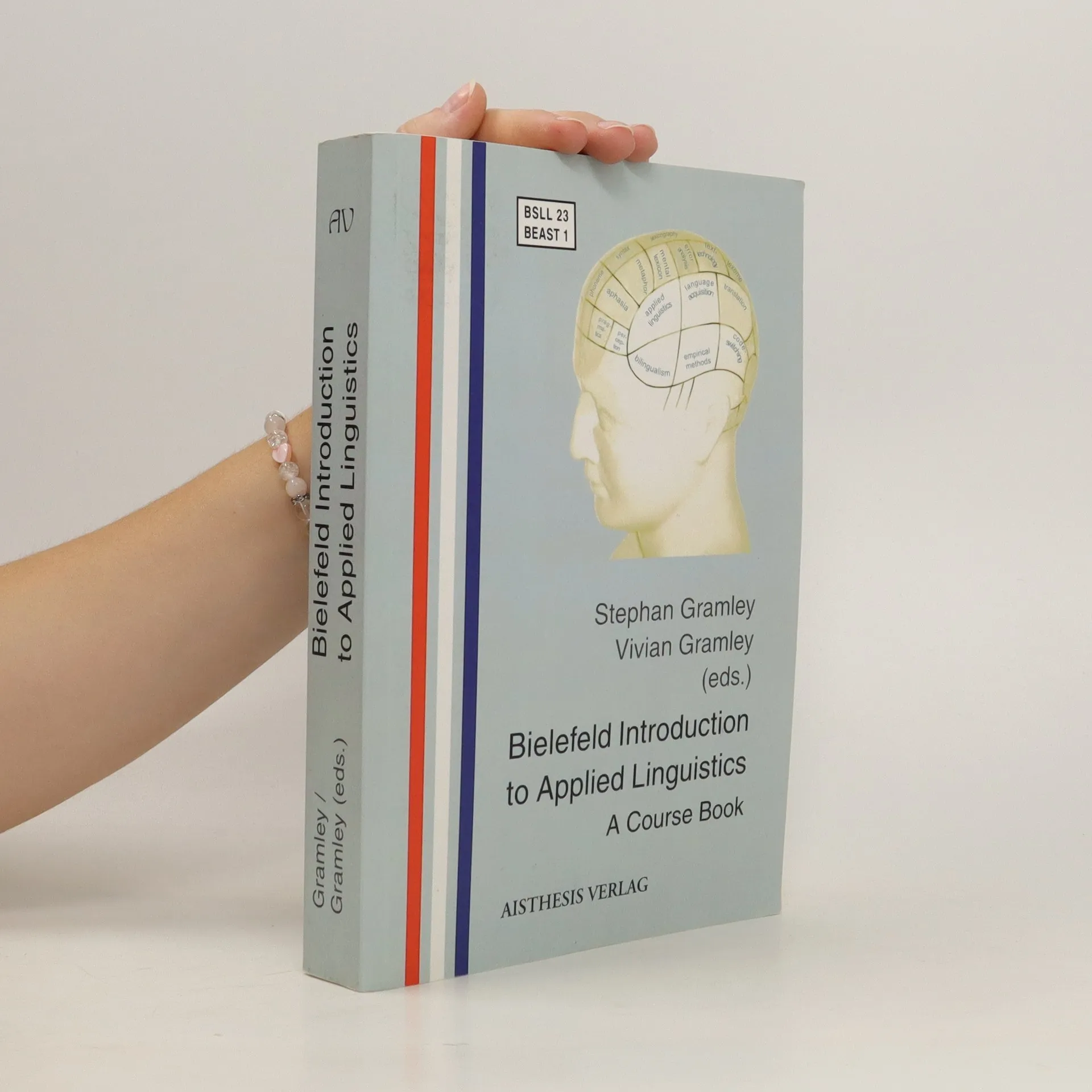


Bielefeld Introduction to Applied Linguistics
Autoři
Více o knize
The Bielefeld Introduction to Applied Linguistics is designed to provide a wide-ranging and substantial overview of the field for beginning students. It comprises twenty-seven well-documented contributions based on some of the most salient topics in research and teaching done at the Department of Linguistics and Literature at Bielefeld University. In four major sections this book looks at questions involving the user/learner (teaching/learning aids; learning processes and methods of gauging them); mental processes (language acquisition and loss); studies involving the linguistic code (metaphor, translation, empirical methods, approaches to texts); and the language community (bilingualism and code-switching, language policy, pragmatics, speaker groups and their languages). Each contribution offers – on sometimes varying levels of detail – a starting point for the young student and provides a useful selection of literature for further reading. Many of the chapters include a selection of do-able exercises based on the material presented.
Nákup knihy
Bielefeld Introduction to Applied Linguistics, Stephan Gramley
- Jazyk

- Rok vydání
- 2008
- Vazba
- (měkká)
Doručení
Platební metody
Nikdo zatím neohodnotil.
- Titul
- Bielefeld Introduction to Applied Linguistics
- Jazyk
- anglicky
- Autoři
- Stephan Gramley
- Rok vydání
- 2008
- Vazba
- měkká
- Počet stran
- 392
- ISBN10
- 3895287067
- ISBN13
- 9783895287060
- Série
- Kategorie
- Anotace
- The Bielefeld Introduction to Applied Linguistics is designed to provide a wide-ranging and substantial overview of the field for beginning students. It comprises twenty-seven well-documented contributions based on some of the most salient topics in research and teaching done at the Department of Linguistics and Literature at Bielefeld University. In four major sections this book looks at questions involving the user/learner (teaching/learning aids; learning processes and methods of gauging them); mental processes (language acquisition and loss); studies involving the linguistic code (metaphor, translation, empirical methods, approaches to texts); and the language community (bilingualism and code-switching, language policy, pragmatics, speaker groups and their languages). Each contribution offers – on sometimes varying levels of detail – a starting point for the young student and provides a useful selection of literature for further reading. Many of the chapters include a selection of do-able exercises based on the material presented.