

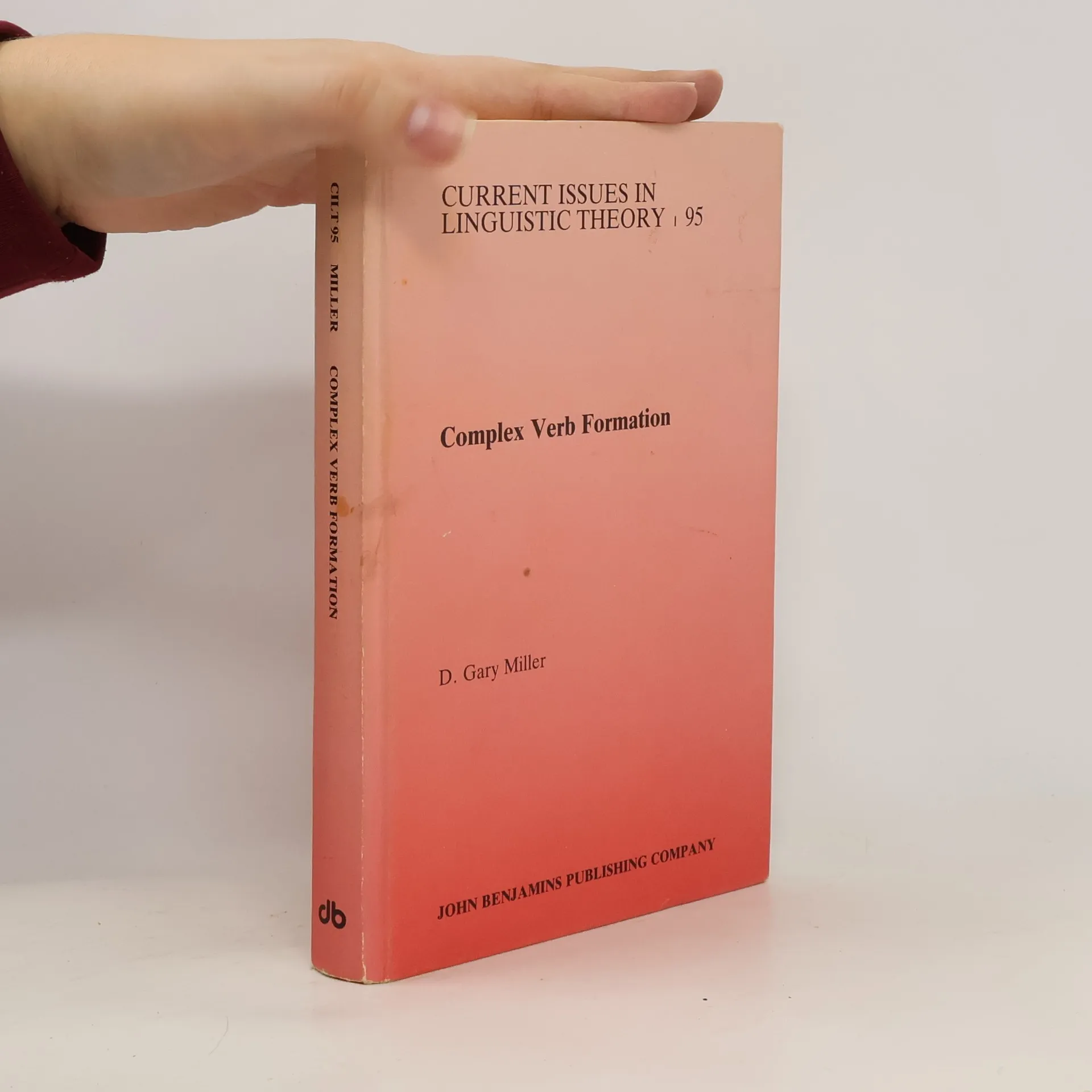
Complex verb formation
Autoři
Více o knize
This investigation of complex verb formation seeks to identify and clarify the way(s) in which a base verb becomes 'complex'. The author carefully considers both the syntactic and the morphological side of this question, and in doing so brings a wealth of data from very diverse languages to bear on claims made about the relationship between syntactic and morphological structure. The work takes the radical position that most data admit of either a syntactic (Phrase Structure) or lexical analysis because both are likely to be valid -- under different circumstances. Both approaches are consistently defended in an attempt to illustrate the complementarity of the two and ascertain which is the better formulation for a given set of data. Placing his analysis firmly in the context of historical linguistics, the author shows that it is necessary to admit the possibility of lexicalization. The book pays attention to many alternative viewpoints, and its value is further enhanced by a 40-page bibliography. Miller's insightful treatment of questions of lexical decomposition, the relationship of morphology to syntax, and the encoding of argument structure on verbs make this a work of the utmost importance for syntacticians as well as morphologists.
Nákup knihy
Complex verb formation, D. Gary Miller
- Jazyk

- Rok vydání
- 1993
- Vazba
- (pevná)
Doručení
Platební metody
Nikdo zatím neohodnotil.
- Titul
- Complex verb formation
- Jazyk
- anglicky
- Autoři
- D. Gary Miller
- Vydavatel
- J. Benjamins Pub. Co.,
- Rok vydání
- 1993
- Vazba
- pevná
- Počet stran
- 401
- ISBN10
- 9027235953
- ISBN13
- 9789027235954
- Série
- Kategorie
- Anotace
- This investigation of complex verb formation seeks to identify and clarify the way(s) in which a base verb becomes 'complex'. The author carefully considers both the syntactic and the morphological side of this question, and in doing so brings a wealth of data from very diverse languages to bear on claims made about the relationship between syntactic and morphological structure. The work takes the radical position that most data admit of either a syntactic (Phrase Structure) or lexical analysis because both are likely to be valid -- under different circumstances. Both approaches are consistently defended in an attempt to illustrate the complementarity of the two and ascertain which is the better formulation for a given set of data. Placing his analysis firmly in the context of historical linguistics, the author shows that it is necessary to admit the possibility of lexicalization. The book pays attention to many alternative viewpoints, and its value is further enhanced by a 40-page bibliography. Miller's insightful treatment of questions of lexical decomposition, the relationship of morphology to syntax, and the encoding of argument structure on verbs make this a work of the utmost importance for syntacticians as well as morphologists.