

Více o knize
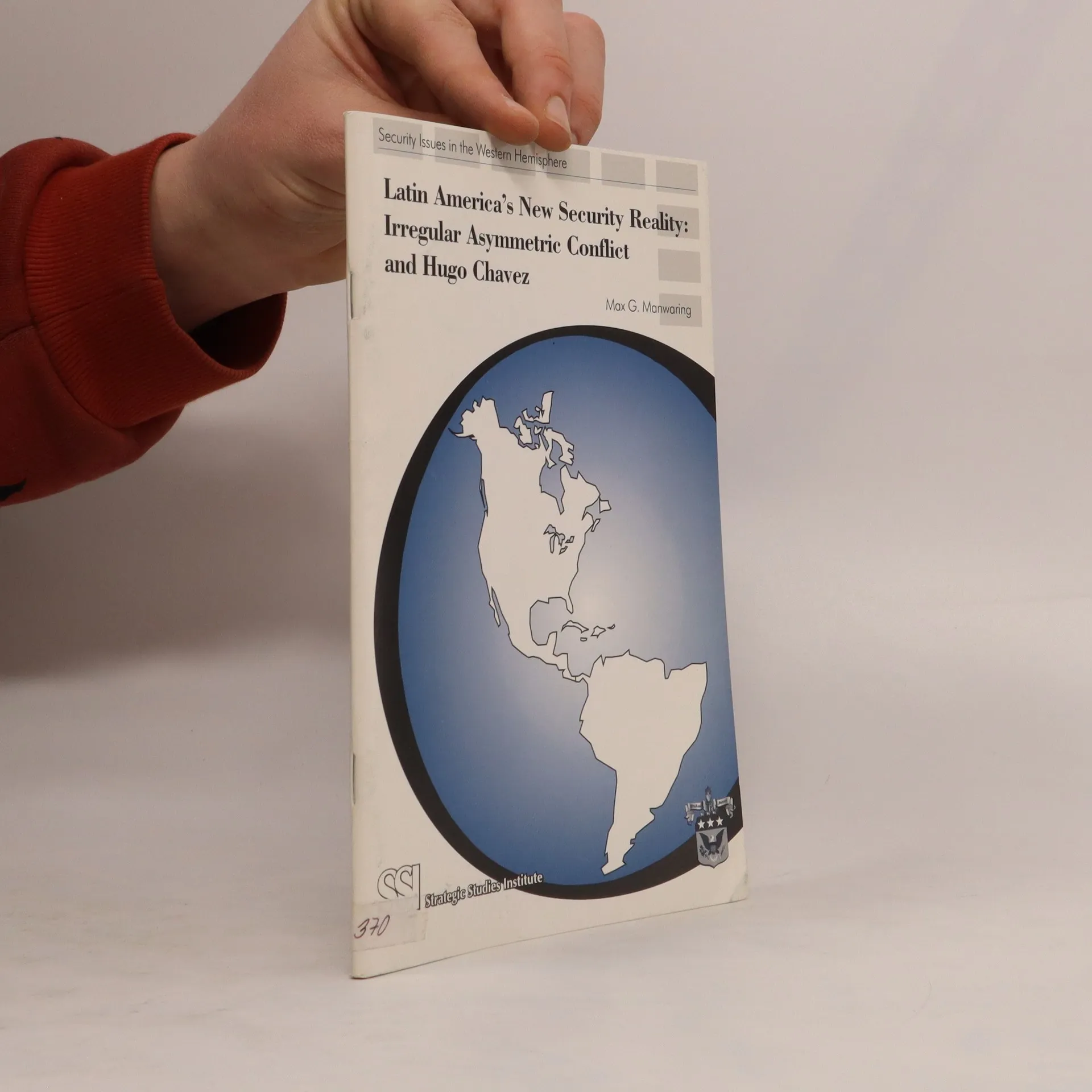
In 2005, Dr. Manwaring authored a monograph addressing the escalating tensions between the United States and Venezuela, particularly focusing on President Hugo Chavez's centralization of power and his vision for a Bolivarian movement aimed at resisting U.S. influence in Latin America. While many North Americans dismiss Chavez as a fringe figure, Dr. Manwaring argues that his threat is both real and immediate, manifesting as a calculated struggle for power that is infiltrating the political landscape of the Western Hemisphere. He outlines how Chavez is galvanizing support for a confrontational, populist, and nationalistic agenda that seeks to radically transform traditional politics in Venezuela and beyond into a form of "direct" democracy. This involves undermining U.S. dominance in the region through an unconventional Fourth-Generation War strategy and systematically establishing a new Bolivarian state via a phased liberation program across Latin America. Dr. Manwaring's analysis provides a deeper understanding of Chavez's ambitions and the implications for regional stability, emphasizing the need for a serious reevaluation of the situation rather than viewing it as a distant concern.
Nákup knihy
Latin America's New Security Reality. Irregular Asymetric Conflict and Hugo Chavez, Max G. Manwaring
- Jazyk

- Rok vydání
- 2007
- Vazba
- (sešitová)
Nikdo zatím neohodnotil.
- Titul
- Latin America's New Security Reality. Irregular Asymetric Conflict and Hugo Chavez
- Jazyk
- anglicky
- Autoři
- Max G. Manwaring
- Rok vydání
- 2007
- Vazba
- sešitová
- Počet stran
- 62
- ISBN10
- 1584873035
- ISBN13
- 9781584873037
- Série
- Štítky
- Anotace
- In 2005, Dr. Manwaring authored a monograph addressing the escalating tensions between the United States and Venezuela, particularly focusing on President Hugo Chavez's centralization of power and his vision for a Bolivarian movement aimed at resisting U.S. influence in Latin America. While many North Americans dismiss Chavez as a fringe figure, Dr. Manwaring argues that his threat is both real and immediate, manifesting as a calculated struggle for power that is infiltrating the political landscape of the Western Hemisphere. He outlines how Chavez is galvanizing support for a confrontational, populist, and nationalistic agenda that seeks to radically transform traditional politics in Venezuela and beyond into a form of "direct" democracy. This involves undermining U.S. dominance in the region through an unconventional Fourth-Generation War strategy and systematically establishing a new Bolivarian state via a phased liberation program across Latin America. Dr. Manwaring's analysis provides a deeper understanding of Chavez's ambitions and the implications for regional stability, emphasizing the need for a serious reevaluation of the situation rather than viewing it as a distant concern.