

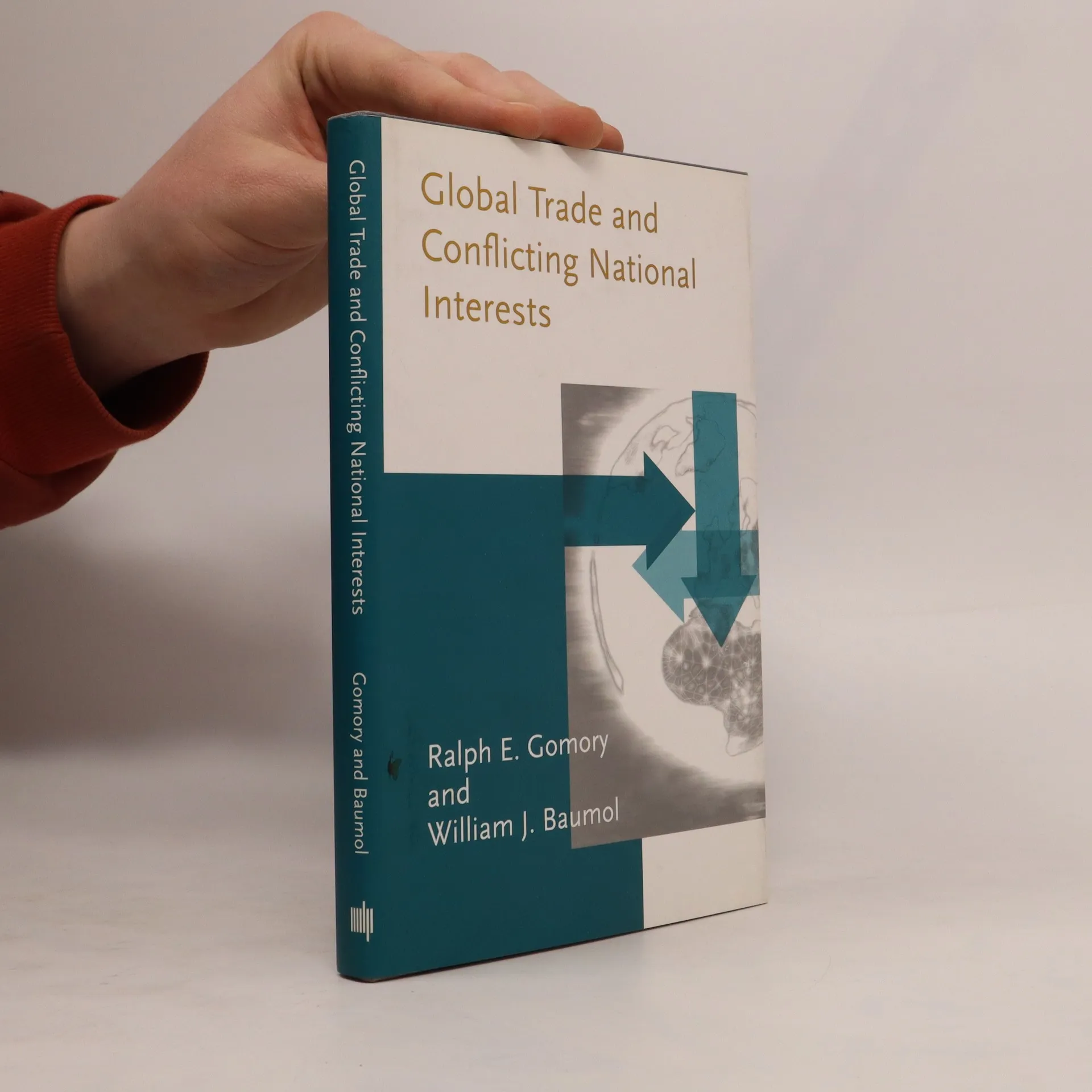


Global trade and conflicting national interests
Hodnocení knihy
Více o knize
In this book Ralph Gomory and William Baumol adapt classical trade models to the modern world economy. Trade today is dominated by manufactured goods, rapidly moving technology, and huge firms that benefit from economies of scale. This is very different from the largely agricultural world in which the classical theories originated. Gomory and Baumol show that the new and significant conflicts resulting from international trade are inherent in modern economies. Today improvement in one country's productive capabilities is often attainable only at the expense of another country's general welfare. The authors describe why and when this is so and why, in a modern free-trade environment, a country might have a vital stake in the competitive strength of its industries.
Nákup knihy
Global trade and conflicting national interests, William J. Baumol, Ralph E Gomory
- Jazyk

- Rok vydání
- 2000
- Vazba
- (pevná)
Doručení
Platební metody
Tady nám chybí tvá recenze.
- Titul
- Global trade and conflicting national interests
- Jazyk
- anglicky
- Autoři
- William J. Baumol, Ralph E Gomory
- Vydavatel
- MIT Press
- Rok vydání
- 2000
- Vazba
- pevná
- Počet stran
- 215
- ISBN10
- 0262072092
- ISBN13
- 9780262072090
- Série
- Štítky
- Byznys
- Hodnocení
- 4 z 5
- Anotace
- In this book Ralph Gomory and William Baumol adapt classical trade models to the modern world economy. Trade today is dominated by manufactured goods, rapidly moving technology, and huge firms that benefit from economies of scale. This is very different from the largely agricultural world in which the classical theories originated. Gomory and Baumol show that the new and significant conflicts resulting from international trade are inherent in modern economies. Today improvement in one country's productive capabilities is often attainable only at the expense of another country's general welfare. The authors describe why and when this is so and why, in a modern free-trade environment, a country might have a vital stake in the competitive strength of its industries.