



Více o knize
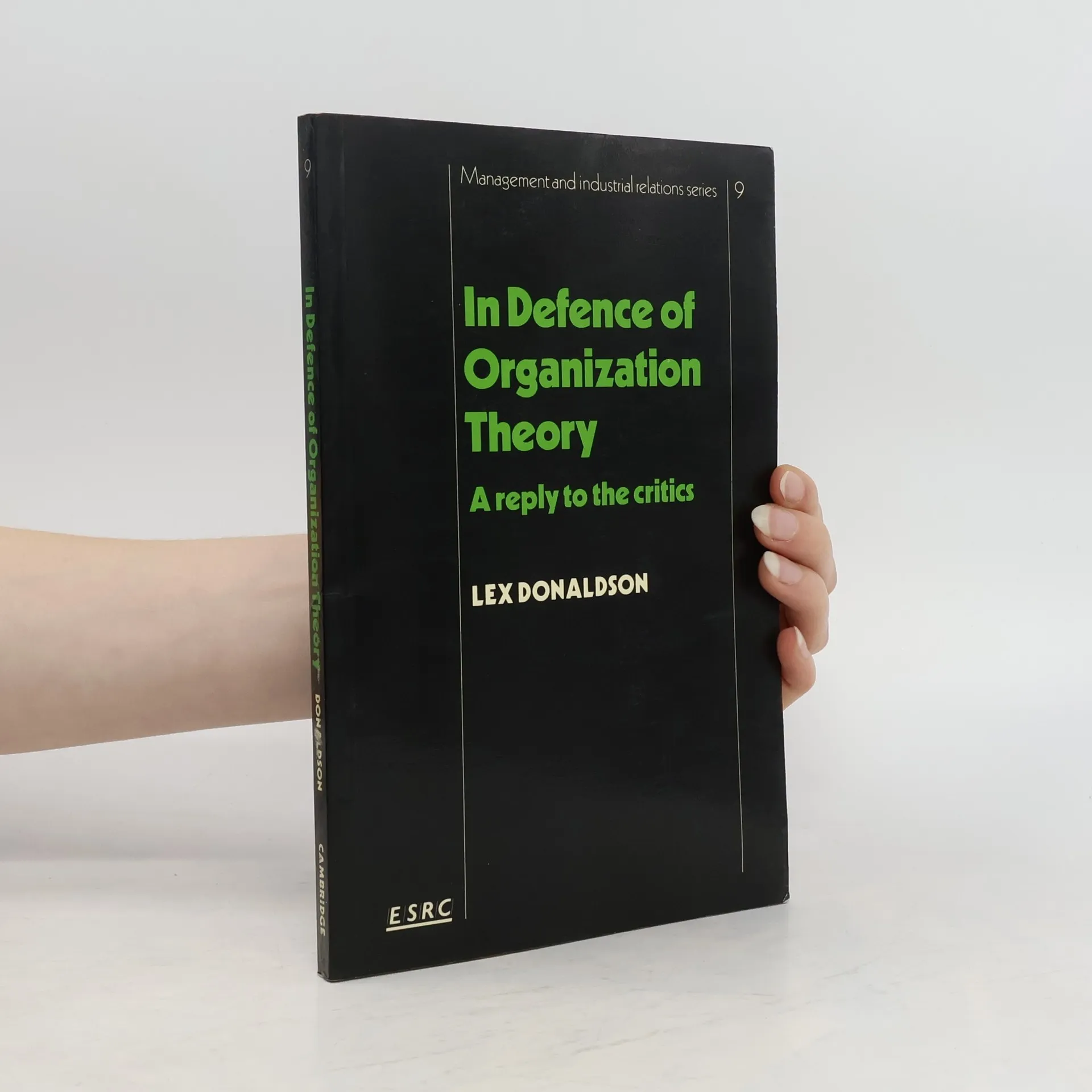
This book provides a concise, clear survey and defence of organizational theory. That theory and its associated research has in recent years become subject to strong criticism. Rival perspectives on organizations have been put forward. One of these stresses that organizations need to be understood as made up of individual people. Another asserts the need to see organizations as part of the conflicts and radical struggles in society. These alternative views have led to a host of critiques of conventional organization studies. It is attacked as being tautological, philosophically naive, ideological, and managerially biased. To date there has been no substantial reply to these criticisms by a protagonist of organization theory. This volume uniquely fills that gap. In part one the author examines and rebuts each of the major lines of criticism. In part two the rival approaches suggested by the critics are themselves subjected to an analysis of their limitations. The book concludes with a new model of organizational design which provides a synthesis of previous research.
Nákup knihy
In Defence of Organisation Theory, Lex Donaldson
- Jazyk

- Rok vydání
- 1985
- Vazba
- (měkká)
Nikdo zatím neohodnotil.
- Titul
- In Defence of Organisation Theory
- Podtitul
- A Reply to the Critics
- Jazyk
- anglicky
- Autoři
- Lex Donaldson
- Vydavatel
- CUP Archive
- Rok vydání
- 1985
- Vazba
- měkká
- Počet stran
- 206
- ISBN10
- 0521315395
- ISBN13
- 9780521315395
- Série
- Štítky
- Filosofická tématika
- Anotace
- This book provides a concise, clear survey and defence of organizational theory. That theory and its associated research has in recent years become subject to strong criticism. Rival perspectives on organizations have been put forward. One of these stresses that organizations need to be understood as made up of individual people. Another asserts the need to see organizations as part of the conflicts and radical struggles in society. These alternative views have led to a host of critiques of conventional organization studies. It is attacked as being tautological, philosophically naive, ideological, and managerially biased. To date there has been no substantial reply to these criticisms by a protagonist of organization theory. This volume uniquely fills that gap. In part one the author examines and rebuts each of the major lines of criticism. In part two the rival approaches suggested by the critics are themselves subjected to an analysis of their limitations. The book concludes with a new model of organizational design which provides a synthesis of previous research.