

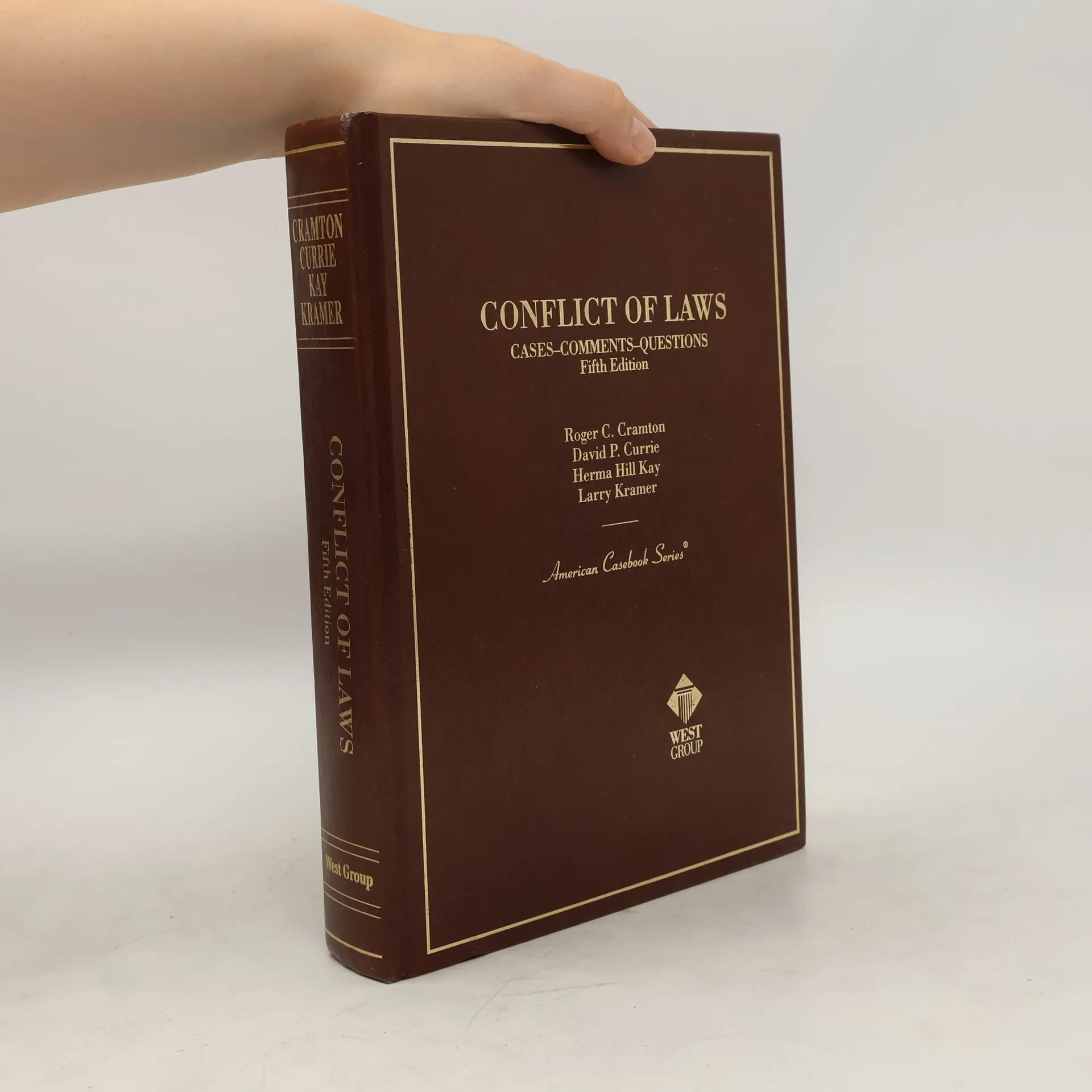
Conflict of Laws
Cases, Comments, Questions
Autoři
Více o knize
Part One of this casebook consists of the first three chapters, which present choice of law as both a policy and a constitutional problem. Chapter Two explores modern departures from the traditional approach. Substantively, the chapters focuses on party autonomy, the Second Restatement, interest analysis, and the "better law" approach. Chapter Three turns to the problems of constitutional limits of choice of law. Chapter four - eight examine other conflicts among lawmakers or law enforcers. Constitutional questions, for example, are the focus of Chapter Four, which deals with adjudicatory jurisdiction. Chapter five - six deals with recognition of judgement and selected problems in family law, respectively. Chapter seven turns to conflicts between state and federal law. Chapter eight exposes students to the core set needed to understand the place of conflict of laws analysis in international law.
Nákup knihy
Conflict of Laws, Roger C. Cramton
- Jazyk

- Rok vydání
- 1993
- Vazba
- (pevná)
Doručení
Platební metody
Nikdo zatím neohodnotil.
- Titul
- Conflict of Laws
- Podtitul
- Cases, Comments, Questions
- Jazyk
- anglicky
- Autoři
- Roger C. Cramton
- Vydavatel
- West Group
- Rok vydání
- 1993
- Vazba
- pevná
- Počet stran
- 743
- ISBN10
- 0314020152
- ISBN13
- 9780314020154
- Série
- Štítky
- Byznys, Právní tématika
- Anotace
- Part One of this casebook consists of the first three chapters, which present choice of law as both a policy and a constitutional problem. Chapter Two explores modern departures from the traditional approach. Substantively, the chapters focuses on party autonomy, the Second Restatement, interest analysis, and the "better law" approach. Chapter Three turns to the problems of constitutional limits of choice of law. Chapter four - eight examine other conflicts among lawmakers or law enforcers. Constitutional questions, for example, are the focus of Chapter Four, which deals with adjudicatory jurisdiction. Chapter five - six deals with recognition of judgement and selected problems in family law, respectively. Chapter seven turns to conflicts between state and federal law. Chapter eight exposes students to the core set needed to understand the place of conflict of laws analysis in international law.