


The First Strange Place
Race and Sex in World War II Hawaii
Autoři
Hodnocení knihy
Parametry
Více o knize
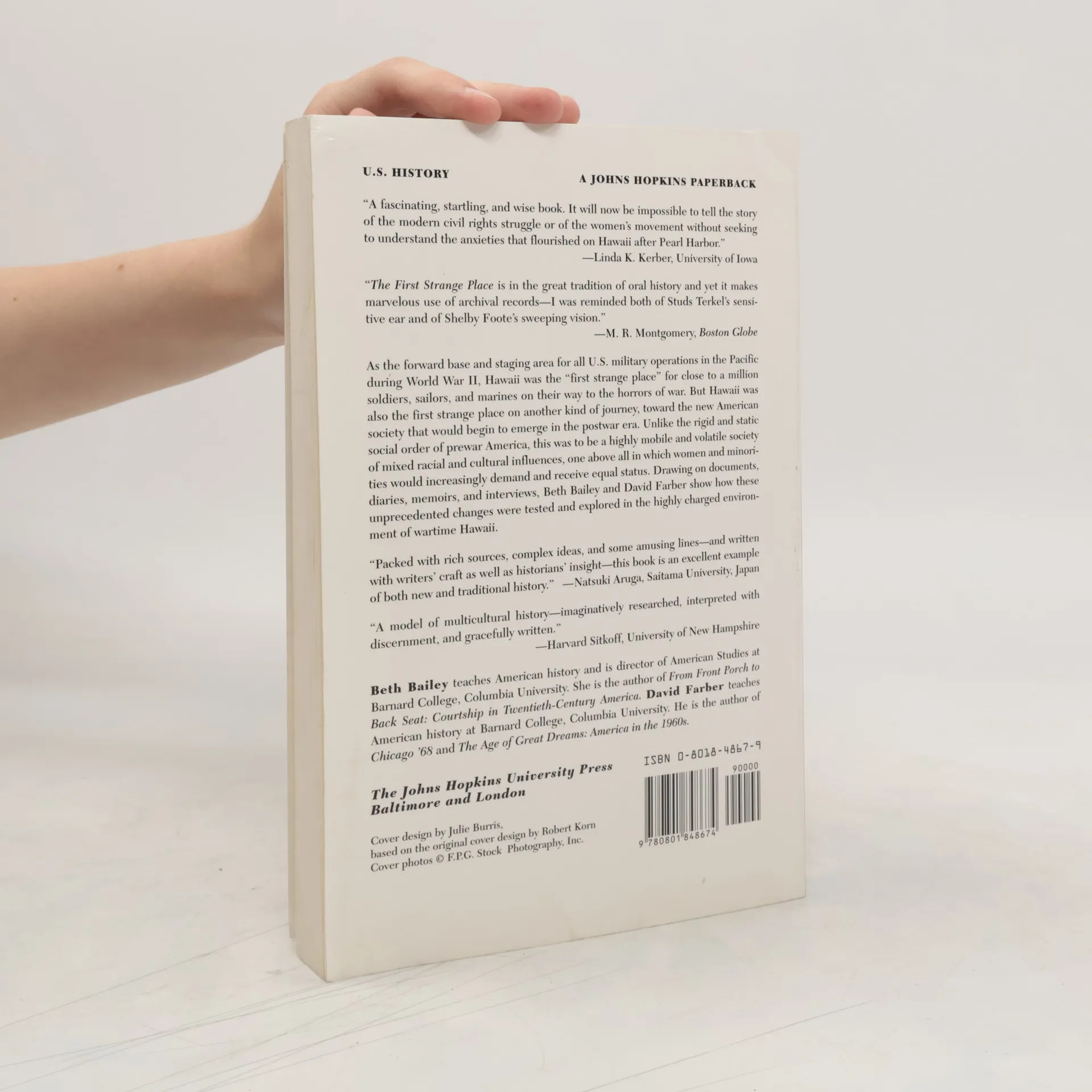
As the forward base and staging area for all US military operations in the Pacific during World War II, Hawaii was the "first strange place" for close to a million soldiers, sailors, and marines on their way to the horrors of war. But Hawaii was also the first strange place on another kind of journey, toward the new American society that would begin to emerge in the postwar era. Unlike the rigid and static social order of prewar America, this was to be a highly mobile and volatile society of mixed racial and cultural influences, one above all in which women and minorities would increasingly demand and receive equal status. Drawing on documents, diaries, memoirs, and interviews, Beth Bailey and David Farber show how these unprecedented changes were tested and explored in the highly charged environment of wartime Hawaii.
Nákup knihy
The First Strange Place, David Farber, Beth Bailey
- Jazyk

- Rok vydání
- 1994
- Vazba
- (měkká)
Doručení
Platební metody
Tady nám chybí tvá recenze.
- Titul
- The First Strange Place
- Podtitul
- Race and Sex in World War II Hawaii
- Jazyk
- anglicky
- Autoři
- David Farber, Beth Bailey
- Vydavatel
- JHU Press
- Rok vydání
- 1994
- Vazba
- měkká
- ISBN10
- 0801848679
- ISBN13
- 9780801848674
- Série
- Štítky
- Historické téma, Havajské ostrovy
- Hodnocení
- 3,8 z 5
- Anotace
- As the forward base and staging area for all US military operations in the Pacific during World War II, Hawaii was the "first strange place" for close to a million soldiers, sailors, and marines on their way to the horrors of war. But Hawaii was also the first strange place on another kind of journey, toward the new American society that would begin to emerge in the postwar era. Unlike the rigid and static social order of prewar America, this was to be a highly mobile and volatile society of mixed racial and cultural influences, one above all in which women and minorities would increasingly demand and receive equal status. Drawing on documents, diaries, memoirs, and interviews, Beth Bailey and David Farber show how these unprecedented changes were tested and explored in the highly charged environment of wartime Hawaii.