

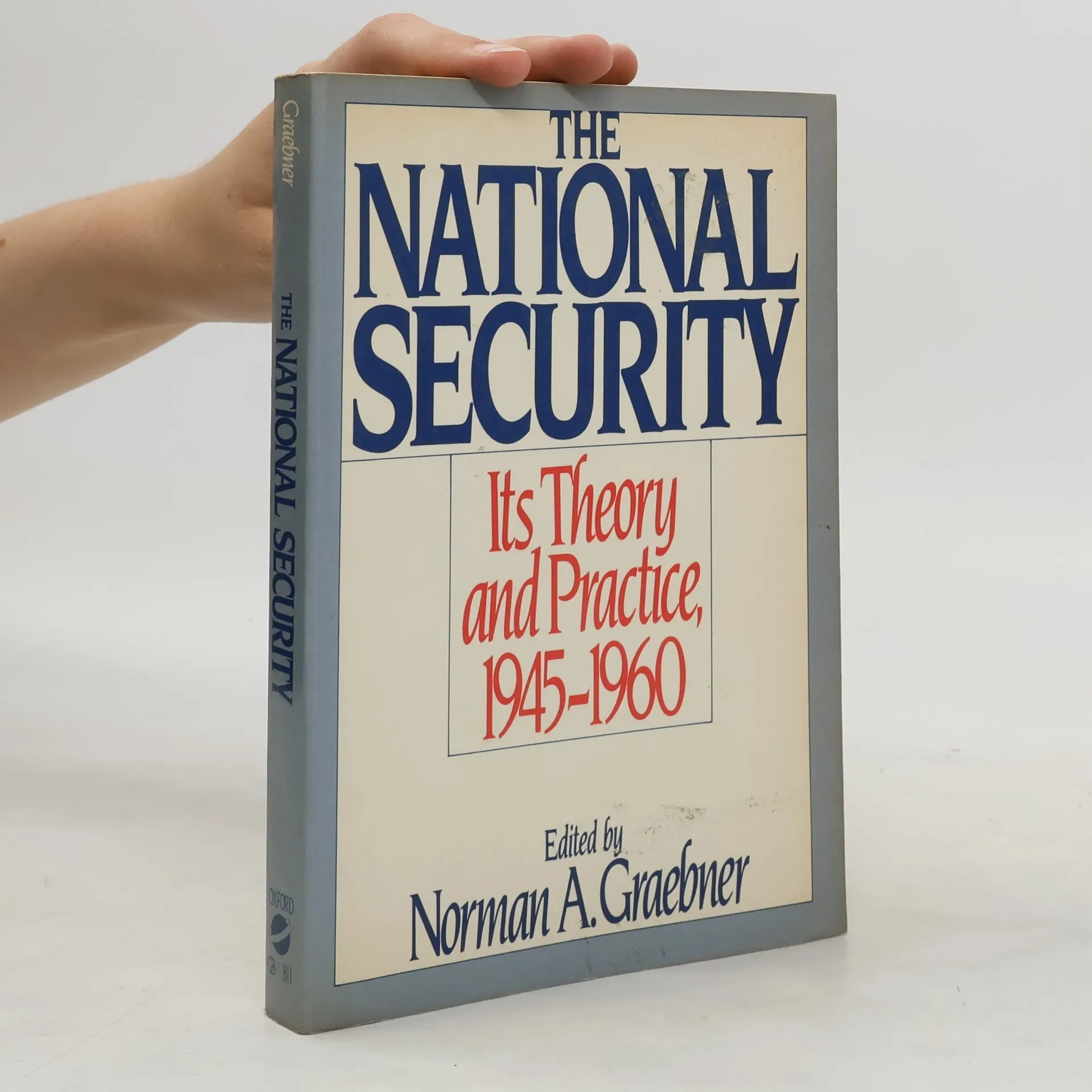


The National Security
Its Theory and Practice, 1945-1960
Autoři
Parametry
- 328 stránek
- 12 hodin čtení
Více o knize
Based on a conference at West Point, this volume explores the national security policies developed by the Truman and Eisenhower administrations in response to the threat of Soviet expansionism. More pointed and analytic than any other book on the subject, it shows clearly that the makers of Cold War policy were motivated by fear. It also examines the nature of U.S. security policy and points to the growing gap between the ends and the means of global security policy--the goal of protecting Western democracy from the "Red Menace" by using a nuclear strategy with limited applications. The contributors, including David Alan Rosenberg, Lloyd C. Gardner, Martin J. Sherwin, and Gary W. Reichard explore such issues as how dependence on nuclear weapons became the central doctrine of American foreign policy, the bureaucratic and political context of U.S. security, Eisenhower's ongoing disputes with Army and Navy leaders over the security issue, the objections of Democrats to theevolving security strategy, and the limits of Cold War policy, particularly how the viewing of the Third World through a U.S.-Soviet prism impeded us from developing a truly global security policy. Written in an accessible, journalistic style, The National Security makes available a wealth of information on the Cold War period and offers insights into fears that dominate political thinking to this day.
Nákup knihy
The National Security, Norman A. Graebner
- Jazyk

- Rok vydání
- 1986
- Vazba
- (měkká)
Doručení
Platební metody
Nikdo zatím neohodnotil.
- Titul
- The National Security
- Podtitul
- Its Theory and Practice, 1945-1960
- Jazyk
- anglicky
- Autoři
- Norman A. Graebner
- Vydavatel
- Oxford University Press
- Rok vydání
- 1986
- Vazba
- měkká
- Počet stran
- 328
- ISBN10
- 0195039874
- ISBN13
- 9780195039870
- Série
- Kategorie
- Anotace
- Based on a conference at West Point, this volume explores the national security policies developed by the Truman and Eisenhower administrations in response to the threat of Soviet expansionism. More pointed and analytic than any other book on the subject, it shows clearly that the makers of Cold War policy were motivated by fear. It also examines the nature of U.S. security policy and points to the growing gap between the ends and the means of global security policy--the goal of protecting Western democracy from the "Red Menace" by using a nuclear strategy with limited applications. The contributors, including David Alan Rosenberg, Lloyd C. Gardner, Martin J. Sherwin, and Gary W. Reichard explore such issues as how dependence on nuclear weapons became the central doctrine of American foreign policy, the bureaucratic and political context of U.S. security, Eisenhower's ongoing disputes with Army and Navy leaders over the security issue, the objections of Democrats to theevolving security strategy, and the limits of Cold War policy, particularly how the viewing of the Third World through a U.S.-Soviet prism impeded us from developing a truly global security policy. Written in an accessible, journalistic style, The National Security makes available a wealth of information on the Cold War period and offers insights into fears that dominate political thinking to this day.