

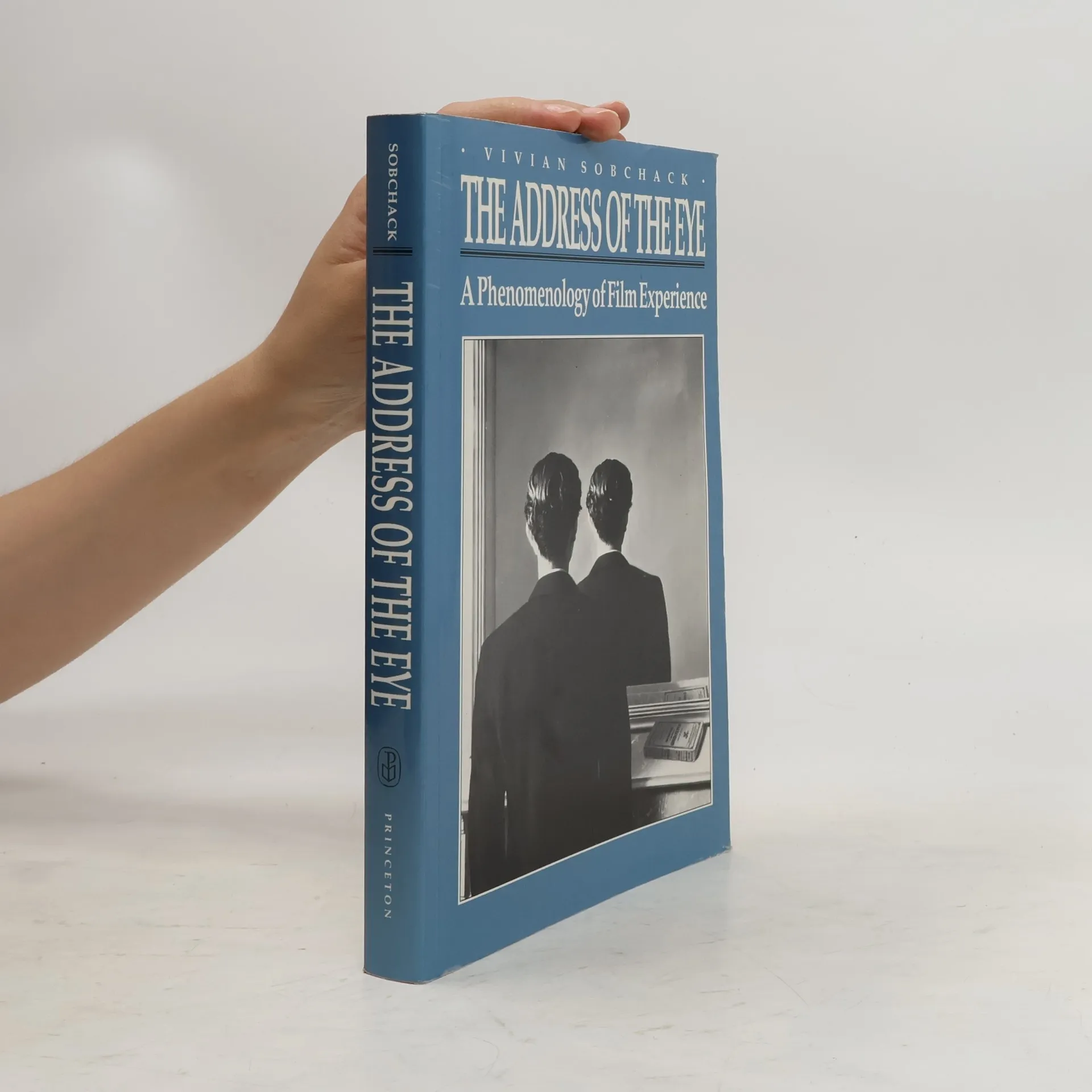
The Address of the Eye
A Phenomenology of Film Experience
Autoři
Hodnocení knihy
Více o knize
Cinema is a sensuous object, but in our presence it becomes also a sensing, sensual, sense-making subject. Thus argues Vivian Sobchack as she challenges basic assumptions of current film theory that reduce film to an object of vision and the spectator to a victim of a deterministic cinematic apparatus. Maintaining that these premises ignore the material and cultural-historical situations of both the spectator and the film, the author makes the radical proposal that the cinematic experience depends on two "viewers" viewing: the spectator and the film, each existing as both subject and object of vision. Drawing on existential and semiotic phenomenology, and particularly on the work of Merleau-Ponty, Sobchack shows how the film experience provides empirical insight into the reversible, dialectical, and signifying nature of that embodied vision we each live daily as both "mine" and "another's." In this attempt to account for cinematic intelligibility and signification, the author explores the possibility of human choice and expressive freedom within the bounds of history and culture.
Nákup knihy
The Address of the Eye, Vivian Sobchack
- Jazyk

- Rok vydání
- 1991
- Vazba
- (měkká)
Doručení
Platební metody
Tady nám chybí tvá recenze.
- Titul
- The Address of the Eye
- Podtitul
- A Phenomenology of Film Experience
- Jazyk
- anglicky
- Autoři
- Vivian Sobchack
- Vydavatel
- Princeton University Press
- Rok vydání
- 1991
- Vazba
- měkká
- Počet stran
- 354
- ISBN10
- 0691008744
- ISBN13
- 9780691008745
- Série
- Štítky
- Filmová tématika
- Hodnocení
- 3,95 z 5
- Anotace
- Cinema is a sensuous object, but in our presence it becomes also a sensing, sensual, sense-making subject. Thus argues Vivian Sobchack as she challenges basic assumptions of current film theory that reduce film to an object of vision and the spectator to a victim of a deterministic cinematic apparatus. Maintaining that these premises ignore the material and cultural-historical situations of both the spectator and the film, the author makes the radical proposal that the cinematic experience depends on two "viewers" viewing: the spectator and the film, each existing as both subject and object of vision. Drawing on existential and semiotic phenomenology, and particularly on the work of Merleau-Ponty, Sobchack shows how the film experience provides empirical insight into the reversible, dialectical, and signifying nature of that embodied vision we each live daily as both "mine" and "another's." In this attempt to account for cinematic intelligibility and signification, the author explores the possibility of human choice and expressive freedom within the bounds of history and culture.