

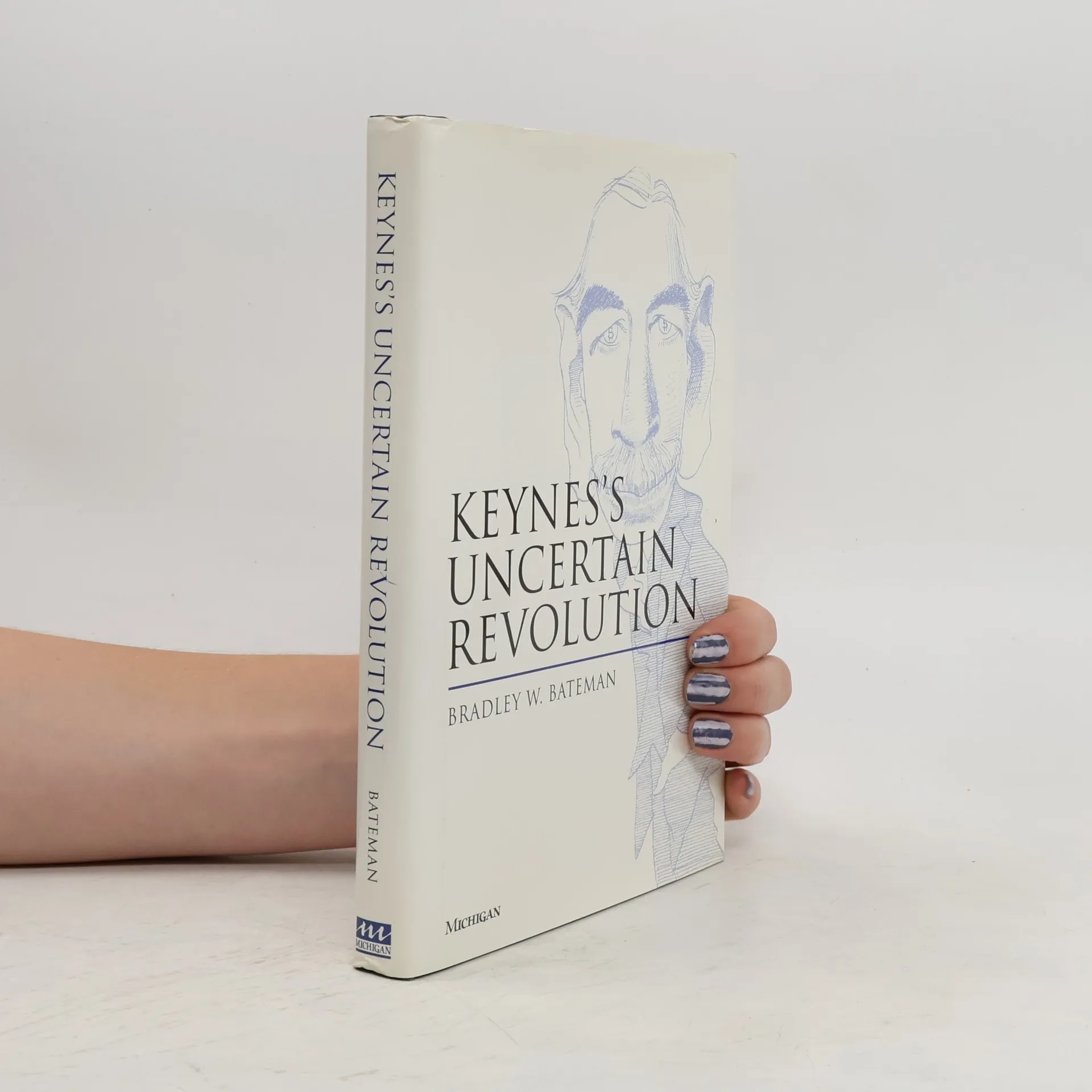


Keynes's Uncertain Revolution
Autoři
Více o knize
This book explores Maynard Keynes's engagement with probability and uncertainty, delving into the connections between his 1921 Treatise of Probability and the 1936 General Theory of Money, Interest and Employment. Bradley Bateman uniquely investigates the origins of Keynes's ideas, examining the historical context of his early philosophical work and his extensive policymaking during the Inter War period. He concludes that a straightforward link between the Treatise and the General Theory is elusive. Notably, while writing the General Theory, Keynes often argued against the significance of uncertainty in economic theory. Bateman reveals that Keynes's true interest in probability and uncertainty emerged from his understanding of contemporary financial markets and his policy debates regarding their regulation. This analysis will appeal to political historians, philosophers, historians of science, and economists, as Bateman highlights the diverse influences on Keynes's thought and emphasizes the necessity of contextualizing economic doctrine's evolution. Bradley Bateman serves as Associate Professor at Grinnell College, where he teaches writing and economics.
Nákup knihy
Keynes's Uncertain Revolution, Bradley W. Bateman
- Jazyk

- Rok vydání
- 1996
- Vazba
- (pevná)
Doručení
Platební metody
Nikdo zatím neohodnotil.
- Titul
- Keynes's Uncertain Revolution
- Jazyk
- anglicky
- Autoři
- Bradley W. Bateman
- Vydavatel
- University of Michigan Press
- Rok vydání
- 1996
- Vazba
- pevná
- Počet stran
- 183
- ISBN10
- 0472107089
- ISBN13
- 9780472107087
- Série
- Anotace
- This book explores Maynard Keynes's engagement with probability and uncertainty, delving into the connections between his 1921 Treatise of Probability and the 1936 General Theory of Money, Interest and Employment. Bradley Bateman uniquely investigates the origins of Keynes's ideas, examining the historical context of his early philosophical work and his extensive policymaking during the Inter War period. He concludes that a straightforward link between the Treatise and the General Theory is elusive. Notably, while writing the General Theory, Keynes often argued against the significance of uncertainty in economic theory. Bateman reveals that Keynes's true interest in probability and uncertainty emerged from his understanding of contemporary financial markets and his policy debates regarding their regulation. This analysis will appeal to political historians, philosophers, historians of science, and economists, as Bateman highlights the diverse influences on Keynes's thought and emphasizes the necessity of contextualizing economic doctrine's evolution. Bradley Bateman serves as Associate Professor at Grinnell College, where he teaches writing and economics.