

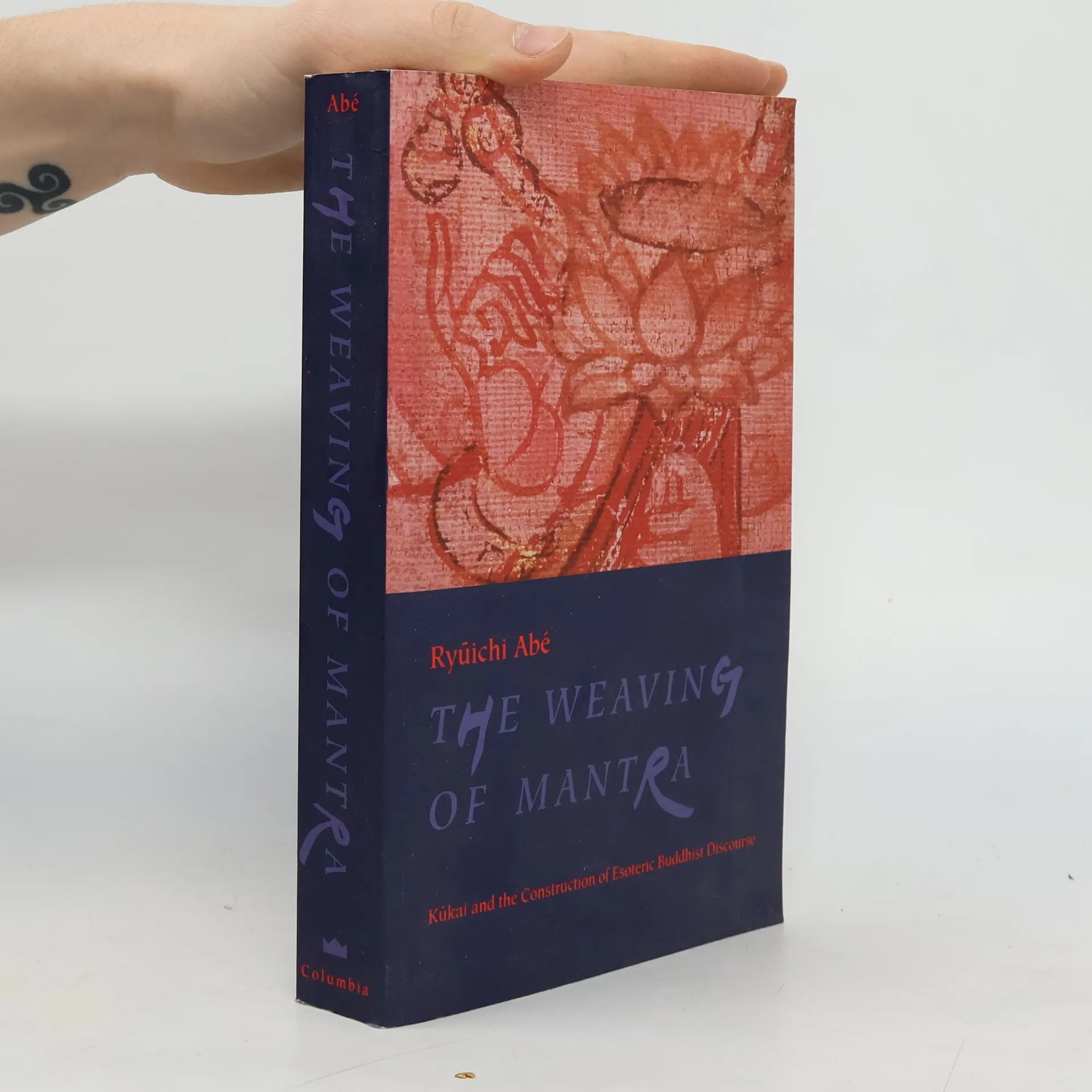


Parametry
- 620 stránek
- 22 hodin čtení
Více o knize
The great Buddhist priest K?kai (774-835) introduced tantric Buddhism to early ninth-century Japan. In "The Weaving of Mantra," Ry?ichi Ab? examines K?kai's significant yet overlooked influence on Japanese culture. Ab? employs a novel approach, integrating historical research, discourse analysis, literary criticism, and semiology, to argue that K?kai's impact stemmed not from founding a new sect but from developing a general theory of language based on mantra ritual speech. The work situates K?kai within the political and social landscape of ninth-century Japan, highlighting how esoteric Buddhism contributed to societal transformations, including the rise of monasteries as feudal powers and the creation of the kana phonetic alphabet. Ab? illustrates K?kai's writings as pivotal in Japan's shift from ancient to medieval society, supplanting Confucianism as the state ideology. The book contextualizes K?kai's life within the Ritsuryo state and explores his engagement with the Nara Buddhist intelligentsia, essential for the introduction of esoteric Buddhism. Ab? discusses K?kai's major work, "Ten Abiding Stages on the Secret Mandalas," and introduces previously unknown Japanese and Chinese texts. Rather than focusing on literal interpretations, "The Weaving of Mantra" examines K?kai's rhetorical strategies, revealing the significance of his texts to readers and his transformative discourse in Japanese culture.
Nákup knihy
The Weaving of Mantra, Ryūichi Abé
- Jazyk

- Rok vydání
- 1999
- Vazba
- (měkká)
Doručení
Platební metody
Tady nám chybí tvá recenze.
- Titul
- The Weaving of Mantra
- Podtitul
- Kukai and the Construction of Esoteric Buddhist Discourse
- Jazyk
- anglicky
- Autoři
- Ryūichi Abé
- Vydavatel
- Columbia University Press
- Rok vydání
- 1999
- Vazba
- měkká
- Počet stran
- 620
- ISBN10
- 0231112874
- ISBN13
- 9780231112871
- Série
- Štítky
- Historické téma, Náboženská témata, USA, Ruční práce, Japonsko, Historie náboženství, Dálný východ
- Hodnocení
- 4,3 z 5
- Anotace
- The great Buddhist priest K?kai (774-835) introduced tantric Buddhism to early ninth-century Japan. In "The Weaving of Mantra," Ry?ichi Ab? examines K?kai's significant yet overlooked influence on Japanese culture. Ab? employs a novel approach, integrating historical research, discourse analysis, literary criticism, and semiology, to argue that K?kai's impact stemmed not from founding a new sect but from developing a general theory of language based on mantra ritual speech. The work situates K?kai within the political and social landscape of ninth-century Japan, highlighting how esoteric Buddhism contributed to societal transformations, including the rise of monasteries as feudal powers and the creation of the kana phonetic alphabet. Ab? illustrates K?kai's writings as pivotal in Japan's shift from ancient to medieval society, supplanting Confucianism as the state ideology. The book contextualizes K?kai's life within the Ritsuryo state and explores his engagement with the Nara Buddhist intelligentsia, essential for the introduction of esoteric Buddhism. Ab? discusses K?kai's major work, "Ten Abiding Stages on the Secret Mandalas," and introduces previously unknown Japanese and Chinese texts. Rather than focusing on literal interpretations, "The Weaving of Mantra" examines K?kai's rhetorical strategies, revealing the significance of his texts to readers and his transformative discourse in Japanese culture.