

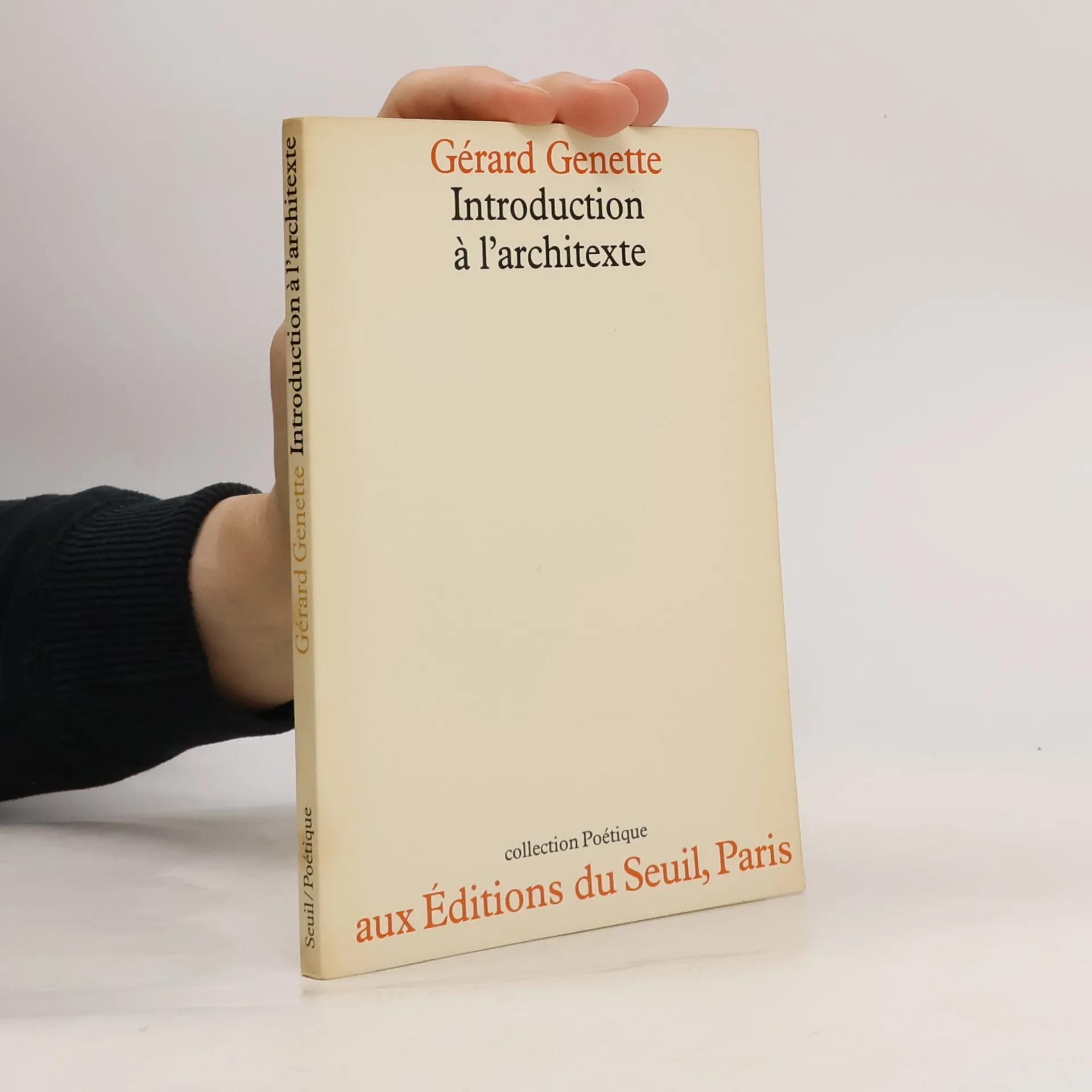
Více o knize
In this essential theoretical essay, Gérard Genette asserts that the object of poetics is not the text, but the architext --the transcendent categories (literary genres, modes of enunciation, and types of discourse, among others) to which each individual text belongs. In seeking to link these categories in a system embracing the entire field of literature, Western poetics has divided literature into three kinds: dramatic, epic, and lyric. This division, generally accepted since the eighteenth century, has been wrongly attributed to Aristotle with great detriment to the development of poetics. Here Genette disassembles this burdensome triad by retracing its gradual construction and distinguishes among the architextual categories that this division has long obscured. In so doing, Genette lays a firm foundation for future theorists of literary forms.
Nákup knihy
Poétique: Introduction à l'architexte, Gérard Genette
- Jazyk

- Rok vydání
- 1979
- Vazba
- (měkká)
Doručení
Platební metody
Tady nám chybí tvá recenze.
- Titul
- Poétique: Introduction à l'architexte
- Jazyk
- francouzsky
- Autoři
- Gérard Genette
- Vydavatel
- Éditions du Seuil
- Rok vydání
- 1979
- Vazba
- měkká
- Počet stran
- 96
- ISBN10
- 2020053101
- ISBN13
- 9782020053105
- Série
- Štítky
- Vědecké teorie, Kritika, Literární teorie
- Hodnocení
- 3,4 z 5
- Anotace
- In this essential theoretical essay, Gérard Genette asserts that the object of poetics is not the text, but the architext --the transcendent categories (literary genres, modes of enunciation, and types of discourse, among others) to which each individual text belongs. In seeking to link these categories in a system embracing the entire field of literature, Western poetics has divided literature into three kinds: dramatic, epic, and lyric. This division, generally accepted since the eighteenth century, has been wrongly attributed to Aristotle with great detriment to the development of poetics. Here Genette disassembles this burdensome triad by retracing its gradual construction and distinguishes among the architextual categories that this division has long obscured. In so doing, Genette lays a firm foundation for future theorists of literary forms.