


Více o knize
The Fourth Annual Pezcoller Symposium, held in Rovereto, Italy, from June 24-26, 1992, focused on how cells use integral membrane proteins to perceive and interact with their environment. The event featured timely presentations and engaging discussions on the genetics and biochemistry of adhesion molecules, their regulatory functions, and their roles in cancer and the immune system. A significant emphasis was placed on integrin family adhesion proteins, which are crucial across all eukaryotic biological systems. Detailed discussions covered the regulation of integrin genes, their expression, and specific aspects of fibronectin genetics. The symposium explored the molecular basis for integrin regulation, their role in cell adhesion, and the implications for cell function. Additionally, the involvement of integrins in signal transduction, their critical role in T and NK cell function, and the biological consequences of integrin heterogeneity were thoroughly analyzed. The discussions also highlighted the role of cell adhesion molecules in tumor invasion and metastasis, along with new insights into CD44 and its splice variants in normal differentiation and tumor progression.
Nákup knihy
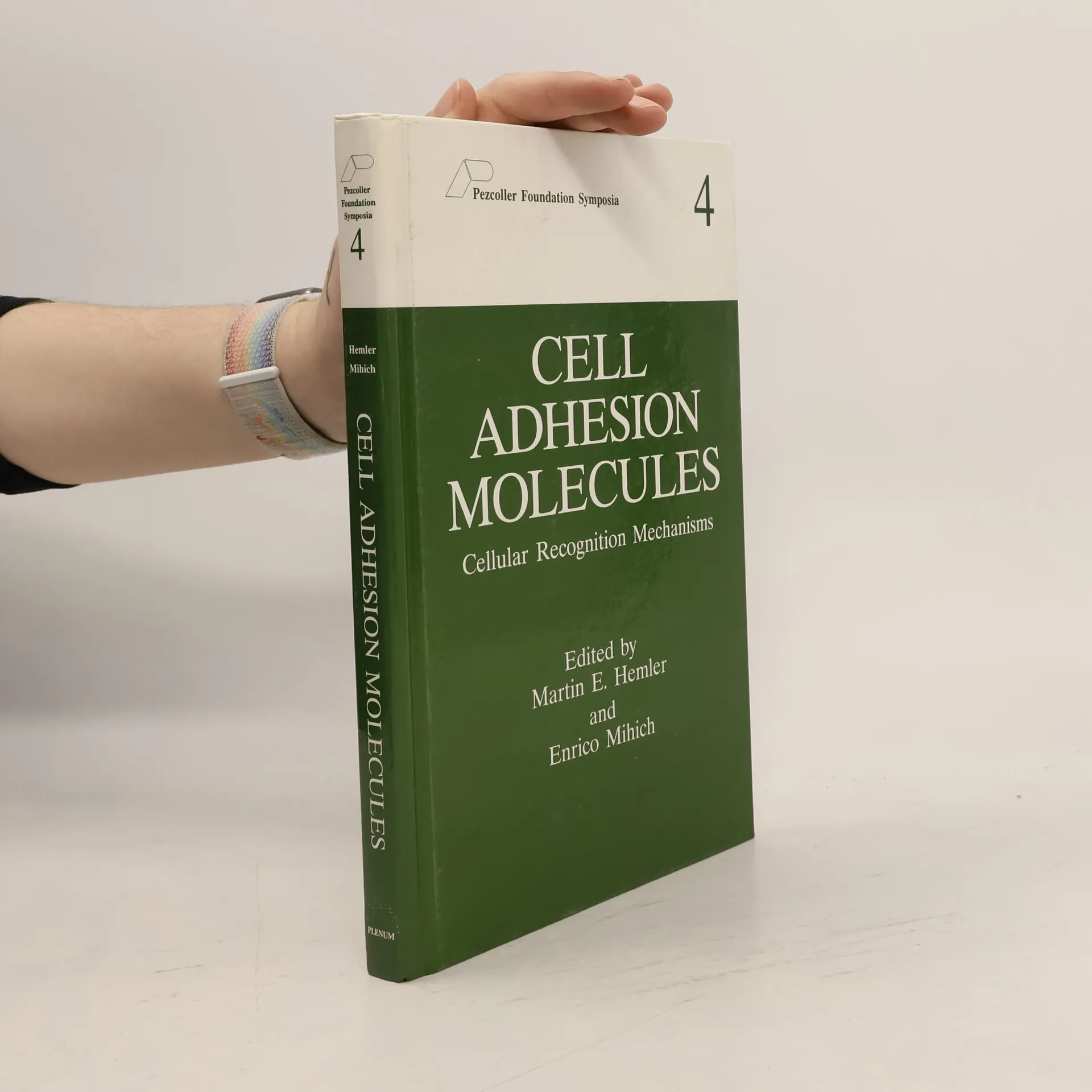
Pezcoller Foundation Symposia - 4: Cell Adhesion Molecules, Martin E. Hemler, Enrico Mihich
- Jazyk

- Rok vydání
- 1993
- Vazba
- (pevná)
Nikdo zatím neohodnotil.
- Titul
- Pezcoller Foundation Symposia - 4: Cell Adhesion Molecules
- Podtitul
- Cellular Recognition Mechanisms
- Jazyk
- anglicky
- Autoři
- Martin E. Hemler, Enrico Mihich
- Vydavatel
- Springer
- Rok vydání
- 1993
- Vazba
- pevná
- Počet stran
- 294
- ISBN10
- 0306444968
- ISBN13
- 9780306444968
- Série
- Štítky
- Přírodní vědy, Věda, USA, Lékařská tématika, Rostliny, Odborná literatura, Zoologie, Genetika, Biochemie, Základy, Fyziologie, Onkologie, Molekulární biologie, Imunologie, Imunitní systém, Cytologie
- Anotace
- The Fourth Annual Pezcoller Symposium, held in Rovereto, Italy, from June 24-26, 1992, focused on how cells use integral membrane proteins to perceive and interact with their environment. The event featured timely presentations and engaging discussions on the genetics and biochemistry of adhesion molecules, their regulatory functions, and their roles in cancer and the immune system. A significant emphasis was placed on integrin family adhesion proteins, which are crucial across all eukaryotic biological systems. Detailed discussions covered the regulation of integrin genes, their expression, and specific aspects of fibronectin genetics. The symposium explored the molecular basis for integrin regulation, their role in cell adhesion, and the implications for cell function. Additionally, the involvement of integrins in signal transduction, their critical role in T and NK cell function, and the biological consequences of integrin heterogeneity were thoroughly analyzed. The discussions also highlighted the role of cell adhesion molecules in tumor invasion and metastasis, along with new insights into CD44 and its splice variants in normal differentiation and tumor progression.