

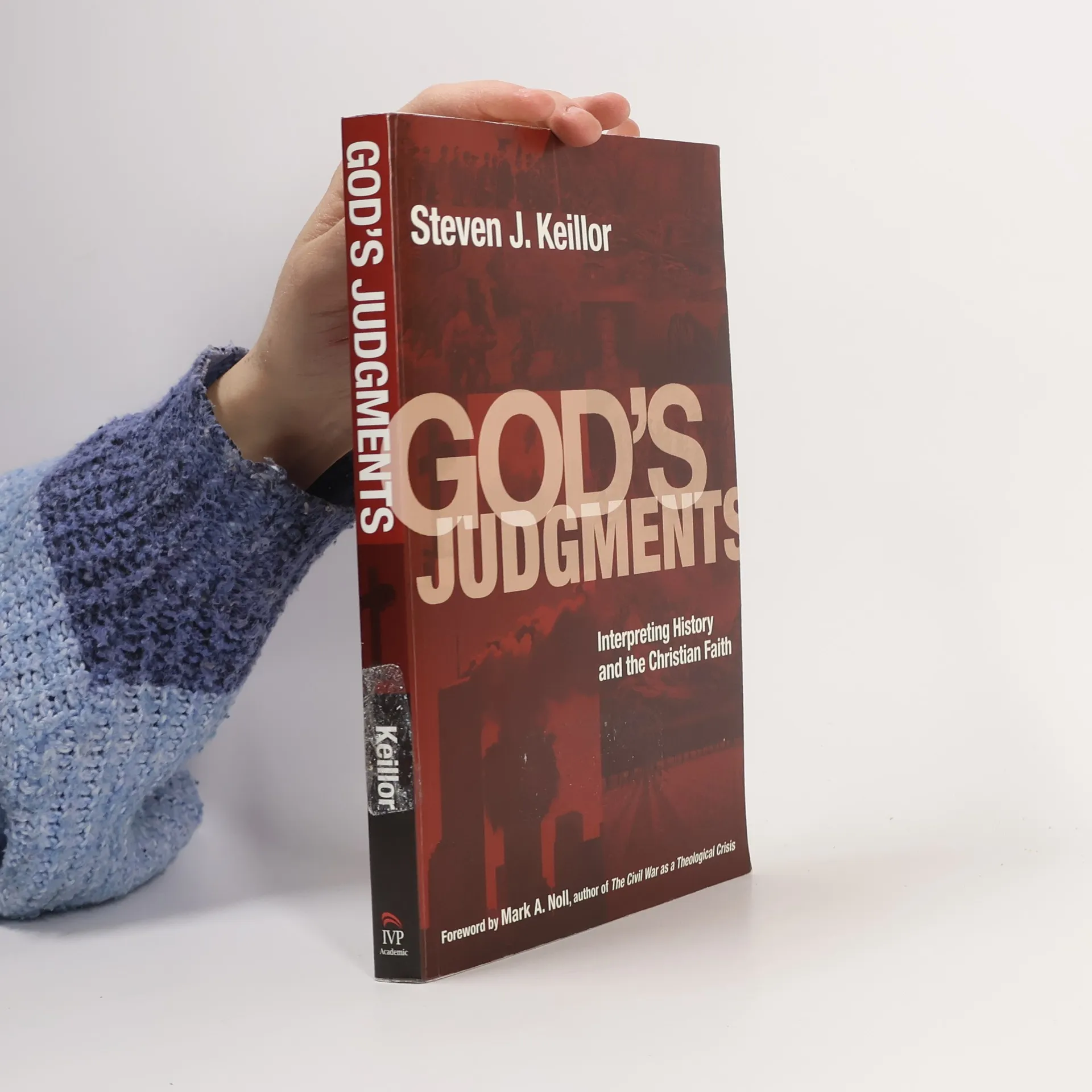
God's Judgments
Interpreting History and the Christian Faith
Hodnocení knihy
Více o knize
What do God's judgments have to do with history? Steven J. Keillor presents the bold thesis that divine judgment can be a fruitful category for historical investigation. In fact, he makes the case that Christianity is rightly grasped as an interpretation of history more than a worldview or philosophy. Grounding his thesis first on a study of God's judgments in the teaching of both the Old and New Testaments, Keillor then revisits two prominent events in U.S. history, the burning of Washington in 1814 and the Civil War, to further explore and test his interpretive principle of divine judgment. He concludes by suggesting the relevance of his thesis to some pressing contemporary concerns.
Nákup knihy
God's Judgments, Mark A. Noll, Steven J. Keillor
- Jazyk

- Rok vydání
- 2007
- Vazba
- (měkká)
Doručení
Platební metody
Tady nám chybí tvá recenze.
- Titul
- God's Judgments
- Podtitul
- Interpreting History and the Christian Faith
- Jazyk
- anglicky
- Autoři
- Mark A. Noll, Steven J. Keillor
- Vydavatel
- IVP Academic
- Rok vydání
- 2007
- Vazba
- měkká
- Počet stran
- 223
- ISBN10
- 0830825657
- ISBN13
- 9780830825653
- Série
- Štítky
- Historické téma, Náboženská témata, Křesťanská témata, USA, Teologie, Inspirace, Etika, Církevní historie, Historie náboženství
- Hodnocení
- 3,05 z 5
- Anotace
- What do God's judgments have to do with history? Steven J. Keillor presents the bold thesis that divine judgment can be a fruitful category for historical investigation. In fact, he makes the case that Christianity is rightly grasped as an interpretation of history more than a worldview or philosophy. Grounding his thesis first on a study of God's judgments in the teaching of both the Old and New Testaments, Keillor then revisits two prominent events in U.S. history, the burning of Washington in 1814 and the Civil War, to further explore and test his interpretive principle of divine judgment. He concludes by suggesting the relevance of his thesis to some pressing contemporary concerns.