

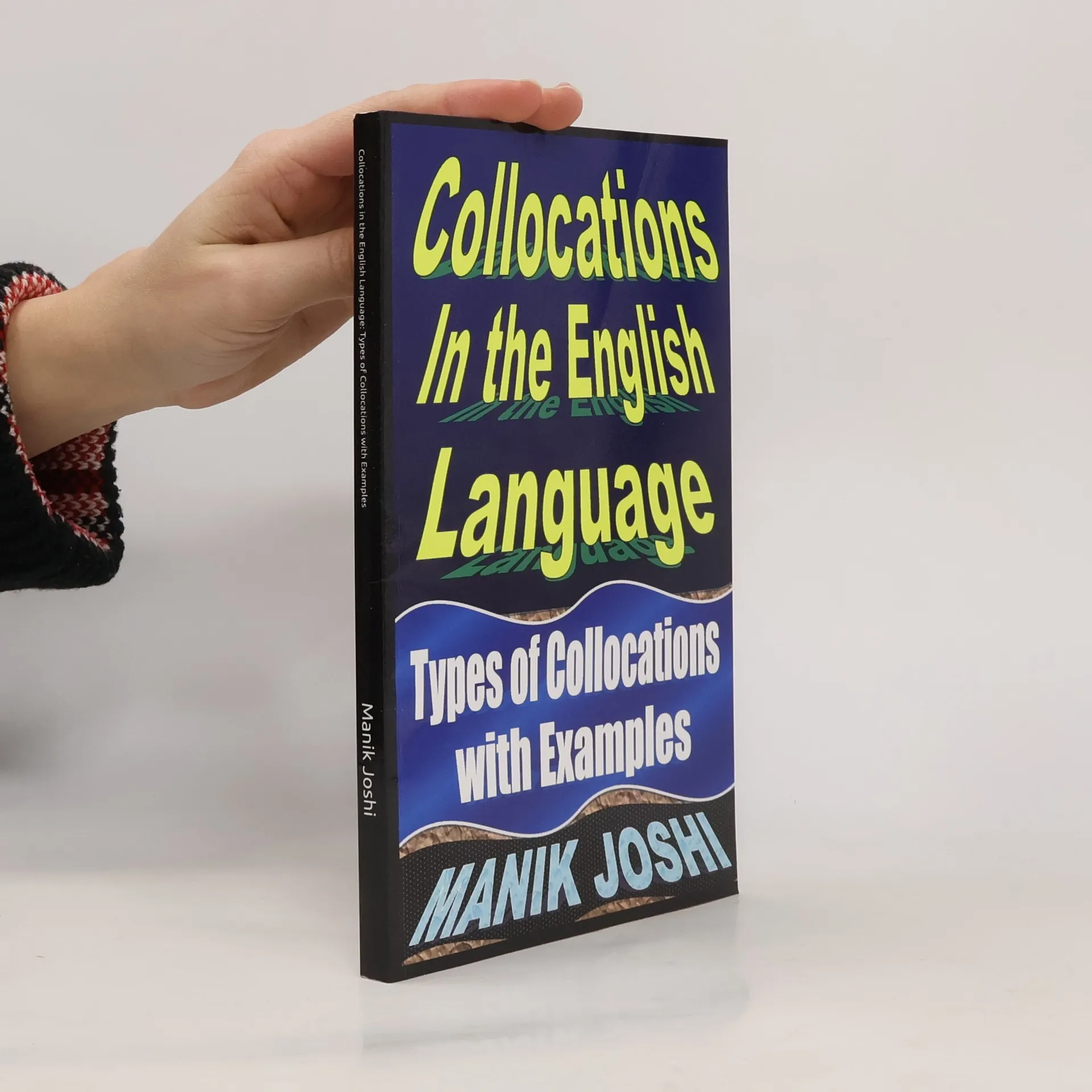

Collocations in the English Language
Types of Collocations with Examples
Autoři
Více o knize
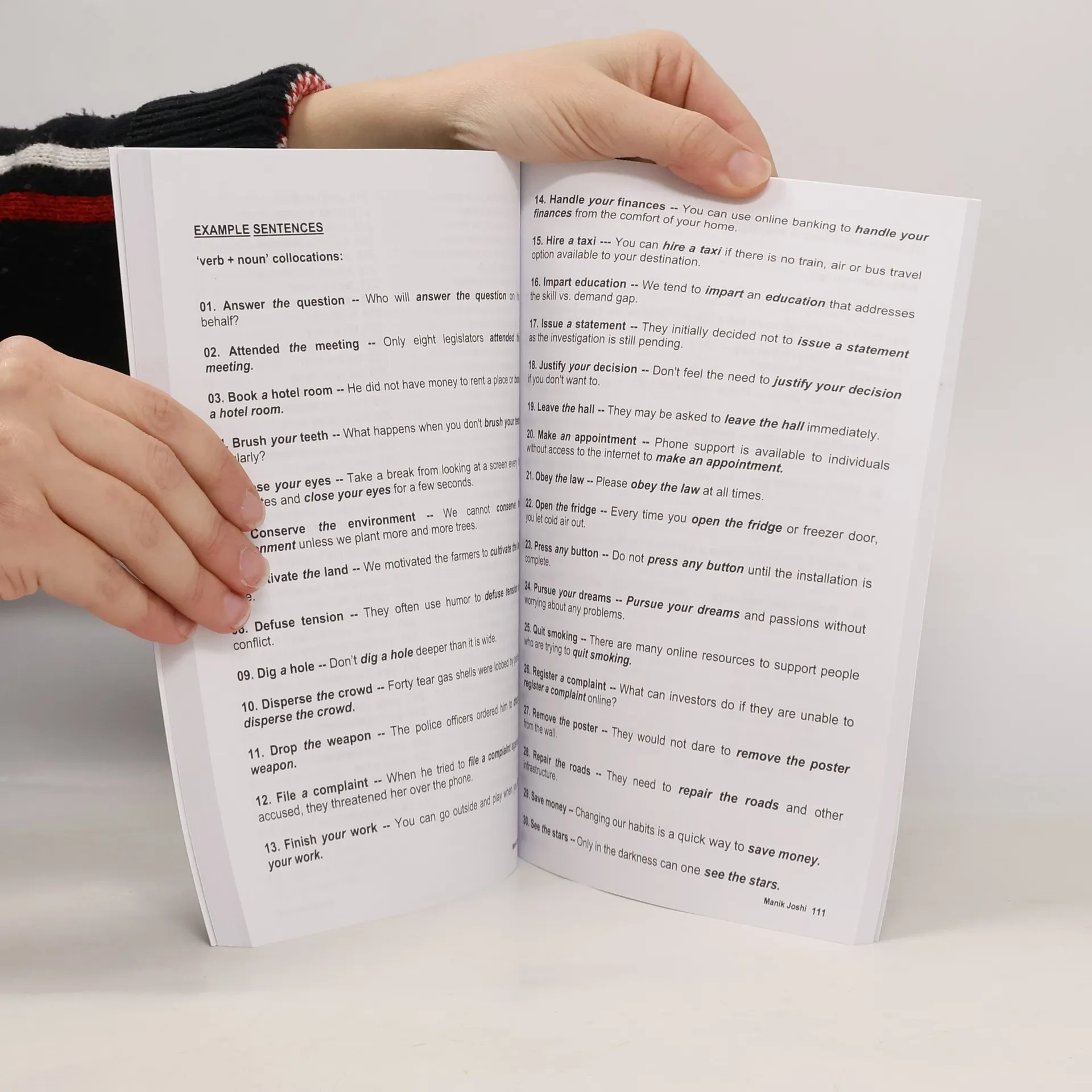
A collocation is a natural combination of words that native English speakers commonly use together. The term was first introduced by British linguist J.R. Firth. For instance, we say "light rainfall" instead of "skinny rainfall," and "take a printout" rather than "perform a printout." Understanding collocations helps in using language correctly, as some combinations sound right while others do not. Collocations can be categorized into several types: 1. **Adjective + Noun** (e.g., bright future) 2. **Adjective + Preposition** (e.g., skilled at) 3. **Adverb + Adjective** (e.g., keenly awaited) 4. **Adverb + Noun** (e.g., timely justice) 5. **Adverb + Preposition** (e.g., far from) 6. **Adverb + Verb** (e.g., legally entitled) 7. **Noun + Adjective** (e.g., disease-free) 8. **Noun + Noun** (e.g., awareness rally) 9. **Noun + Preposition** (e.g., confusion about) 10. **Noun + Verb** (e.g., lions roar) 11. **Verb + Adverb** (e.g., decide fast) 12. **Verb + Noun** (e.g., feed the bird) 13. **Verb + Preposition** (e.g., argue about) 14. **Other useful collocations** (e.g., cool-headed, environment-friendly) These combinations enhance fluency and comprehension in English, making speech and writing sound more natural.
Nákup knihy
Collocations in the English Language, Manik Joshi
- Jazyk

- Rok vydání
- 2021
- Vazba
- (měkká)
Doručení
Platební metody
Nikdo zatím neohodnotil.
- Titul
- Collocations in the English Language
- Podtitul
- Types of Collocations with Examples
- Jazyk
- anglicky
- Autoři
- Manik Joshi
- Vydavatel
- Independently published
- Rok vydání
- 2021
- Vazba
- měkká
- Počet stran
- 175
- ISBN13
- 9798720412067
- Série
- Kategorie
- Anotace
- A collocation is a natural combination of words that native English speakers commonly use together. The term was first introduced by British linguist J.R. Firth. For instance, we say "light rainfall" instead of "skinny rainfall," and "take a printout" rather than "perform a printout." Understanding collocations helps in using language correctly, as some combinations sound right while others do not. Collocations can be categorized into several types: 1. **Adjective + Noun** (e.g., bright future) 2. **Adjective + Preposition** (e.g., skilled at) 3. **Adverb + Adjective** (e.g., keenly awaited) 4. **Adverb + Noun** (e.g., timely justice) 5. **Adverb + Preposition** (e.g., far from) 6. **Adverb + Verb** (e.g., legally entitled) 7. **Noun + Adjective** (e.g., disease-free) 8. **Noun + Noun** (e.g., awareness rally) 9. **Noun + Preposition** (e.g., confusion about) 10. **Noun + Verb** (e.g., lions roar) 11. **Verb + Adverb** (e.g., decide fast) 12. **Verb + Noun** (e.g., feed the bird) 13. **Verb + Preposition** (e.g., argue about) 14. **Other useful collocations** (e.g., cool-headed, environment-friendly) These combinations enhance fluency and comprehension in English, making speech and writing sound more natural.