

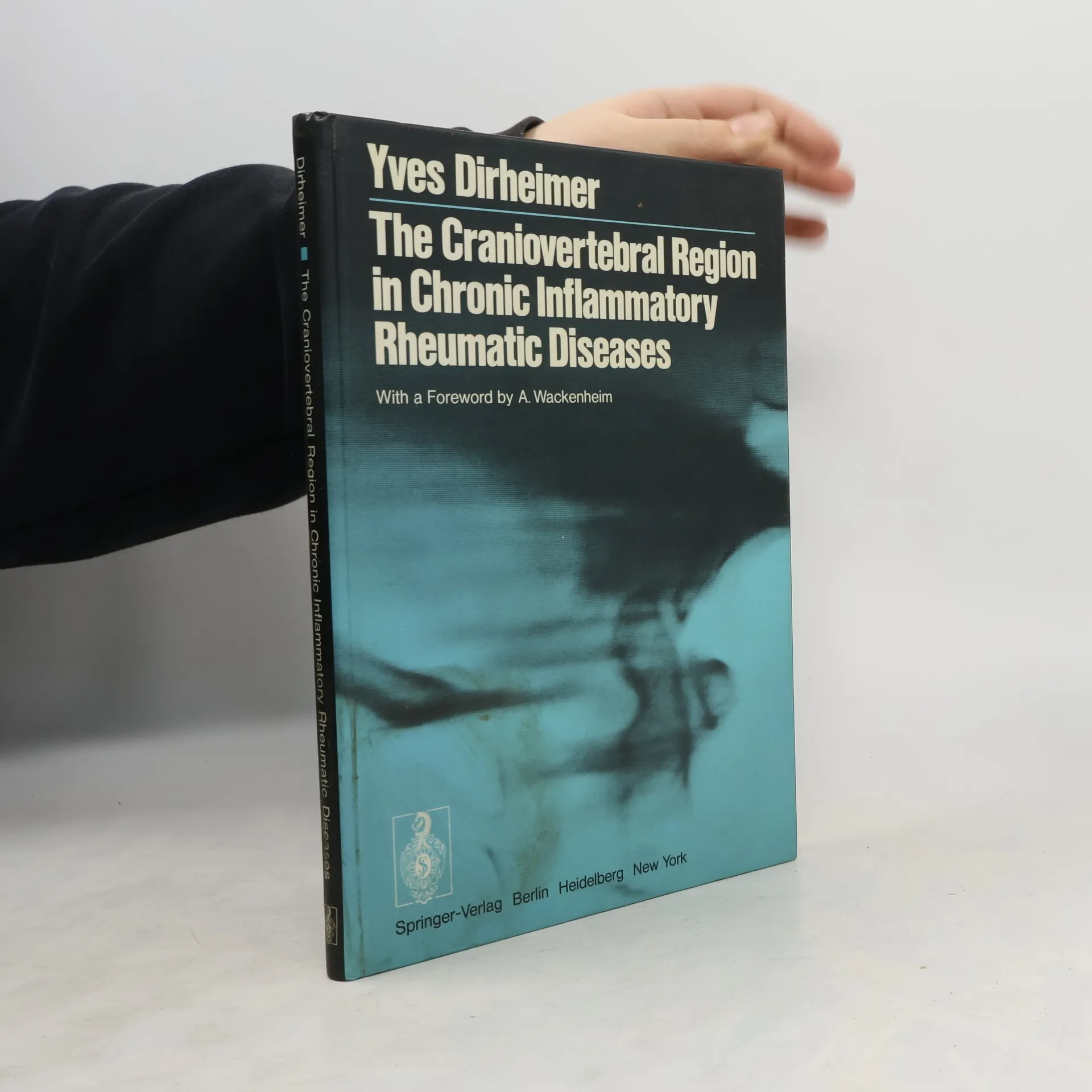


The Craniovertebral Region in Chronic Inflammatory Rheumatic Diseases
Více o knize
Radiology, the youngest major medical science, has experienced remarkable technical evolution since X-rays were discovered. It began with various tomography types and contrast agents, advancing to serioscopy, image subtraction, direct enlargement, echography, thermography, and xerography. Now, even before these innovations are fully adopted, computerized (axial) tomography has emerged, presenting unforeseeable dimensions. In less than a century, radiology has become essential to medical practice. Its development as a specialty has followed technical advances, which have varied significantly across countries. This rapid growth led to subspecialization, including the early emergence of radiotherapy and radiodiagnostics as distinct fields. However, radiology's integration into university education has maintained it as a unified branch of medicine, countering the tendency for specialties to become autonomous. Today, the fourth generation of radiologists faces a pivotal choice: to become technologists reliant on machinery, to specialize narrowly, or to remain physicians. Most in this generation have chosen not to be mere accessories to technology, instead opting to specialize in line with the Hippocratic tradition of medicine.
Nákup knihy
The Craniovertebral Region in Chronic Inflammatory Rheumatic Diseases, A. Wackenheim, Yves Dirheimer
- Jazyk

- Rok vydání
- 1977
- Vazba
- (pevná)
Doručení
Platební metody
Nikdo zatím neohodnotil.
- Titul
- The Craniovertebral Region in Chronic Inflammatory Rheumatic Diseases
- Jazyk
- anglicky
- Autoři
- A. Wackenheim, Yves Dirheimer
- Vydavatel
- Springer
- Rok vydání
- 1977
- Vazba
- pevná
- Počet stran
- 173
- ISBN10
- 3540081607
- ISBN13
- 9783540081609
- Série
- Kategorie
- Štítky
- Lékařská tématika, Odborná literatura, Nemoci, Evoluce, Vývoj, Adopce, Revmatické nemoci, Osteoporóza, Revmatoidní artritida
- Anotace
- Radiology, the youngest major medical science, has experienced remarkable technical evolution since X-rays were discovered. It began with various tomography types and contrast agents, advancing to serioscopy, image subtraction, direct enlargement, echography, thermography, and xerography. Now, even before these innovations are fully adopted, computerized (axial) tomography has emerged, presenting unforeseeable dimensions. In less than a century, radiology has become essential to medical practice. Its development as a specialty has followed technical advances, which have varied significantly across countries. This rapid growth led to subspecialization, including the early emergence of radiotherapy and radiodiagnostics as distinct fields. However, radiology's integration into university education has maintained it as a unified branch of medicine, countering the tendency for specialties to become autonomous. Today, the fourth generation of radiologists faces a pivotal choice: to become technologists reliant on machinery, to specialize narrowly, or to remain physicians. Most in this generation have chosen not to be mere accessories to technology, instead opting to specialize in line with the Hippocratic tradition of medicine.