

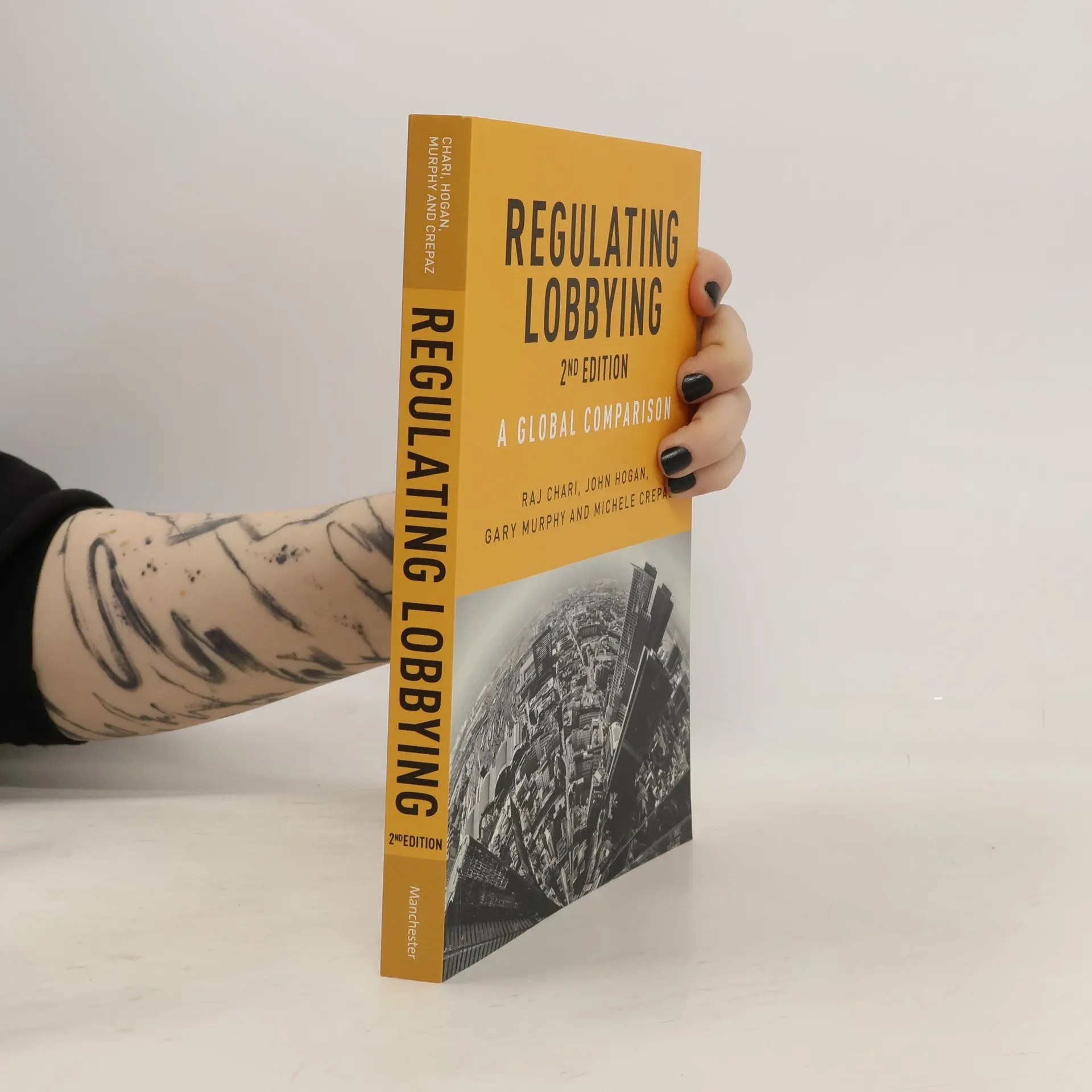


Regulating Lobbying
A Global Comparison, 2nd Edition
Více o knize
Governments worldwide are developing sunshine policies that increase transparency in politics, where a key initiative is regulating lobbyists. Building on the pioneering first edition, this book updates its examination of all jurisdictions with regulations, from the Americas, Europe, Middle East, Asia, and Australia. Unlike any book, it offers unique insights into how the regulations compare and contrast against each other, offering a revamped theoretical classification of different regulatory environments and situating each political system therein. This edition innovatively considers different measurements to capture the robustness of lobbying laws in terms of promoting transparency and accountability. And, based on the authors’ experience of advising governments globally, it closes with a no-nonsense guide on how to make a lobbying law. This is of value to policymakers seeking to introduce or amend regulations, and lobbyists seeking to influence this process.
Nákup knihy
Regulating Lobbying, Gary Murphy, Raj S. Chari, Hogan John, Michele Crepaz
- Jazyk

- Rok vydání
- 2019
- Vazba
- (měkká)
Doručení
Platební metody
Nikdo zatím neohodnotil.
- Titul
- Regulating Lobbying
- Podtitul
- A Global Comparison, 2nd Edition
- Jazyk
- anglicky
- Autoři
- Gary Murphy, Raj S. Chari, Hogan John, Michele Crepaz
- Vydavatel
- Manchester University Press
- Rok vydání
- 2019
- Vazba
- měkká
- Počet stran
- 256
- ISBN10
- 1526117258
- ISBN13
- 9781526117250
- Série
- Štítky
- Politika, Politické teorie, Korupce, Zákony, Advokacie
- Anotace
- Governments worldwide are developing sunshine policies that increase transparency in politics, where a key initiative is regulating lobbyists. Building on the pioneering first edition, this book updates its examination of all jurisdictions with regulations, from the Americas, Europe, Middle East, Asia, and Australia. Unlike any book, it offers unique insights into how the regulations compare and contrast against each other, offering a revamped theoretical classification of different regulatory environments and situating each political system therein. This edition innovatively considers different measurements to capture the robustness of lobbying laws in terms of promoting transparency and accountability. And, based on the authors’ experience of advising governments globally, it closes with a no-nonsense guide on how to make a lobbying law. This is of value to policymakers seeking to introduce or amend regulations, and lobbyists seeking to influence this process.