

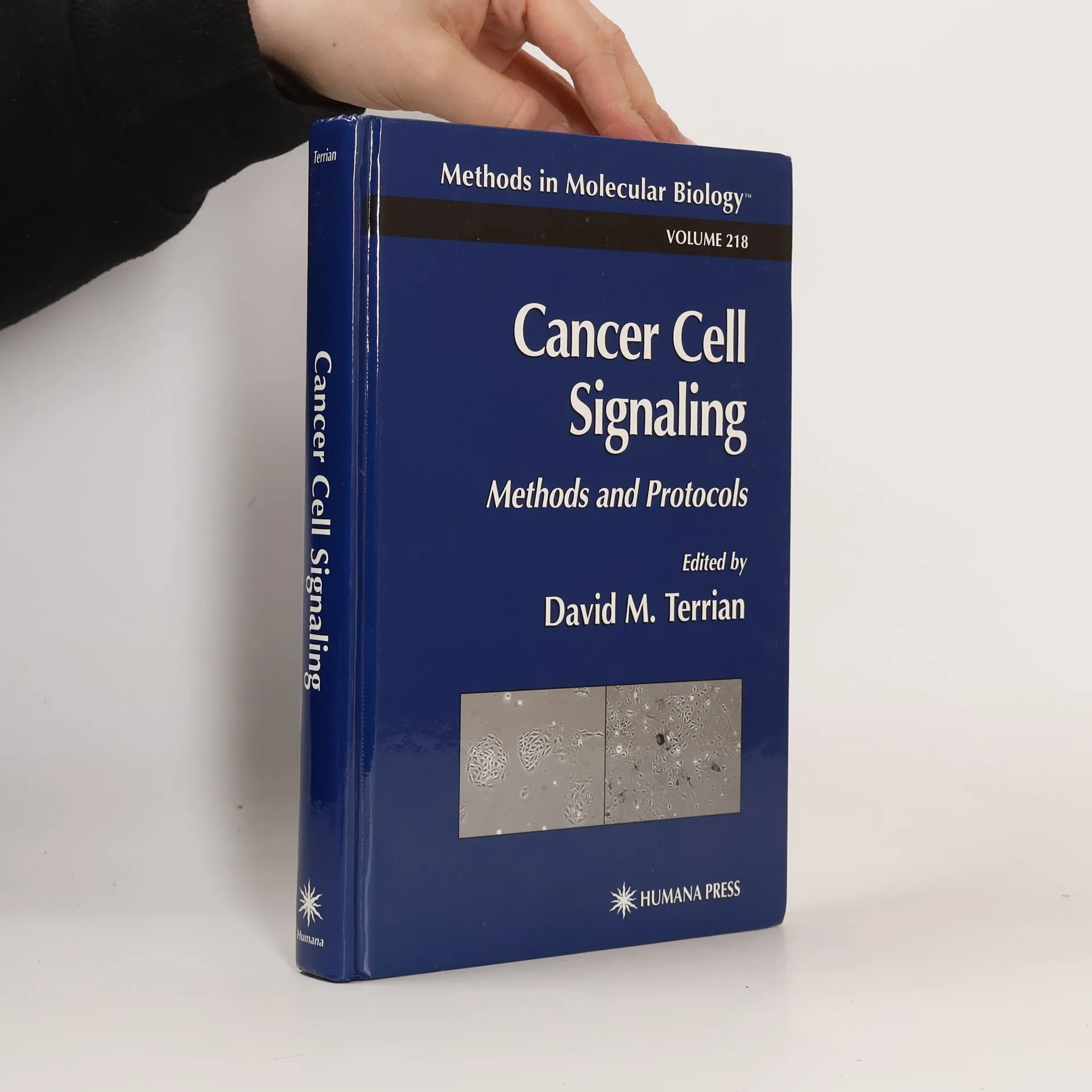


Methods in Molecular Biology - 218: Cancer Cell Signaling
Methods and Protocols
Autoři
Více o knize
Cells respond to environmental cues through a dynamic network of signaling pathways that maintain a balance between proliferation, differentiation, senescence, and death. A key research challenge is identifying aberrations in signal transduction that disrupt this equilibrium and lead to malignant transformation. The study of cell-signaling molecules is essential in cancer research, allowing investigators to formulate hypotheses on how cancer cells misinterpret or inappropriately respond to growth regulatory cues. Despite significant insights gained, the rapidly evolving nature of cell signaling research has led to continuous revisions of theoretical constructs and methods. An example of this evolution is the analysis of Human Genome Project data, which reveals unexpected diversity in multigene families encoding signaling pathway intermediates. When assessing methodological approaches, it is crucial to prioritize protocols that can be adapted for analyzing multiple gene family members. This collection of methods in cell signaling research is grounded in cancer biology, providing valuable tools for advancing our understanding of cancer mechanisms.
Nákup knihy
Methods in Molecular Biology - 218: Cancer Cell Signaling, David M. Terrian
- Jazyk

- Rok vydání
- 2002
- Vazba
- (pevná)
Doručení
Platební metody
Nikdo zatím neohodnotil.
- Titul
- Methods in Molecular Biology - 218: Cancer Cell Signaling
- Podtitul
- Methods and Protocols
- Jazyk
- anglicky
- Autoři
- David M. Terrian
- Vydavatel
- Humana Press
- Rok vydání
- 2002
- Vazba
- pevná
- Počet stran
- 348
- ISBN10
- 1588290751
- ISBN13
- 9781588290755
- Série
- Štítky
- Přírodní vědy, Příručky a návody, USA, Lékařská tématika, Rakovina, nádory, Mikrobiologie, Onkologie, Patologie, Molekulární biologie
- Anotace
- Cells respond to environmental cues through a dynamic network of signaling pathways that maintain a balance between proliferation, differentiation, senescence, and death. A key research challenge is identifying aberrations in signal transduction that disrupt this equilibrium and lead to malignant transformation. The study of cell-signaling molecules is essential in cancer research, allowing investigators to formulate hypotheses on how cancer cells misinterpret or inappropriately respond to growth regulatory cues. Despite significant insights gained, the rapidly evolving nature of cell signaling research has led to continuous revisions of theoretical constructs and methods. An example of this evolution is the analysis of Human Genome Project data, which reveals unexpected diversity in multigene families encoding signaling pathway intermediates. When assessing methodological approaches, it is crucial to prioritize protocols that can be adapted for analyzing multiple gene family members. This collection of methods in cell signaling research is grounded in cancer biology, providing valuable tools for advancing our understanding of cancer mechanisms.