

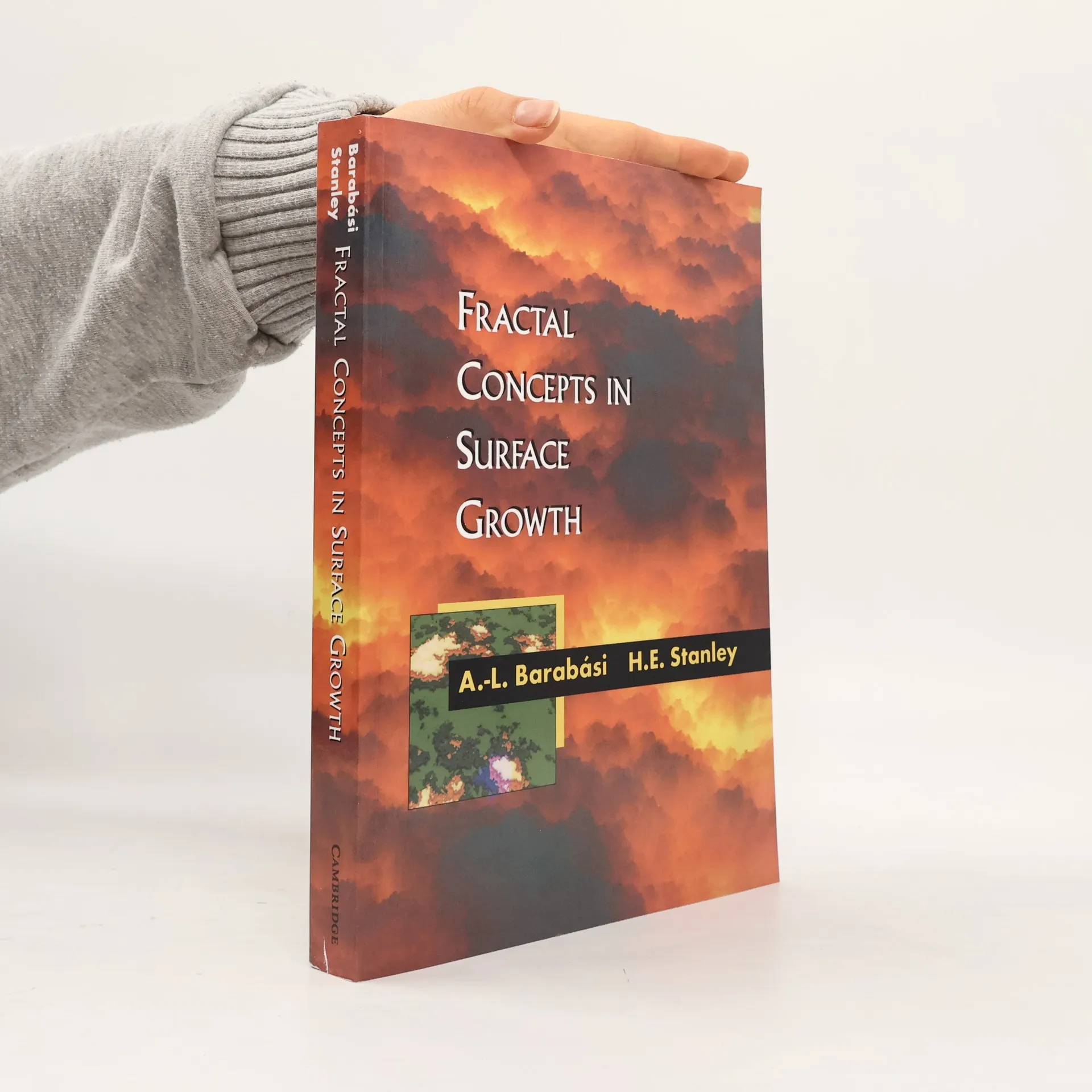
Více o knize
Fractals and surfaces are two of the most widely-studied areas of modern physics. In fact, most surfaces in nature are fractals. In this book, Drs. Barabási and Stanley explain how fractals can be successfully used to describe and predict the morphology of surface growth. The authors begin by presenting basic growth models and the principles used to develop them. They next demonstrate how models can be used to answer specific questions about surface roughness. In the second half of the book, they discuss in detail two classes of fluid flow in porous media and molecular beam epitaxy (MBE). In each case, the authors review the model and analytical approach, and present experimental results. This book is the first attempt to unite the subjects of fractals and surfaces, and it will appeal to advanced undergraduate and graduate students in condensed matter physics and statistical mechanics. Because of the technological importance of MBE, it will also be of interest to scientists, particularly materials scientists, working in industry and research. Interested readers may view a sample chapter by contacting our web site at
Nákup knihy
Fractal Concepts in Surface Growth, Albert-László Barabási, H. Eugene Stanley
- Jazyk

- Rok vydání
- 1991
- Vazba
- (měkká)
Tady nám chybí tvá recenze.
- Titul
- Fractal Concepts in Surface Growth
- Jazyk
- anglicky
- Vydavatel
- Cambridge University Press
- Rok vydání
- 1991
- Vazba
- měkká
- Počet stran
- 388
- ISBN10
- 0521483182
- ISBN13
- 9780521483186
- Série
- Hodnocení
- 4,25 z 5
- Anotace
- Fractals and surfaces are two of the most widely-studied areas of modern physics. In fact, most surfaces in nature are fractals. In this book, Drs. Barabási and Stanley explain how fractals can be successfully used to describe and predict the morphology of surface growth. The authors begin by presenting basic growth models and the principles used to develop them. They next demonstrate how models can be used to answer specific questions about surface roughness. In the second half of the book, they discuss in detail two classes of fluid flow in porous media and molecular beam epitaxy (MBE). In each case, the authors review the model and analytical approach, and present experimental results. This book is the first attempt to unite the subjects of fractals and surfaces, and it will appeal to advanced undergraduate and graduate students in condensed matter physics and statistical mechanics. Because of the technological importance of MBE, it will also be of interest to scientists, particularly materials scientists, working in industry and research. Interested readers may view a sample chapter by contacting our web site at