

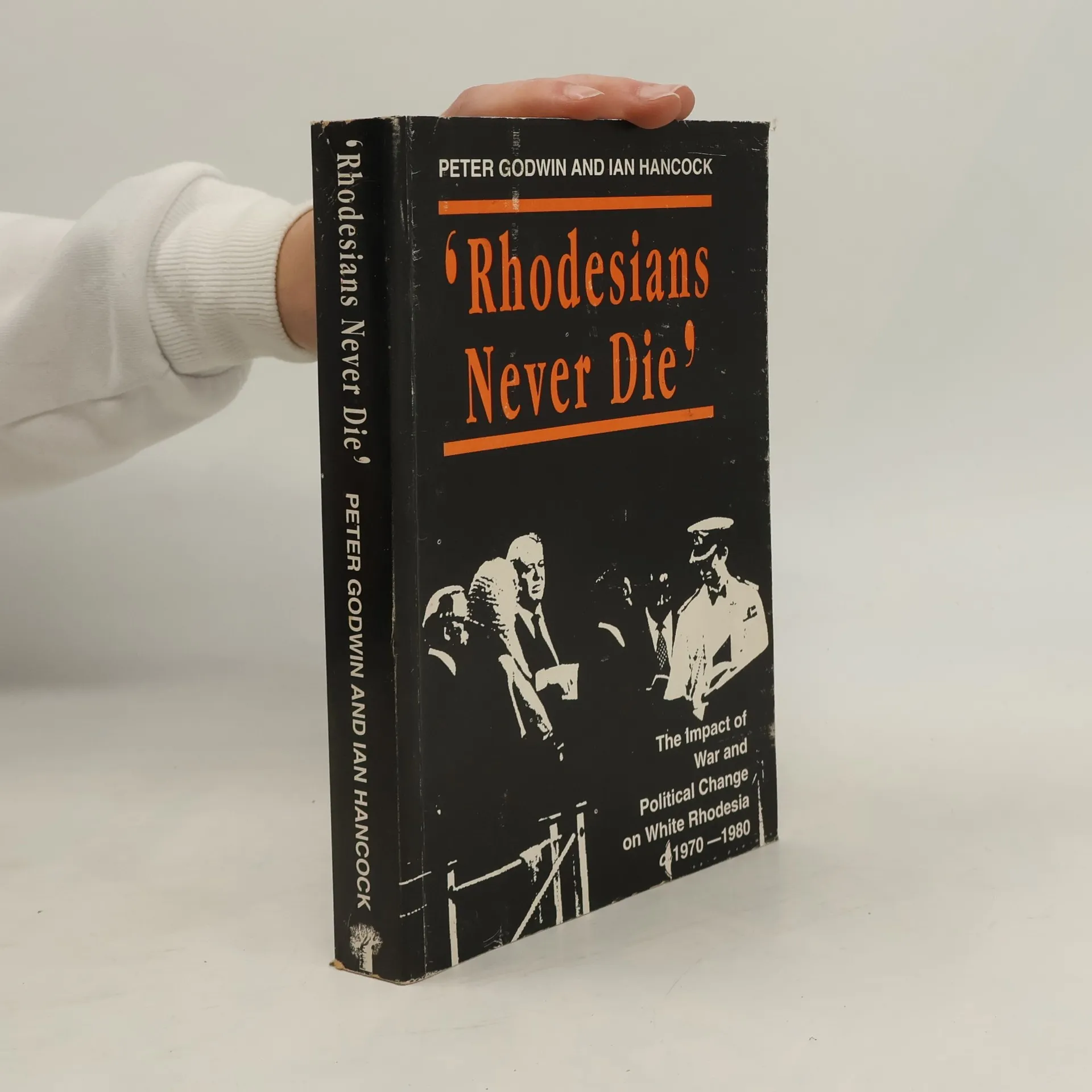
State and Democracy Series: Rhodesians Never Die
The Impact of War and Political Change on White Rhodesia 1970-1980
Autoři
Hodnocení knihy
Více o knize
This book tells the story of how White Rhodesians, three-quarters of whom were ill- prepared for revolutionary change, reacted to the "terrorist" war and the onset of black rule in the 1970s. It shows how internal divisions--both old and new--undermined the supposed unity of White Rhodesia, how most Rhodesians begrudgingly accepted the inevitability of black majority rule without adjusting to its implications, and how the self- appointed defenders of Western civilization sometimes adopted uncivilized methods of protecting the "Rhodesian way of life." This is a lively and accessible account, based on careful archival research and numerous personal interviews. It sets out to tell the story from the inside and to incorporate the diverse dimensions of the Rhodesian experience. The authors suggest that the Rhodesians were more differentiated than has often been assumed and that perhaps their greatest fault was an almost infinite capacity for self- delusion.
Nákup knihy
State and Democracy Series: Rhodesians Never Die, Ian Hancock, Peter Godwin
- Jazyk

- Rok vydání
- 1993
- Vazba
- (měkká)
Doručení
Platební metody
Tady nám chybí tvá recenze.
- Titul
- State and Democracy Series: Rhodesians Never Die
- Podtitul
- The Impact of War and Political Change on White Rhodesia 1970-1980
- Jazyk
- anglicky
- Autoři
- Ian Hancock, Peter Godwin
- Vydavatel
- Baobab
- Rok vydání
- 1993
- Vazba
- měkká
- Počet stran
- 400
- ISBN10
- 0908311826
- ISBN13
- 9780908311828
- Série
- Kategorie
- Štítky
- Politika, Afrika, Politické teorie, Terorismus, Zimbabwe
- Hodnocení
- 3,95 z 5
- Anotace
- This book tells the story of how White Rhodesians, three-quarters of whom were ill- prepared for revolutionary change, reacted to the "terrorist" war and the onset of black rule in the 1970s. It shows how internal divisions--both old and new--undermined the supposed unity of White Rhodesia, how most Rhodesians begrudgingly accepted the inevitability of black majority rule without adjusting to its implications, and how the self- appointed defenders of Western civilization sometimes adopted uncivilized methods of protecting the "Rhodesian way of life." This is a lively and accessible account, based on careful archival research and numerous personal interviews. It sets out to tell the story from the inside and to incorporate the diverse dimensions of the Rhodesian experience. The authors suggest that the Rhodesians were more differentiated than has often been assumed and that perhaps their greatest fault was an almost infinite capacity for self- delusion.