



Více o knize
All living things, from humans to hermit crabs to deep water plankton, compete for limited resources, a universal truth that connects economics, evolution, and history. Geerat Vermeij explores the interplay of biology, economics, and geology, revealing how competition, cooperation, adaptation, and feedback govern both evolution and human economies. He illustrates that historical patterns in both human and nonhuman evolution stem from these shared principles. Through numerous examples of evolutionary innovations, Vermeij posits that evolution and economics are intertwined. Dominant consumers and producers exert significant influence over the characteristics and distribution of life forms. Consumer demand, paired with favorable supply-side conditions, drives adaptation and escalation among organisms. Although disruptions can temporarily halt these processes, they ultimately intensify escalation, leading to trends in economic systems toward increased power, production rates, and broader reach for dominant members. Despite our ability to shape our environment, humans remain subject to the same economic principles and historical trends that have existed since life's origin over 3 billion years ago. Engagingly written and brilliantly argued, this exploration reveals that the most enduring human institutions are structured like successful living organisms, emphasizing the importance of opportunity and adaptability.
Nákup knihy
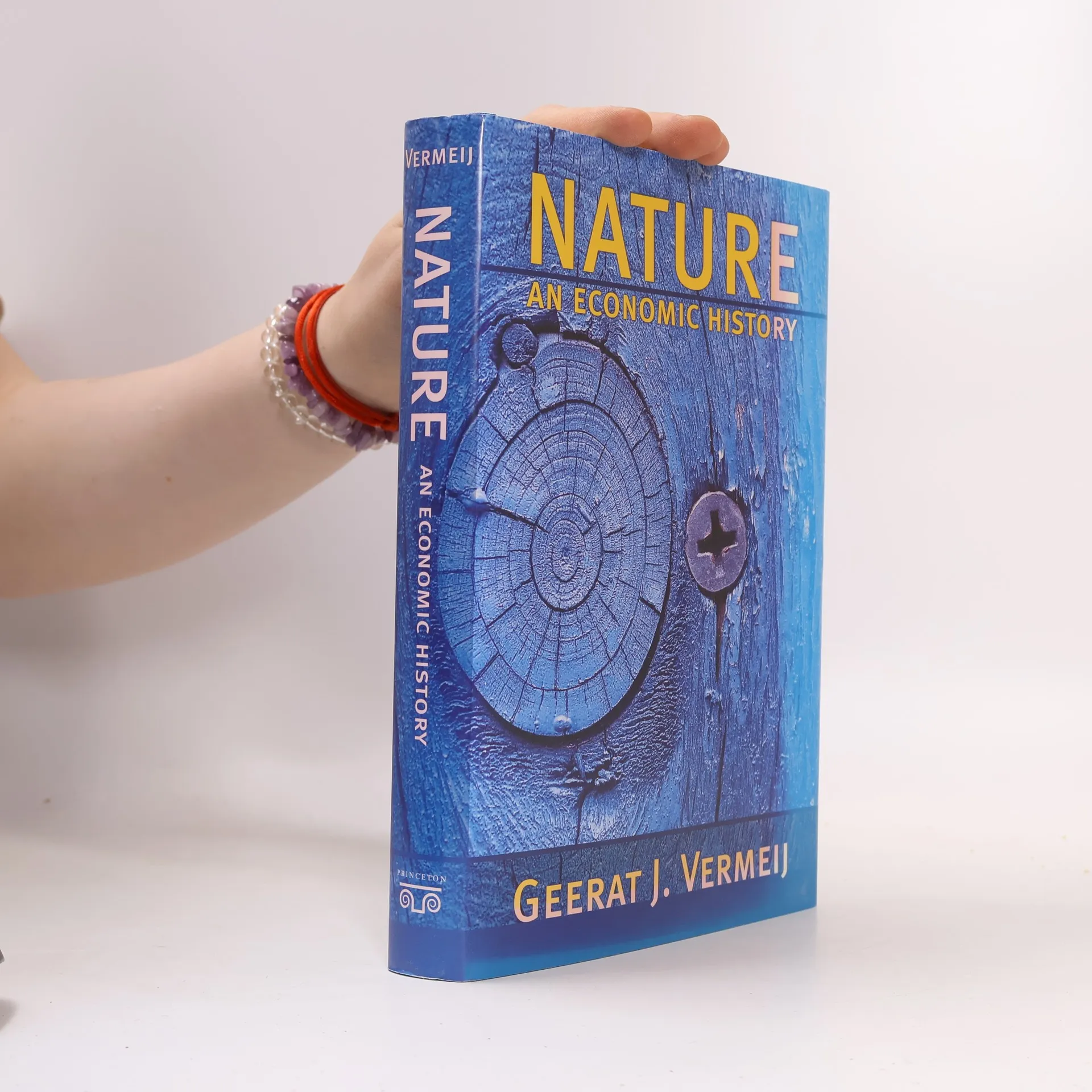
Nature, Geerat J. Vermeij
- Jazyk

- Rok vydání
- 2004
- Vazba
- (pevná)
Doručení
Platební metody
Nikdo zatím neohodnotil.
- Titul
- Nature
- Podtitul
- An Economic History
- Jazyk
- anglicky
- Autoři
- Geerat J. Vermeij
- Vydavatel
- Princeton University Press
- Rok vydání
- 2004
- Vazba
- pevná
- Počet stran
- 445
- ISBN10
- 0691115273
- ISBN13
- 9780691115276
- Série
- Štítky
- Byznys, Příroda, Přírodní vědy, Věda, Evoluce
- Anotace
- All living things, from humans to hermit crabs to deep water plankton, compete for limited resources, a universal truth that connects economics, evolution, and history. Geerat Vermeij explores the interplay of biology, economics, and geology, revealing how competition, cooperation, adaptation, and feedback govern both evolution and human economies. He illustrates that historical patterns in both human and nonhuman evolution stem from these shared principles. Through numerous examples of evolutionary innovations, Vermeij posits that evolution and economics are intertwined. Dominant consumers and producers exert significant influence over the characteristics and distribution of life forms. Consumer demand, paired with favorable supply-side conditions, drives adaptation and escalation among organisms. Although disruptions can temporarily halt these processes, they ultimately intensify escalation, leading to trends in economic systems toward increased power, production rates, and broader reach for dominant members. Despite our ability to shape our environment, humans remain subject to the same economic principles and historical trends that have existed since life's origin over 3 billion years ago. Engagingly written and brilliantly argued, this exploration reveals that the most enduring human institutions are structured like successful living organisms, emphasizing the importance of opportunity and adaptability.