


Více o knize
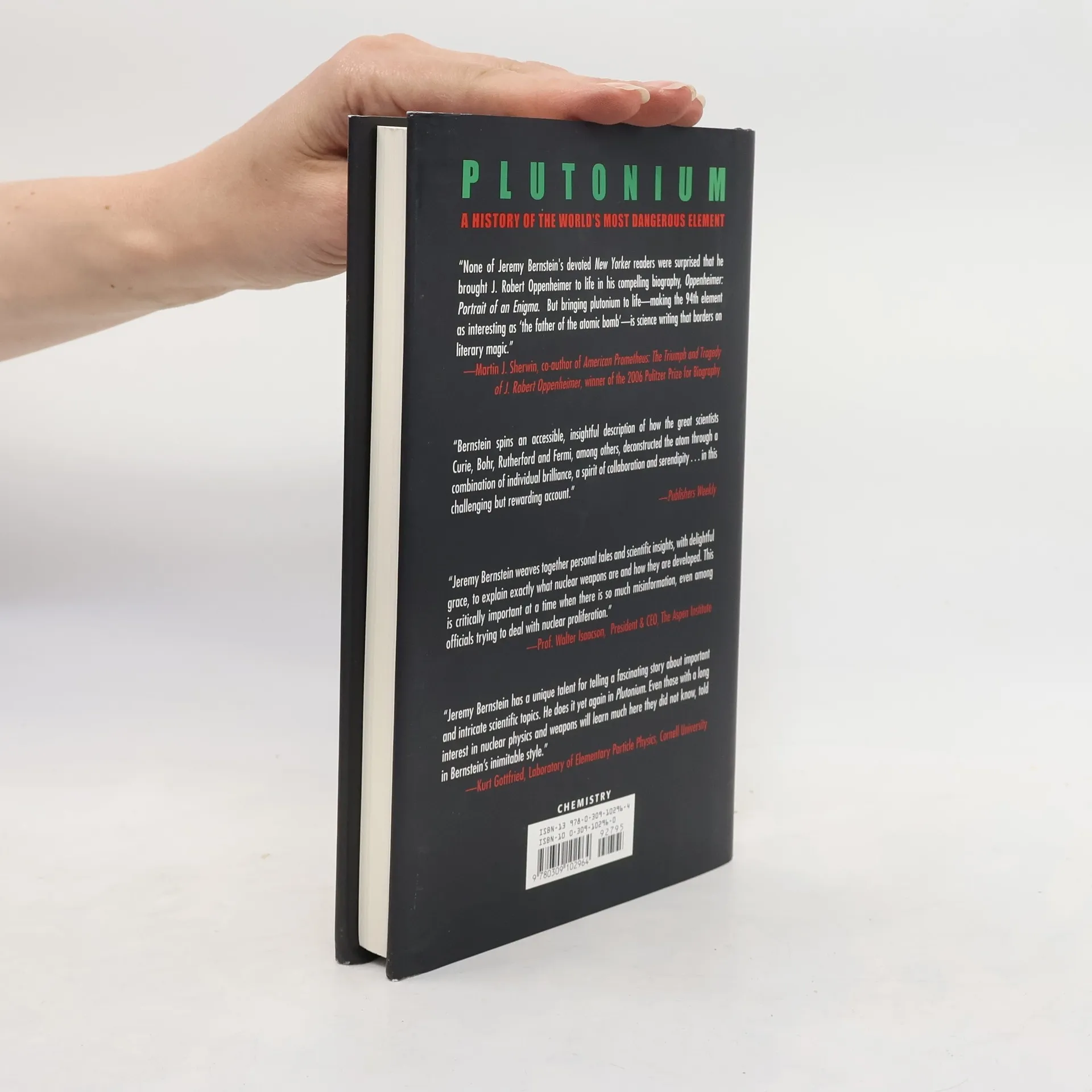
When plutonium was first manufactured at Berkeley in 1941, it was so scarce that it was invisible to the naked eye. A year later, enough had been produced to be seen, but now we face the challenge of managing its excess. The history of plutonium is as peculiar as the element itself. Initially pursued out of scientific curiosity, its significance shifted dramatically with the discovery of fission, revealing its potential as a powerful nuclear weapon. This realization placed plutonium at the center of the World War II arms race, as nations scrambled to acquire it—Russians through espionage, Germans through independent research. Today, the U.S. alone possesses about 47 metric tons, yet it serves almost no purpose beyond military applications. This transformation from a scientific novelty to a dangerous asset raises questions about how curiosity turned into a burden. In this comprehensive history, physicist Jeremy Bernstein explores the journey of plutonium, detailing the scientific advancements and the key figures involved. This work uniquely intertwines the elements of science and the human stories behind the development of this complex and perilous element.
Nákup knihy
Plutonium, Jeremy Bernstein
- Jazyk

- Rok vydání
- 2007
- Vazba
- (pevná)
Doručení
Platební metody
Nikdo zatím neohodnotil.
- Titul
- Plutonium
- Podtitul
- A History of the World's Most Dangerous Element
- Jazyk
- anglicky
- Autoři
- Jeremy Bernstein
- Vydavatel
- Joseph Henry Press
- Rok vydání
- 2007
- Vazba
- pevná
- Počet stran
- 214
- ISBN10
- 0309102960
- ISBN13
- 9780309102964
- Série
- Štítky
- Historické téma, Přírodní vědy, Politika, Věda
- Anotace
- When plutonium was first manufactured at Berkeley in 1941, it was so scarce that it was invisible to the naked eye. A year later, enough had been produced to be seen, but now we face the challenge of managing its excess. The history of plutonium is as peculiar as the element itself. Initially pursued out of scientific curiosity, its significance shifted dramatically with the discovery of fission, revealing its potential as a powerful nuclear weapon. This realization placed plutonium at the center of the World War II arms race, as nations scrambled to acquire it—Russians through espionage, Germans through independent research. Today, the U.S. alone possesses about 47 metric tons, yet it serves almost no purpose beyond military applications. This transformation from a scientific novelty to a dangerous asset raises questions about how curiosity turned into a burden. In this comprehensive history, physicist Jeremy Bernstein explores the journey of plutonium, detailing the scientific advancements and the key figures involved. This work uniquely intertwines the elements of science and the human stories behind the development of this complex and perilous element.