





Více o knize
Ptolemy's Almagest shares with Euclid's Elements the glory of being the scientific text longest in use. From its conception in the second century up to the late Renaissance, this work determined astronomy as a science. During this time the Almagest was not only a work on astronomy; the subject was defined as what is described in the Almagest. The cautious emancipation of the late middle ages and the revolutionary creation of the new science in the 16th century are not conceivable without reference to the Almagest. This text lifted European astronomy to the high standard of knowledge on which the new science flourished. Before, the Ptolemaic models of the orbits of the sun, the moon, and the planets had been refined by Arabic astronomers. They provided the structural elements with which Copernicus and Kepler ushered in the era of modern astronomy. The Almagest survived the destruction of its epicyclic representation of the planetary orbits in the conceptual traces left behind in the theories of its successors. The clear separation of the sidereal from the tropical year, the celestial coordinate systems, the concepts of time, the forms of the constellations, and brightness classifications of celestial objects are, among many other things, still part of the astronomical canon even today.
Nákup knihy
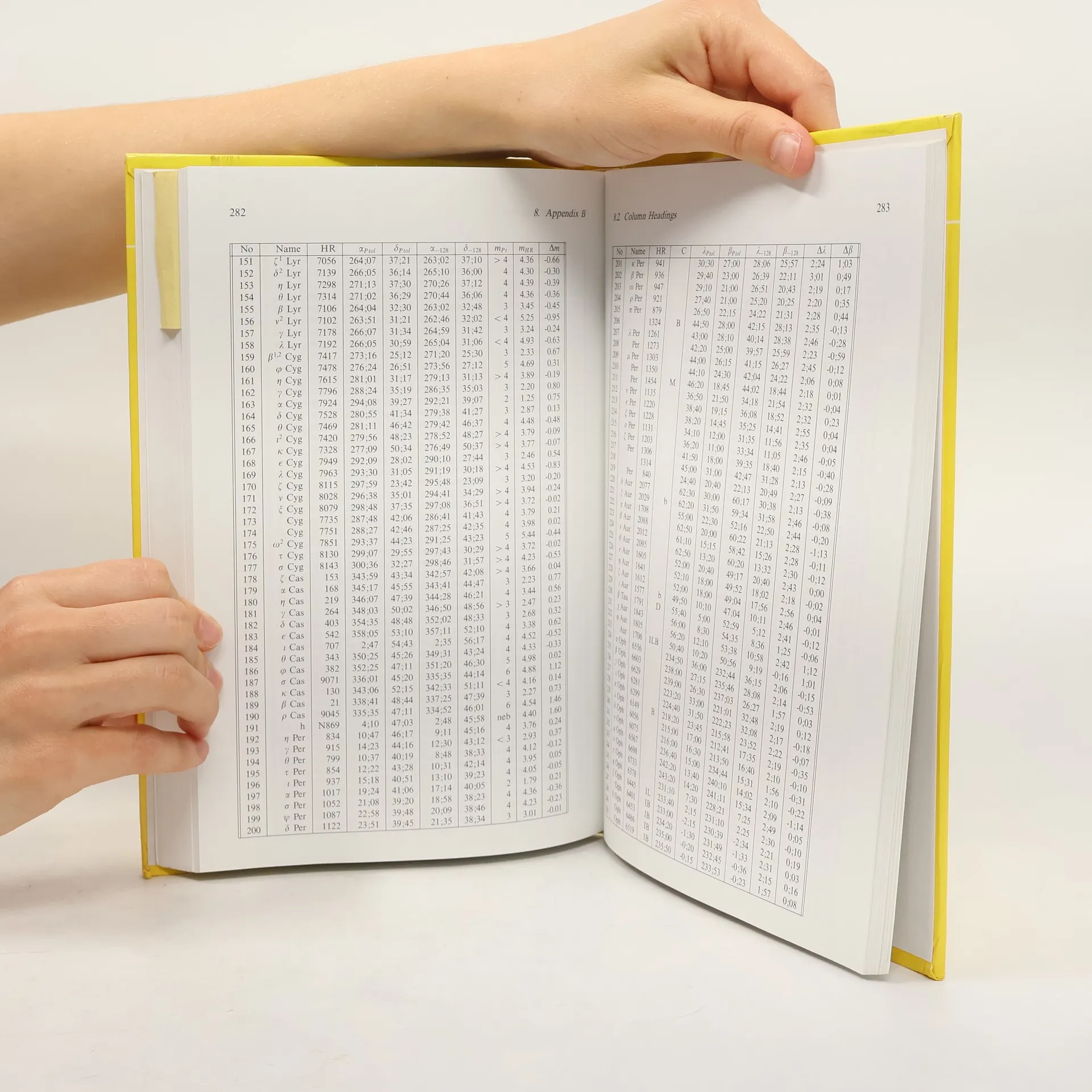
Studies in the History of Mathematics and Physical Sciences - 14: The History of Ptolemy’s Star Catalogue, Gerd Graßhoff
- Jazyk

- Rok vydání
- 1990
- Vazba
- (pevná)
Nikdo zatím neohodnotil.
- Titul
- Studies in the History of Mathematics and Physical Sciences - 14: The History of Ptolemy’s Star Catalogue
- Jazyk
- anglicky
- Autoři
- Gerd Graßhoff
- Vydavatel
- Springer
- Rok vydání
- 1990
- Vazba
- pevná
- Počet stran
- 347
- ISBN10
- 0387971815
- ISBN13
- 9780387971810
- Série
- Kategorie
- Štítky
- Historické téma, Věda
- Anotace
- Ptolemy's Almagest shares with Euclid's Elements the glory of being the scientific text longest in use. From its conception in the second century up to the late Renaissance, this work determined astronomy as a science. During this time the Almagest was not only a work on astronomy; the subject was defined as what is described in the Almagest. The cautious emancipation of the late middle ages and the revolutionary creation of the new science in the 16th century are not conceivable without reference to the Almagest. This text lifted European astronomy to the high standard of knowledge on which the new science flourished. Before, the Ptolemaic models of the orbits of the sun, the moon, and the planets had been refined by Arabic astronomers. They provided the structural elements with which Copernicus and Kepler ushered in the era of modern astronomy. The Almagest survived the destruction of its epicyclic representation of the planetary orbits in the conceptual traces left behind in the theories of its successors. The clear separation of the sidereal from the tropical year, the celestial coordinate systems, the concepts of time, the forms of the constellations, and brightness classifications of celestial objects are, among many other things, still part of the astronomical canon even today.