


Parametry
- 110 stránek
- 4 hodiny čtení
Více o knize
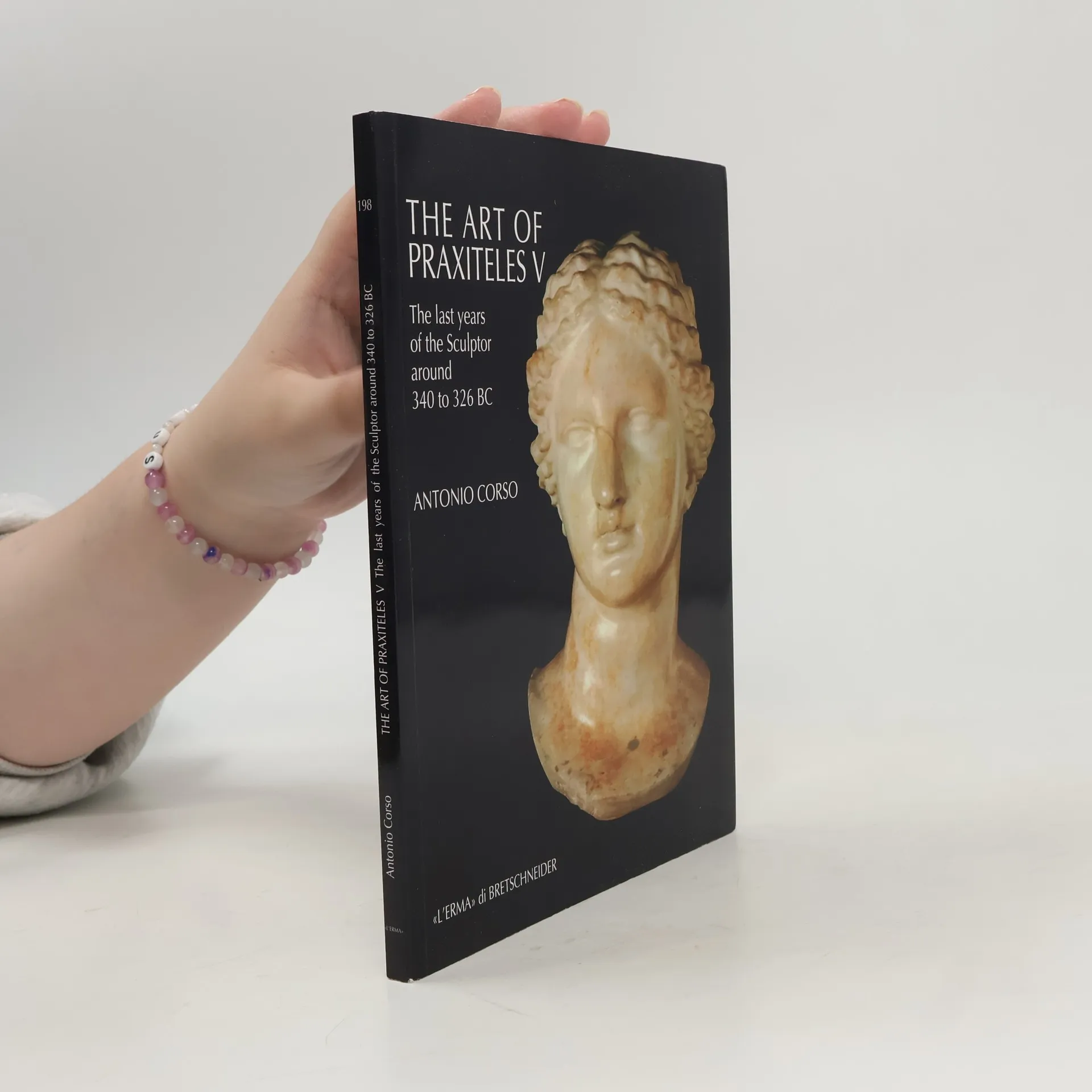
The book is focused on the last works of the most famous late classical sculptor of Greece, the Athenian his oeuvre from around 340 to his death in 326 BC is analytically considered.The most important works of this master considered in this essay are the Eubuleus, the Phryne of Delphi, the Leconfield Aphrodite and the Sleeping Eros. The last works of Praxiteles are particularly important because they shed light to the crucial moment of the decline of the free city state and of the rise of the Hellenistic model of monarchy.With these creations our artist depicted a world of beautiful tales and of mundane beauty which will be extremely influential during the golden period of the Roman classicism as well as during the post - ancient Renaissances.
Nákup knihy
Studia Archaeologica - 198: The Art of Praxiteles V, Antonio Corso
- Jazyk

- Rok vydání
- 2014
- Vazba
- (měkká)
Nikdo zatím neohodnotil.
- Titul
- Studia Archaeologica - 198: The Art of Praxiteles V
- Podtitul
- The Last Years of the Sculptor (Around 340 to 326 BC)
- Jazyk
- anglicky
- Autoři
- Antonio Corso
- Vydavatel
- L'ERMA di BRETSCHNEIDER
- Rok vydání
- 2014
- Vazba
- měkká
- Počet stran
- 110
- ISBN10
- 889130655X
- ISBN13
- 9788891306555
- Série
- Kategorie
- Štítky
- Umění, Historie umění, Japonsko, Řecko, Sochařství, Athény
- Anotace
- The book is focused on the last works of the most famous late classical sculptor of Greece, the Athenian his oeuvre from around 340 to his death in 326 BC is analytically considered.The most important works of this master considered in this essay are the Eubuleus, the Phryne of Delphi, the Leconfield Aphrodite and the Sleeping Eros. The last works of Praxiteles are particularly important because they shed light to the crucial moment of the decline of the free city state and of the rise of the Hellenistic model of monarchy.With these creations our artist depicted a world of beautiful tales and of mundane beauty which will be extremely influential during the golden period of the Roman classicism as well as during the post - ancient Renaissances.