

Více o knize
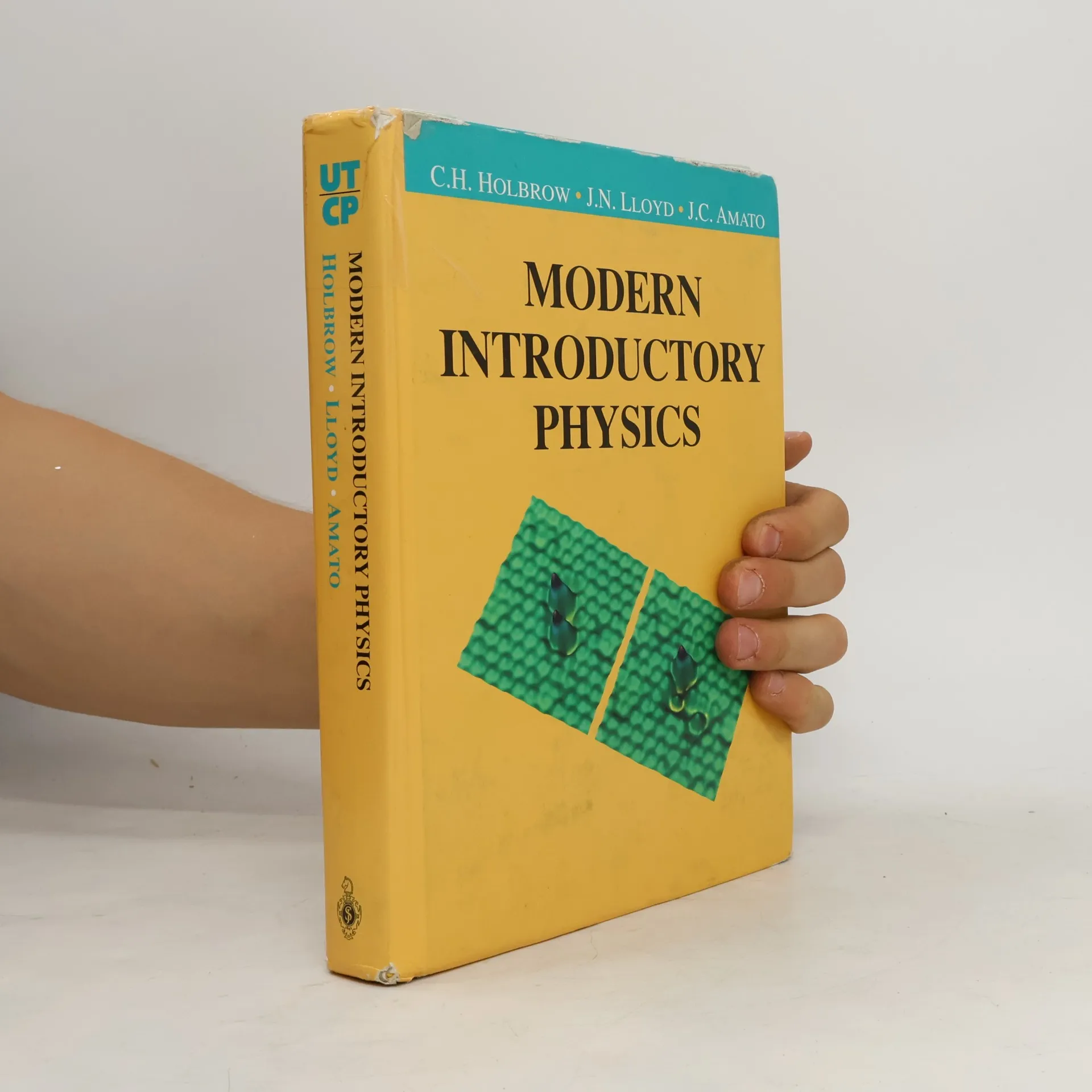
This novel text structures a one-semester course of introductory physics around the question: "Why do we believe in atoms and their properties?" Its theme is thus much of 19th and 20th century physics, but it also connects these topics to classical physics. The treatment emphasizes quantitative reasoning and analysis: how are the ideas of physics inferred from the data, and how are the data acquired? After a brief review of the basic terminology of mechanics, the book begins by introducing the atoms of chemistry: elements, compounds, chemical reactions, valence. It then turns to the physicist's hard- sphere atoms: ideal gases, pressure, temperature, viscosity. The first hint of subatomic structure comes from the discovery of the electron, and the discussion thus turns to electricity, magnetism, light, and x- rays. This leads in turn to waves and relativity. The internal structure of the atom (i.e. the nucleus) was discovered in the early part of the 20th century, and the book concludes with the modern insights into the atom: photons radioactivity, the particle/wave duality, quantum mechanics, the Bohr model, and closes the circle back to the chemist's atom with Moseley's law and the periodic table. A large number of problems, some of them based on computer spreadsheets, as well as laboratory exercises serve to clarify students' understanding.
Nákup knihy
Modern Introductory Physics, Charles H. Holbrow, James N. Lloyd, Joseph C. Amato, Enrique Galvez, M. Elizabeth Parks
- Jazyk

- Rok vydání
- 1999
- Vazba
- (pevná)
Nikdo zatím neohodnotil.
- Titul
- Modern Introductory Physics
- Jazyk
- anglicky
- Vydavatel
- Springer
- Rok vydání
- 1999
- Vazba
- pevná
- Počet stran
- 544
- ISBN10
- 038798576X
- ISBN13
- 9780387985763
- Série
- Štítky
- Přírodní vědy
- Anotace
- This novel text structures a one-semester course of introductory physics around the question: "Why do we believe in atoms and their properties?" Its theme is thus much of 19th and 20th century physics, but it also connects these topics to classical physics. The treatment emphasizes quantitative reasoning and analysis: how are the ideas of physics inferred from the data, and how are the data acquired? After a brief review of the basic terminology of mechanics, the book begins by introducing the atoms of chemistry: elements, compounds, chemical reactions, valence. It then turns to the physicist's hard- sphere atoms: ideal gases, pressure, temperature, viscosity. The first hint of subatomic structure comes from the discovery of the electron, and the discussion thus turns to electricity, magnetism, light, and x- rays. This leads in turn to waves and relativity. The internal structure of the atom (i.e. the nucleus) was discovered in the early part of the 20th century, and the book concludes with the modern insights into the atom: photons radioactivity, the particle/wave duality, quantum mechanics, the Bohr model, and closes the circle back to the chemist's atom with Moseley's law and the periodic table. A large number of problems, some of them based on computer spreadsheets, as well as laboratory exercises serve to clarify students' understanding.