



Parametry
- 496 stránek
- 18 hodin čtení
Více o knize
Particle technology is essential for understanding the formation, processing, and properties of particles and powders found in various products, from construction materials to pharmaceuticals. The process industries heavily rely on particles, whether as catalysts or as intermediate and final products, with minerals often processed in particulate form. While particles offer numerous benefits, they can also pose environmental and health risks, particularly through inhalation, making particle size a critical factor. This well-regarded textbook, now in its 3rd edition, presents a clear introduction to the scientific principles of particle technology, supplemented by practical examples for industrial applications. Each chapter features worked examples and exercises to enhance student learning. Feedback from previous editions has led to revisions, including new introductory chapters on particles as products and computational methods. Key topics covered include characterization (size analysis, surface area), processing (granulation, fluidization), particle formation (granulation, crystallization, tableting, size reduction), storage and transport (hopper design, pneumatic conveying), separation (filtration, settling, cyclones), and safety (fire, explosion, and health hazards). This text is vital for chemical engineering students and is also recommended for those in mechanical engineering, applied chemistry, pharmaceutics, physics, min
Nákup knihy
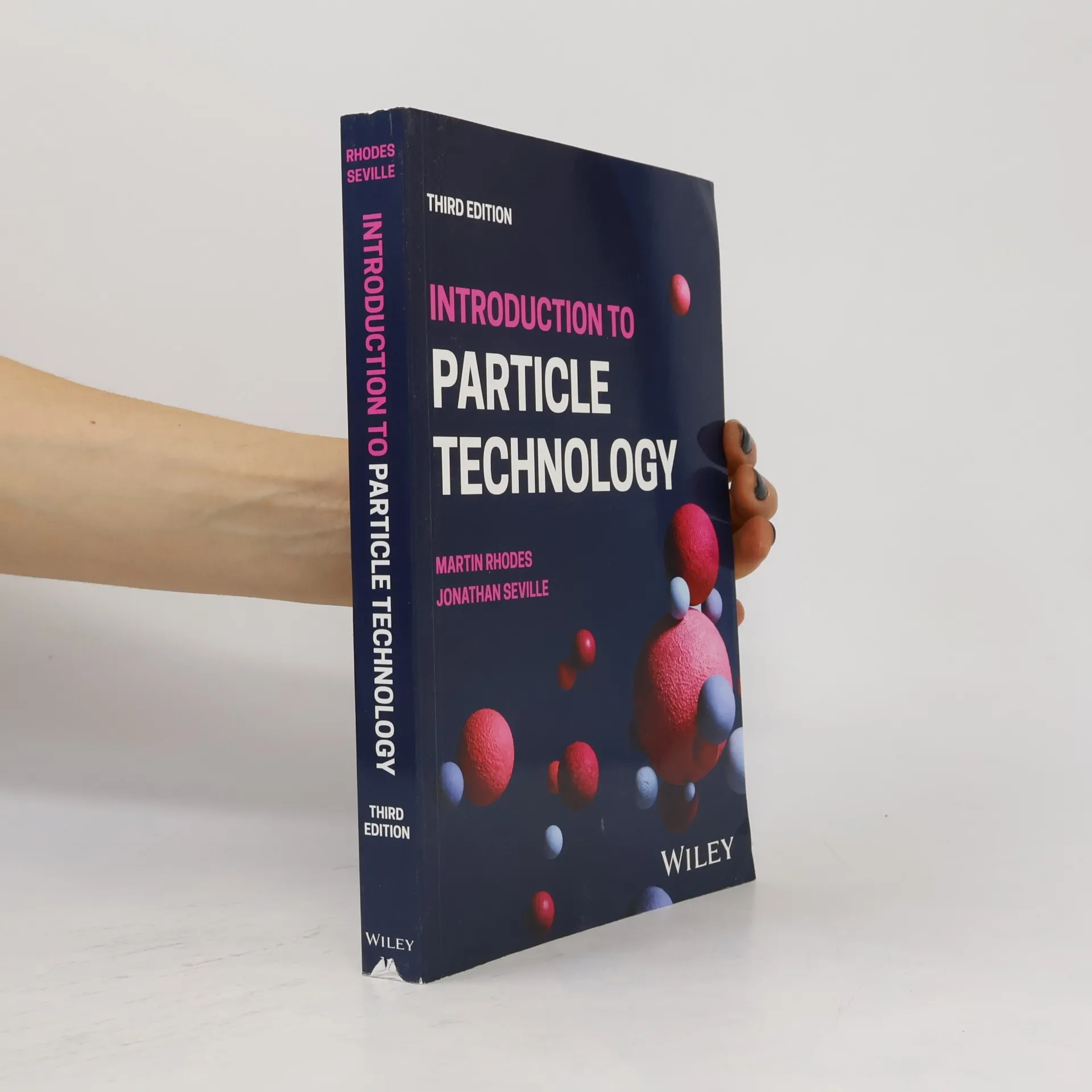
Introduction to Particle Technology, Jonathan K. P. Seville, Martin J. Rhodes
- Jazyk

- Rok vydání
- 2024
- Vazba
- (měkká)
Nikdo zatím neohodnotil.
- Titul
- Introduction to Particle Technology
- Podtitul
- Third Edition
- Jazyk
- anglicky
- Vydavatel
- WILEY
- Rok vydání
- 2024
- Vazba
- měkká
- Počet stran
- 496
- ISBN10
- 111993110X
- ISBN13
- 9781119931102
- Série
- Anotace
- Particle technology is essential for understanding the formation, processing, and properties of particles and powders found in various products, from construction materials to pharmaceuticals. The process industries heavily rely on particles, whether as catalysts or as intermediate and final products, with minerals often processed in particulate form. While particles offer numerous benefits, they can also pose environmental and health risks, particularly through inhalation, making particle size a critical factor. This well-regarded textbook, now in its 3rd edition, presents a clear introduction to the scientific principles of particle technology, supplemented by practical examples for industrial applications. Each chapter features worked examples and exercises to enhance student learning. Feedback from previous editions has led to revisions, including new introductory chapters on particles as products and computational methods. Key topics covered include characterization (size analysis, surface area), processing (granulation, fluidization), particle formation (granulation, crystallization, tableting, size reduction), storage and transport (hopper design, pneumatic conveying), separation (filtration, settling, cyclones), and safety (fire, explosion, and health hazards). This text is vital for chemical engineering students and is also recommended for those in mechanical engineering, applied chemistry, pharmaceutics, physics, min