

Více o knize
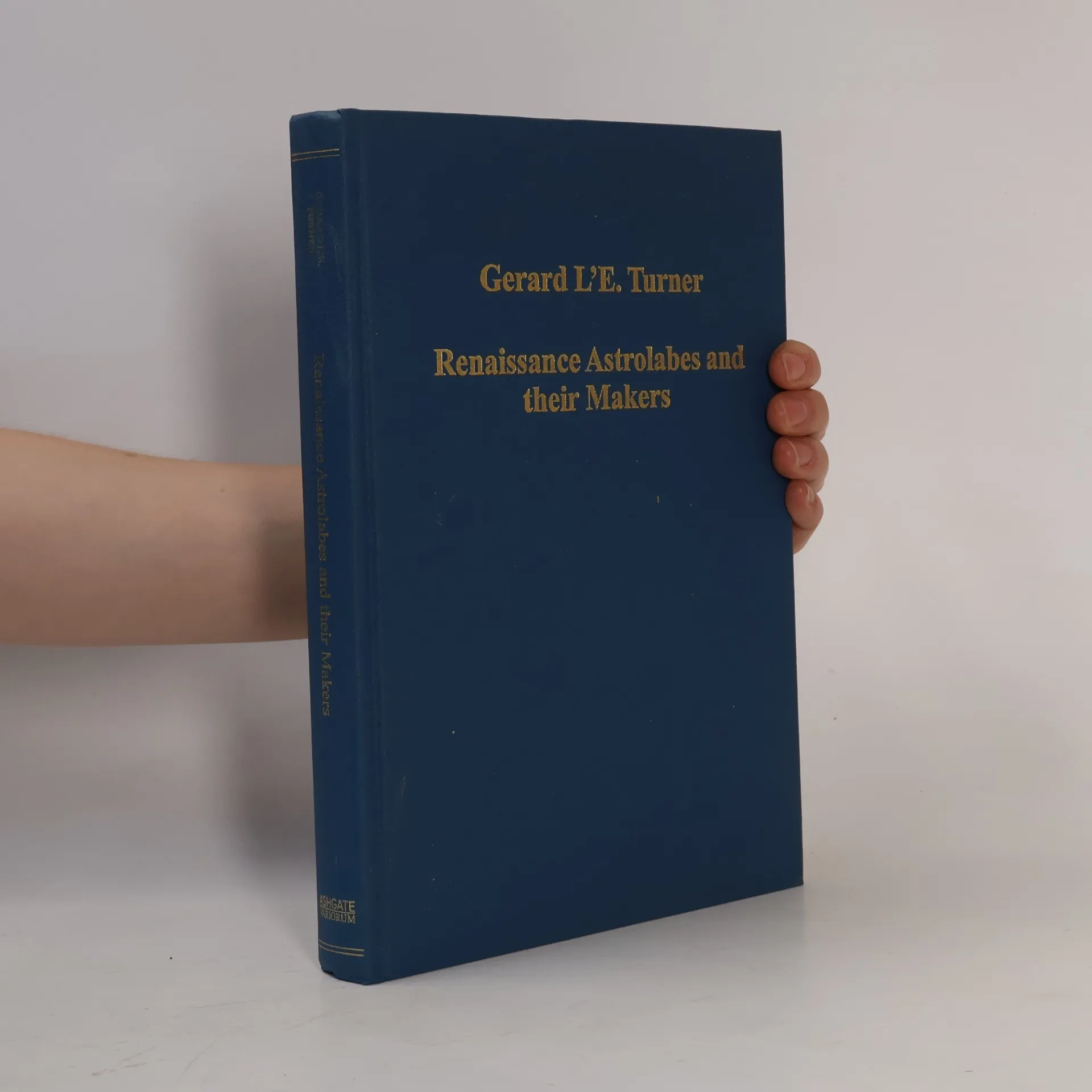
This book is about the archaeology of science, or what can be learnt from the systematic examination of the artefacts made by precision craftsmen for the study of the natural world. An international authority on historical scientific instruments, Gerard Turner has collected here his essays on European astrolabes and related topics. By 1600 the astrolabe had nearly ceased to be made and used in the West, and before that date there was little of the source material for the study of instruments that exists for more modern times. It is necessary to 'read' the instruments themselves, and astrolabes in particular are rich in all sorts of information, mathematical, astronomical, metallurgical, in addition to what they can reveal about craftsmanship, the existence of workshops, and economic and social conditions. There is a strong forensic element in instrument research, and Gerard Turner's achievements include the identification of three astrolabes made by Gerard Mercator, all of whose instruments were thought to have been destroyed. Other essays deal with the discovery of an important late 16th-century Florentine workshop, and of a group of mid-15th-century German astrolabes linked to Regiomontanus.
Nákup knihy
Variorum Collected Studies Series - 766: Renaissance Astrolabes and their Makers, Gerard LEstrange Turner
- Jazyk

- Rok vydání
- 2003
- Vazba
- (pevná)
Nikdo zatím neohodnotil.
- Titul
- Variorum Collected Studies Series - 766: Renaissance Astrolabes and their Makers
- Jazyk
- anglicky
- Autoři
- Gerard LEstrange Turner
- Vydavatel
- Routledge
- Rok vydání
- 2003
- Vazba
- pevná
- Počet stran
- 320
- ISBN10
- 0860789039
- ISBN13
- 9780860789031
- Série
- Kategorie
- Štítky
- Historické téma, Příroda, Věda, Technologie, Evropa, Vesmír, Středověk, Historie Evropy, Sebrané spisy, Historie vědy
- Anotace
- This book is about the archaeology of science, or what can be learnt from the systematic examination of the artefacts made by precision craftsmen for the study of the natural world. An international authority on historical scientific instruments, Gerard Turner has collected here his essays on European astrolabes and related topics. By 1600 the astrolabe had nearly ceased to be made and used in the West, and before that date there was little of the source material for the study of instruments that exists for more modern times. It is necessary to 'read' the instruments themselves, and astrolabes in particular are rich in all sorts of information, mathematical, astronomical, metallurgical, in addition to what they can reveal about craftsmanship, the existence of workshops, and economic and social conditions. There is a strong forensic element in instrument research, and Gerard Turner's achievements include the identification of three astrolabes made by Gerard Mercator, all of whose instruments were thought to have been destroyed. Other essays deal with the discovery of an important late 16th-century Florentine workshop, and of a group of mid-15th-century German astrolabes linked to Regiomontanus.