

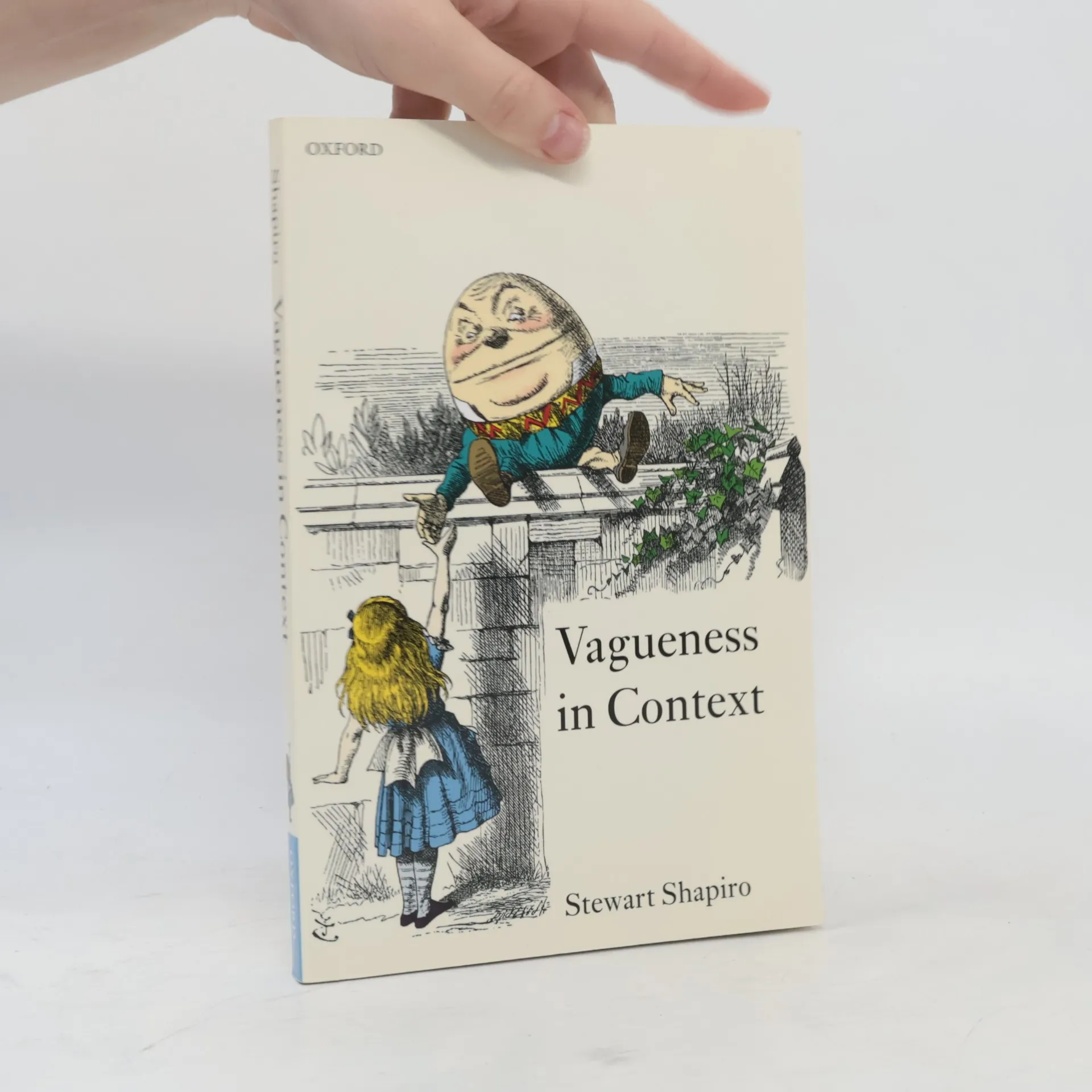

Vagueness in Context
Autoři
Více o knize
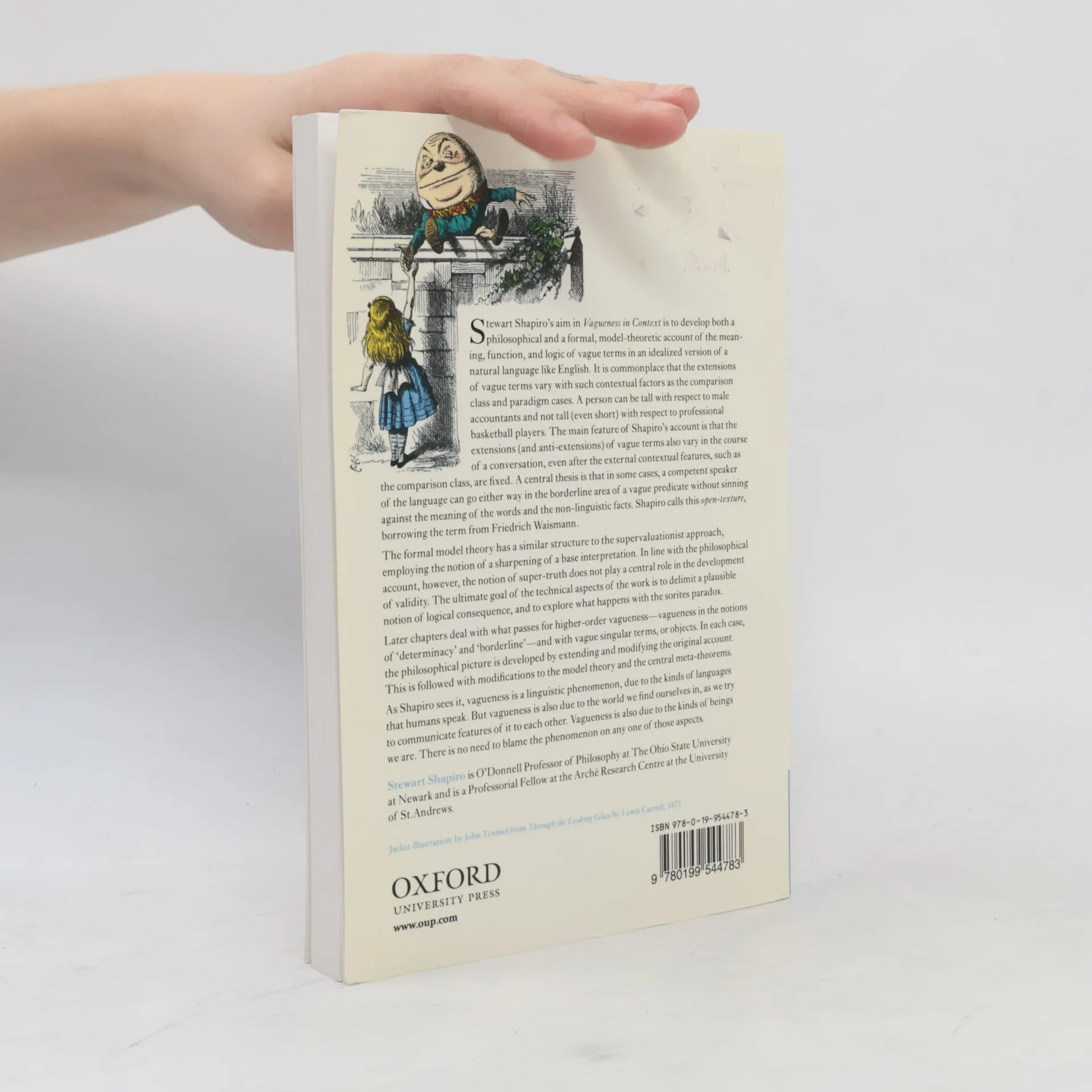
Stewart Shapiro aims to develop a philosophical and formal, model-theoretic account of vague terms in an idealized natural language like English. The extensions of vague terms vary with contextual factors such as comparison classes and paradigm cases; for instance, someone may be considered tall among male accountants but not among professional basketball players. Shapiro's account posits that the extensions of vague terms also fluctuate during conversations, even when external contextual features are fixed. A key thesis is that a competent speaker can navigate the borderline of vague predicates without contradicting the meaning of the words or the non-linguistic facts. He refers to this phenomenon as open texture, borrowing the term from Friedrich Waismann. The formal model theory resembles the supervaluationist approach but does not prioritize super-truth in developing validity. The technical aspects aim to define a plausible notion of logical consequence and address the sorites paradox. Subsequent chapters explore higher-order vagueness and vague singular terms, modifying the original account and the model theory accordingly. Shapiro views vagueness as a linguistic phenomenon shaped by the languages we use, the world we inhabit, and our nature as beings, suggesting that it cannot be attributed solely to one of these aspects.
Nákup knihy
Vagueness in Context, Stewart Shapiro
- Jazyk

- Rok vydání
- 2008
- Vazba
- (měkká)
Doručení
Platební metody
Nikdo zatím neohodnotil.
- Titul
- Vagueness in Context
- Jazyk
- anglicky
- Autoři
- Stewart Shapiro
- Vydavatel
- Oxford University Press
- Rok vydání
- 2008
- Vazba
- měkká
- Počet stran
- 242
- ISBN10
- 0199544786
- ISBN13
- 9780199544783
- Série
- Štítky
- Logika
- Anotace
- Stewart Shapiro aims to develop a philosophical and formal, model-theoretic account of vague terms in an idealized natural language like English. The extensions of vague terms vary with contextual factors such as comparison classes and paradigm cases; for instance, someone may be considered tall among male accountants but not among professional basketball players. Shapiro's account posits that the extensions of vague terms also fluctuate during conversations, even when external contextual features are fixed. A key thesis is that a competent speaker can navigate the borderline of vague predicates without contradicting the meaning of the words or the non-linguistic facts. He refers to this phenomenon as open texture, borrowing the term from Friedrich Waismann. The formal model theory resembles the supervaluationist approach but does not prioritize super-truth in developing validity. The technical aspects aim to define a plausible notion of logical consequence and address the sorites paradox. Subsequent chapters explore higher-order vagueness and vague singular terms, modifying the original account and the model theory accordingly. Shapiro views vagueness as a linguistic phenomenon shaped by the languages we use, the world we inhabit, and our nature as beings, suggesting that it cannot be attributed solely to one of these aspects.