

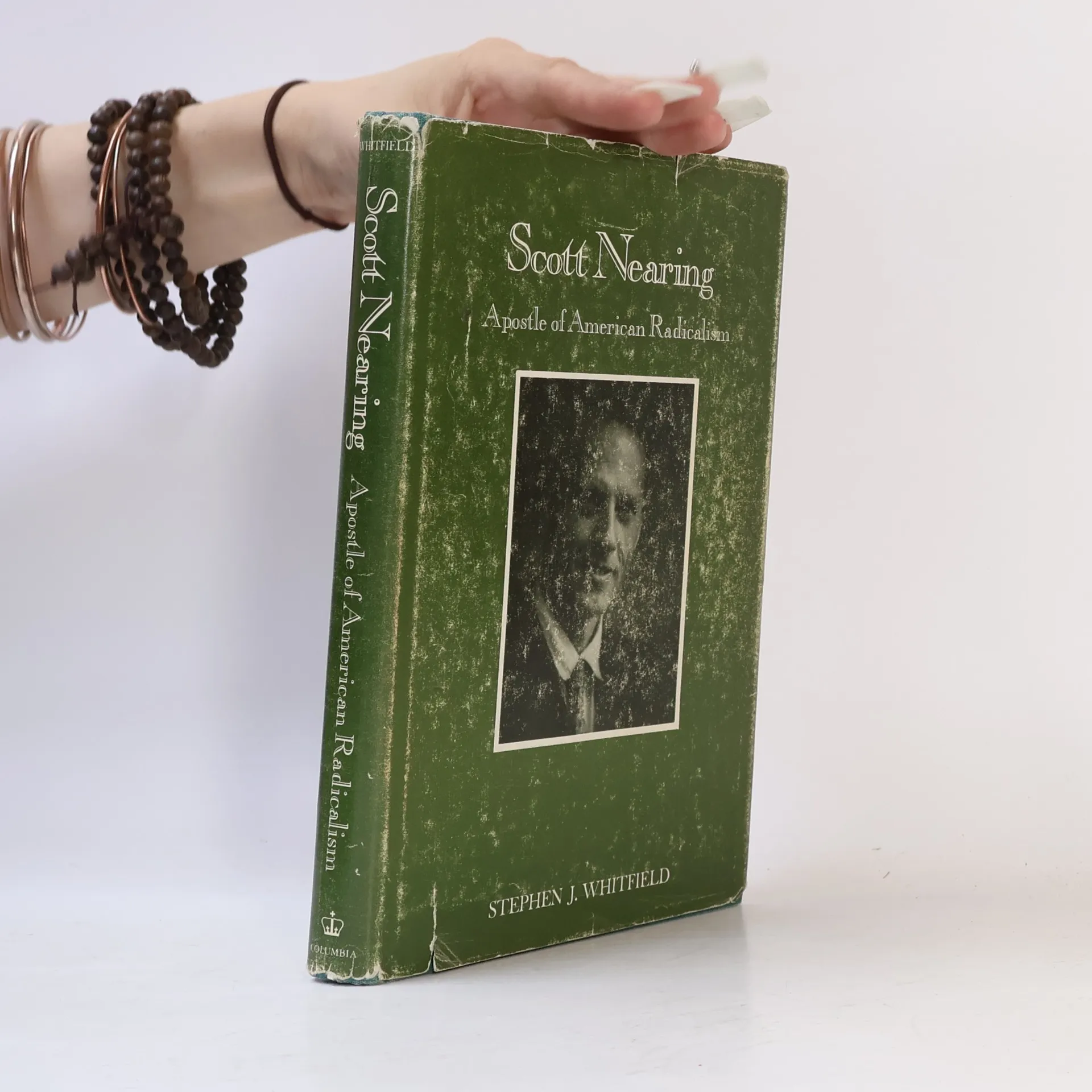



Scott Nearing
Apostle of American Radicalism
Autoři
Parametry
- 269 stránek
- 10 hodin čtení
Více o knize
Many know of Scott Nearing in the context of his retreat from the urban environment to the simpler world of homesteading, subsistence farming, and vegetarianism, so movingly portrayed in the book written with his wife "Living the Good Life." This Scott Nearing of contemporary counter-cultural myth is a beatific nonagenarian, who has escaped the corrupt influence of American capitalist society in order to return to a natural life woven from romantic, bucolic ideals. Yet many others are aware of another, earlier aspect of Nearing's singular career; and it is to his political radicalism that Whitfield's perceptive, gracefully written biography is primarily devoted. Nearing is among the very few surviving old Progressives from the turn of the century, who moved beyond liberalism into the Socialist and then the Communist parties. He felt forced to leave the Party, however, in 1930. Nearing's extraordinary vibrancy and influence, through oratory, pamphleteering, and personal example, are depicted as illustrative of significant aspects of modern American radicalism.
Nákup knihy
Scott Nearing, Stephen J. Whitfield
- Jazyk

- Rok vydání
- 1974
- Vazba
- (pevná)
Doručení
Platební metody
Nikdo zatím neohodnotil.
- Titul
- Scott Nearing
- Podtitul
- Apostle of American Radicalism
- Jazyk
- anglicky
- Autoři
- Stephen J. Whitfield
- Vydavatel
- Columbia University Press
- Rok vydání
- 1974
- Vazba
- pevná
- Počet stran
- 269
- ISBN10
- 023103816X
- ISBN13
- 9780231038164
- Série
- Štítky
- Politika, USA, Politické teorie, Historie USA, Socialismus
- Anotace
- Many know of Scott Nearing in the context of his retreat from the urban environment to the simpler world of homesteading, subsistence farming, and vegetarianism, so movingly portrayed in the book written with his wife "Living the Good Life." This Scott Nearing of contemporary counter-cultural myth is a beatific nonagenarian, who has escaped the corrupt influence of American capitalist society in order to return to a natural life woven from romantic, bucolic ideals. Yet many others are aware of another, earlier aspect of Nearing's singular career; and it is to his political radicalism that Whitfield's perceptive, gracefully written biography is primarily devoted. Nearing is among the very few surviving old Progressives from the turn of the century, who moved beyond liberalism into the Socialist and then the Communist parties. He felt forced to leave the Party, however, in 1930. Nearing's extraordinary vibrancy and influence, through oratory, pamphleteering, and personal example, are depicted as illustrative of significant aspects of modern American radicalism.