

Více o knize
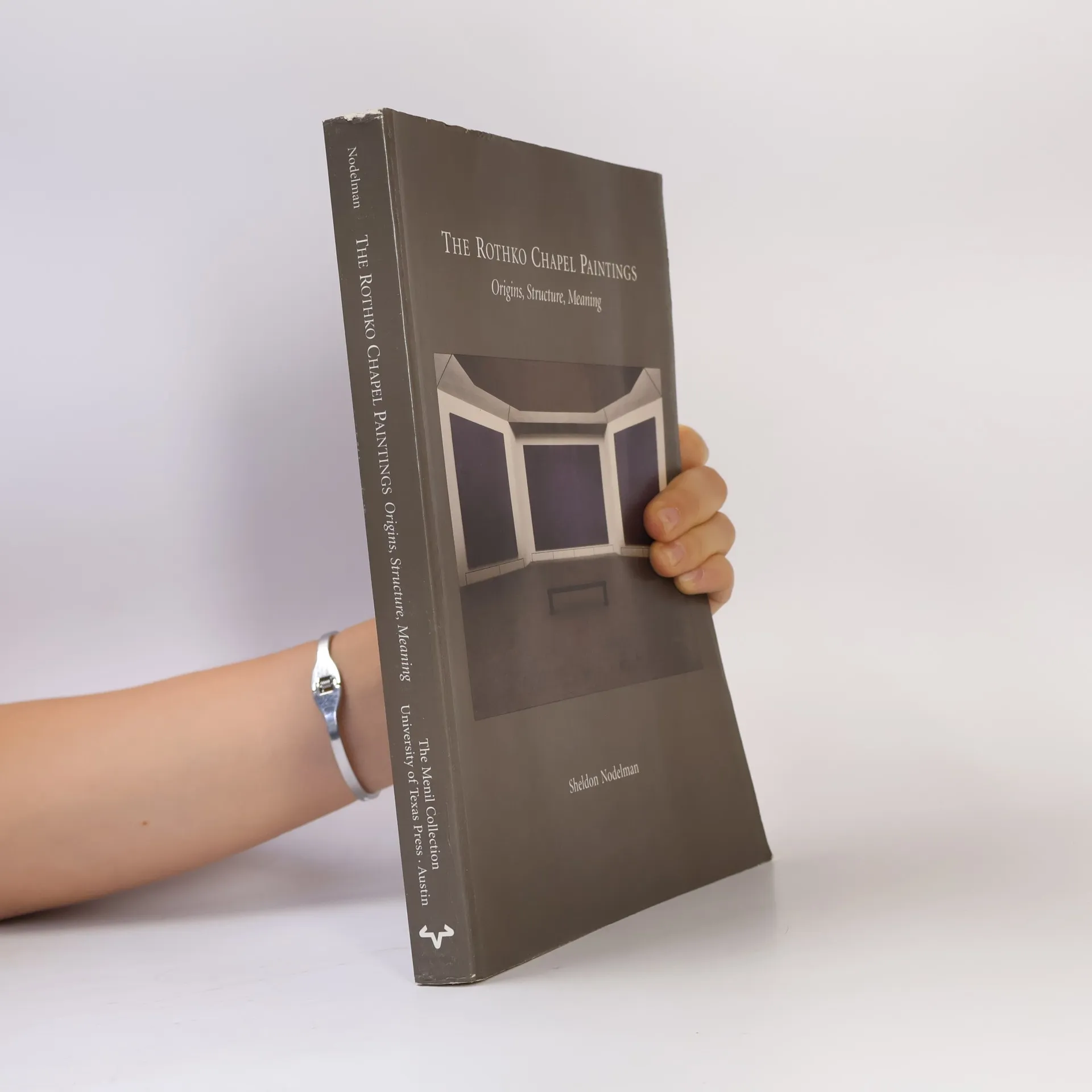
The paintings executed in 1964-1967 by American artist Mark Rothko for the Rothko Chapel in Houston represent the fulfillment of the artist's lifelong ambition and a breakthrough in twentieth-century art. Unlike previous sets of paintings commissioned for the Seagram Building and Harvard University, the Chapel commission allowed Rothko to determine the architectural setting and lighting in which the paintings would appear. This proved to be the catalyst for a new mode of pictorial dynamics based on a kind of interaction of paintings, architecture, and light previously unknown. No painting in the set could be understood in isolation from the rest or apart from its place in the architectural setting. The Rothko Chapel Paintings explores this interdependence of paintings and place. As viewers move about the Chapel's octagonal enclosure, over whose walls the fourteen panels are continuously distributed, they discover systems of pictorial interactions which become the terms or characters of a cosmological drama in which the viewer is a necessary participant. In the act of vision, the embodied viewer is prompted not merely to witness but also to reenact that questioning of human destiny which has preoccupied the Western spiritual tradition.
Nákup knihy
The Rothko Chapel Paintings, Sheldon Nodelman
- Jazyk

- Rok vydání
- 1997
- Vazba
- (měkká)
Nikdo zatím neohodnotil.
- Titul
- The Rothko Chapel Paintings
- Podtitul
- Origins, Structure, Meaning
- Jazyk
- anglicky
- Autoři
- Sheldon Nodelman
- Vydavatel
- University of Texas Press
- Rok vydání
- 1997
- Vazba
- měkká
- Počet stran
- 359
- ISBN10
- 0939594374
- ISBN13
- 9780939594375
- Série
- Kategorie
- Štítky
- Umění
- Anotace
- The paintings executed in 1964-1967 by American artist Mark Rothko for the Rothko Chapel in Houston represent the fulfillment of the artist's lifelong ambition and a breakthrough in twentieth-century art. Unlike previous sets of paintings commissioned for the Seagram Building and Harvard University, the Chapel commission allowed Rothko to determine the architectural setting and lighting in which the paintings would appear. This proved to be the catalyst for a new mode of pictorial dynamics based on a kind of interaction of paintings, architecture, and light previously unknown. No painting in the set could be understood in isolation from the rest or apart from its place in the architectural setting. The Rothko Chapel Paintings explores this interdependence of paintings and place. As viewers move about the Chapel's octagonal enclosure, over whose walls the fourteen panels are continuously distributed, they discover systems of pictorial interactions which become the terms or characters of a cosmological drama in which the viewer is a necessary participant. In the act of vision, the embodied viewer is prompted not merely to witness but also to reenact that questioning of human destiny which has preoccupied the Western spiritual tradition.