



Více o knize
This work explores a cyclic reading of Savitri using the traditional Vedic recitation method known as Ghana Pāth, which involves complex sound patterns. The recitation organizes elements into groups, creating a rich auditory experience. Our aim is to adapt this chanting technique to English poetry, specifically Sri Aurobindo’s Savitri, which is structured in end-stopped pentametric blank verse. By treating lines as the foundational elements, we propose a Ghana Recitation of selected passages that resonate with a variety of sounds and rhythms. This approach is expected to enhance the accent-based medium, introducing new dimensions of sound and movement. In this study, we have chosen a limited selection from Part One of Savitri, focusing on the first three Books, which contain 24 Cantos and 11,674 lines. Our Ghana formulation includes only 60 passages, approximately 1,500 lines, representing about 12% of the total. This selection is subjective and may vary with different interpretations or moods. The goal of Ghana recitation is to cultivate multi-tonal vibrations that engage our entire being, creating a harmonious soundscape that enhances understanding and perception. This practice emphasizes the fusion of sound and sense, aiming to evoke a deeper awareness through the auditory experience.
Nákup knihy
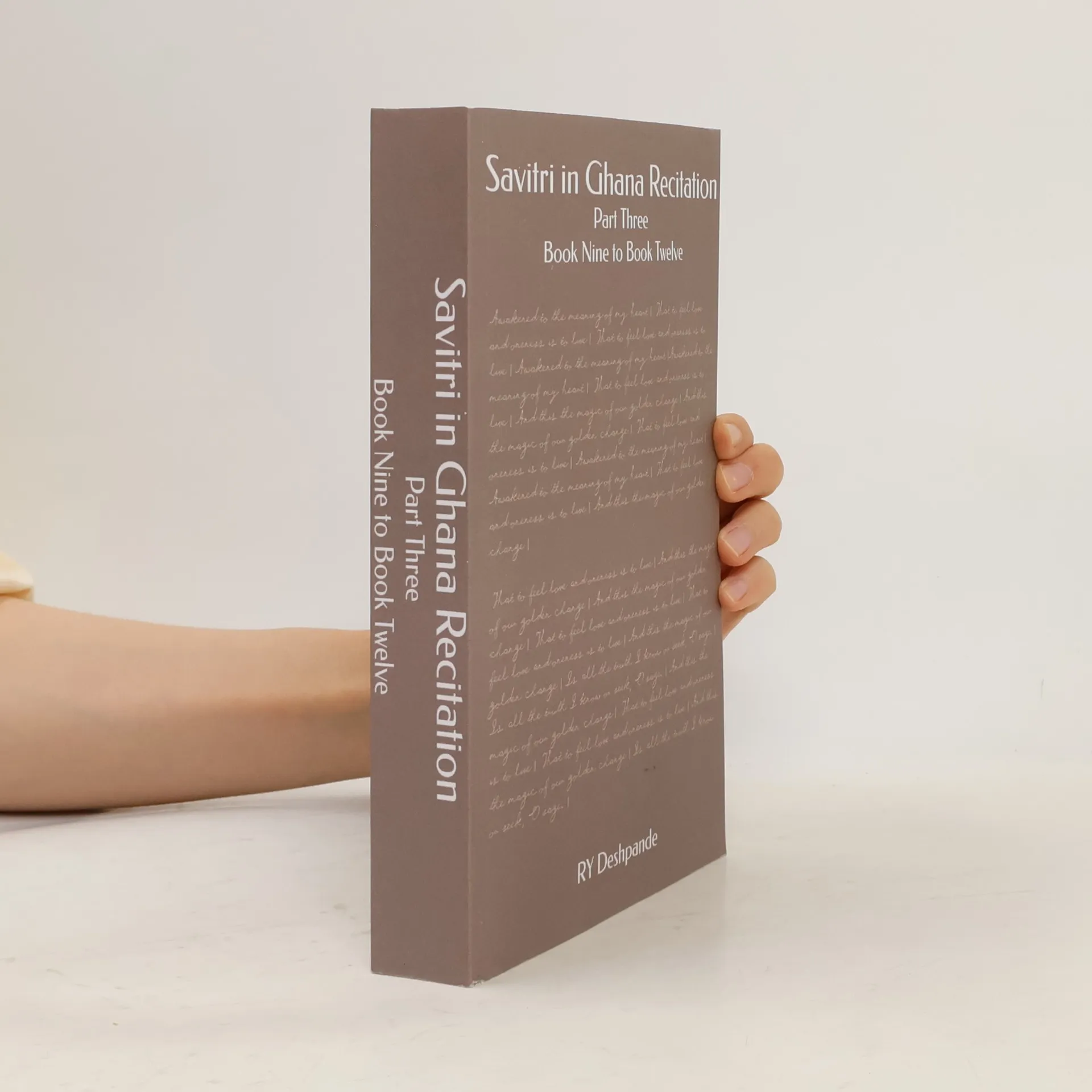
Part Three - Book Nine to Book Twelve: Savitri In Ghana Recitation, RY Deshpande
- Jazyk

- Rok vydání
- 2019
- Vazba
- (měkká)
Doručení
Platební metody
Nikdo zatím neohodnotil.
- Titul
- Part Three - Book Nine to Book Twelve: Savitri In Ghana Recitation
- Jazyk
- anglicky
- Autoři
- RY Deshpande
- Vydavatel
- Independently published
- Rok vydání
- 2019
- Vazba
- měkká
- Počet stran
- 492
- ISBN10
- 109573914X
- ISBN13
- 9781095739143
- Série
- Štítky
- Anotace
- This work explores a cyclic reading of Savitri using the traditional Vedic recitation method known as Ghana Pāth, which involves complex sound patterns. The recitation organizes elements into groups, creating a rich auditory experience. Our aim is to adapt this chanting technique to English poetry, specifically Sri Aurobindo’s Savitri, which is structured in end-stopped pentametric blank verse. By treating lines as the foundational elements, we propose a Ghana Recitation of selected passages that resonate with a variety of sounds and rhythms. This approach is expected to enhance the accent-based medium, introducing new dimensions of sound and movement. In this study, we have chosen a limited selection from Part One of Savitri, focusing on the first three Books, which contain 24 Cantos and 11,674 lines. Our Ghana formulation includes only 60 passages, approximately 1,500 lines, representing about 12% of the total. This selection is subjective and may vary with different interpretations or moods. The goal of Ghana recitation is to cultivate multi-tonal vibrations that engage our entire being, creating a harmonious soundscape that enhances understanding and perception. This practice emphasizes the fusion of sound and sense, aiming to evoke a deeper awareness through the auditory experience.