




Více o knize
This fourth volume in the Cambridge Ancient History centres on events in Greece and Persia in the sixth and fifth centuries BC, from the creation of the Persian empire to the defeat of the empire's invasion of Greece.The first section of the volume examines the Persian empire, its territories, and its expansion under Cyrus, Darius, and Xerxes. Second, in this era, Sparta attained maturity as the leader of a military coalition and Athens passed through a period of enlightened tyranny to a moderate democracy of dynamic energy and intelligence. Given the contrast between Greek idealism and Persian absolutism a clash between the two empires was inevitable. Important chapters deal with the revolt of Ionian Greeks against the Persians, and the two Persian invasions of Greece, including the epic battles of Marathon, Thermopylae, and Salamis. The third division of the volume turns to the Western Mediterranean: Italy has now become a significant factor in the area's historical development and is explored in terms of its peoples and languages from the Bronze to the Iron Ages.
Nákup knihy
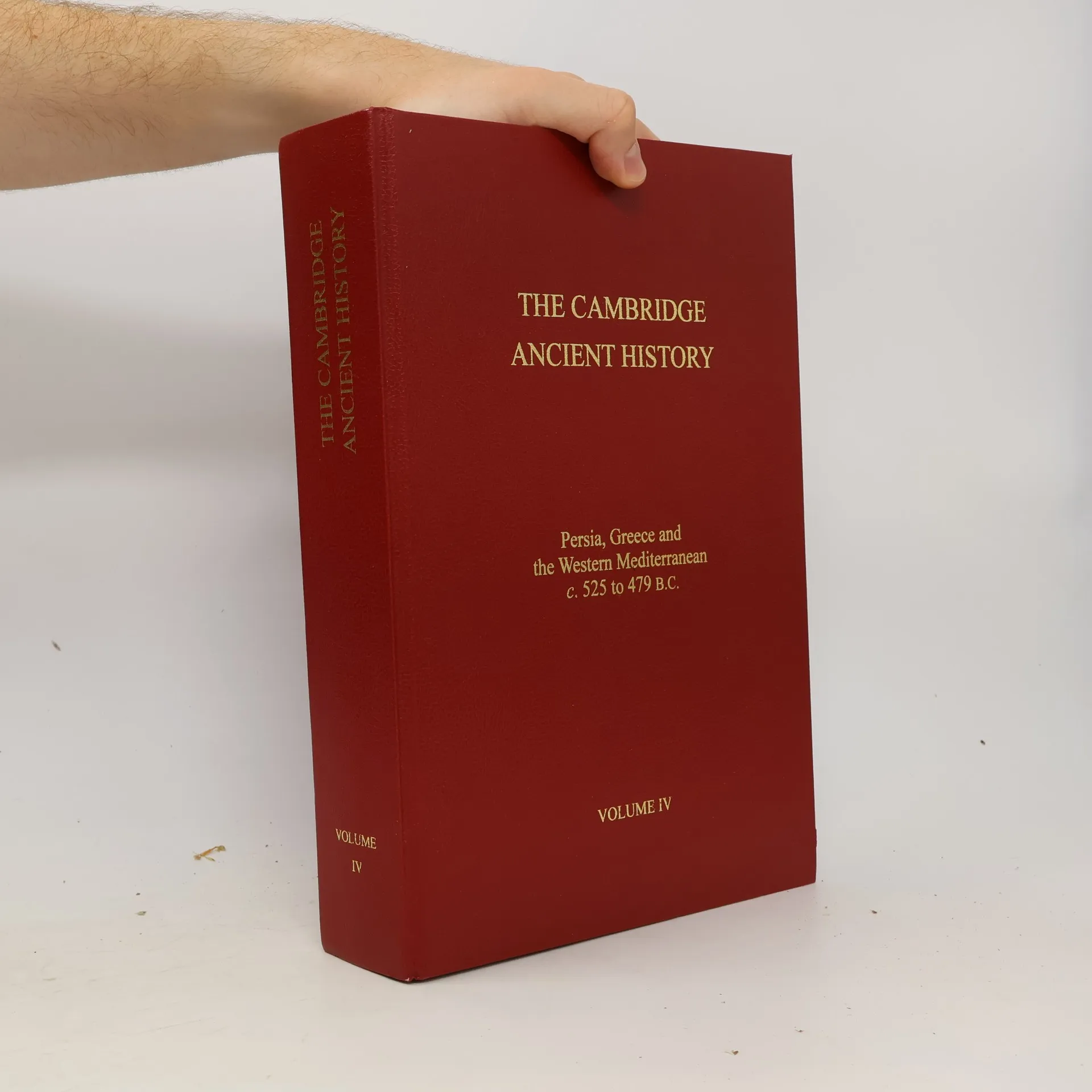
The Cambridge Ancient History, Volume 4, John Boardman, Martin Ostwald, N. G. L. (Nicholas Geoffrey Lemprière) Hammond, David M. Lewis
- Jazyk

- Rok vydání
- 2006
- Vazba
- (pevná)
Doručení
Platební metody
Nikdo zatím neohodnotil.
- Titul
- The Cambridge Ancient History, Volume 4
- Podtitul
- Persia, Greece and the Western Mediterranean, c.525-479 B.C. - 3rd Edition
- Jazyk
- anglicky
- Vydavatel
- Cambridge University Press
- Rok vydání
- 2006
- Vazba
- pevná
- Počet stran
- 946
- ISBN10
- 0521228042
- ISBN13
- 9780521228046
- Série
- Kategorie
- Štítky
- Historické téma, Starověk, antika
- Anotace
- This fourth volume in the Cambridge Ancient History centres on events in Greece and Persia in the sixth and fifth centuries BC, from the creation of the Persian empire to the defeat of the empire's invasion of Greece.The first section of the volume examines the Persian empire, its territories, and its expansion under Cyrus, Darius, and Xerxes. Second, in this era, Sparta attained maturity as the leader of a military coalition and Athens passed through a period of enlightened tyranny to a moderate democracy of dynamic energy and intelligence. Given the contrast between Greek idealism and Persian absolutism a clash between the two empires was inevitable. Important chapters deal with the revolt of Ionian Greeks against the Persians, and the two Persian invasions of Greece, including the epic battles of Marathon, Thermopylae, and Salamis. The third division of the volume turns to the Western Mediterranean: Italy has now become a significant factor in the area's historical development and is explored in terms of its peoples and languages from the Bronze to the Iron Ages.