



Parametry
- 336 stránek
- 12 hodin čtení
Více o knize
To envision the future shaped by information technology, it’s essential to consider the social context that gives it meaning. While many have predicted that technology will eliminate the need for traditional structures—such as travel, supermarkets, and social interactions—individual users remain skeptical. Overwhelmed by information overload and frustrated by unreliable systems, they struggle to grasp the digital revolution's true potential. John Seely Brown and Paul Duguid illuminate the disconnect between the optimistic visions of tech enthusiasts and the pessimism of everyday users, attributing it to the 'tunnel vision' fostered by information-centric technologies. This narrow focus often overlooks the importance of social networks. The authors draw on experiences from Xerox PARC and examples from IBM and California's 'Virtual University' to challenge the sweeping predictions of futurists. They argue that many tools and organizations deemed obsolete actually serve vital social functions that people value. Instead of discarding these 'relics,' we should explore how emerging technologies can learn from and enhance them. By emphasizing the significance of human sociability, the authors provide an optimistic perspective that recognizes the contributions of communities and institutions, ultimately guiding us toward a richer integration of technology in our work and daily lives.
Nákup knihy
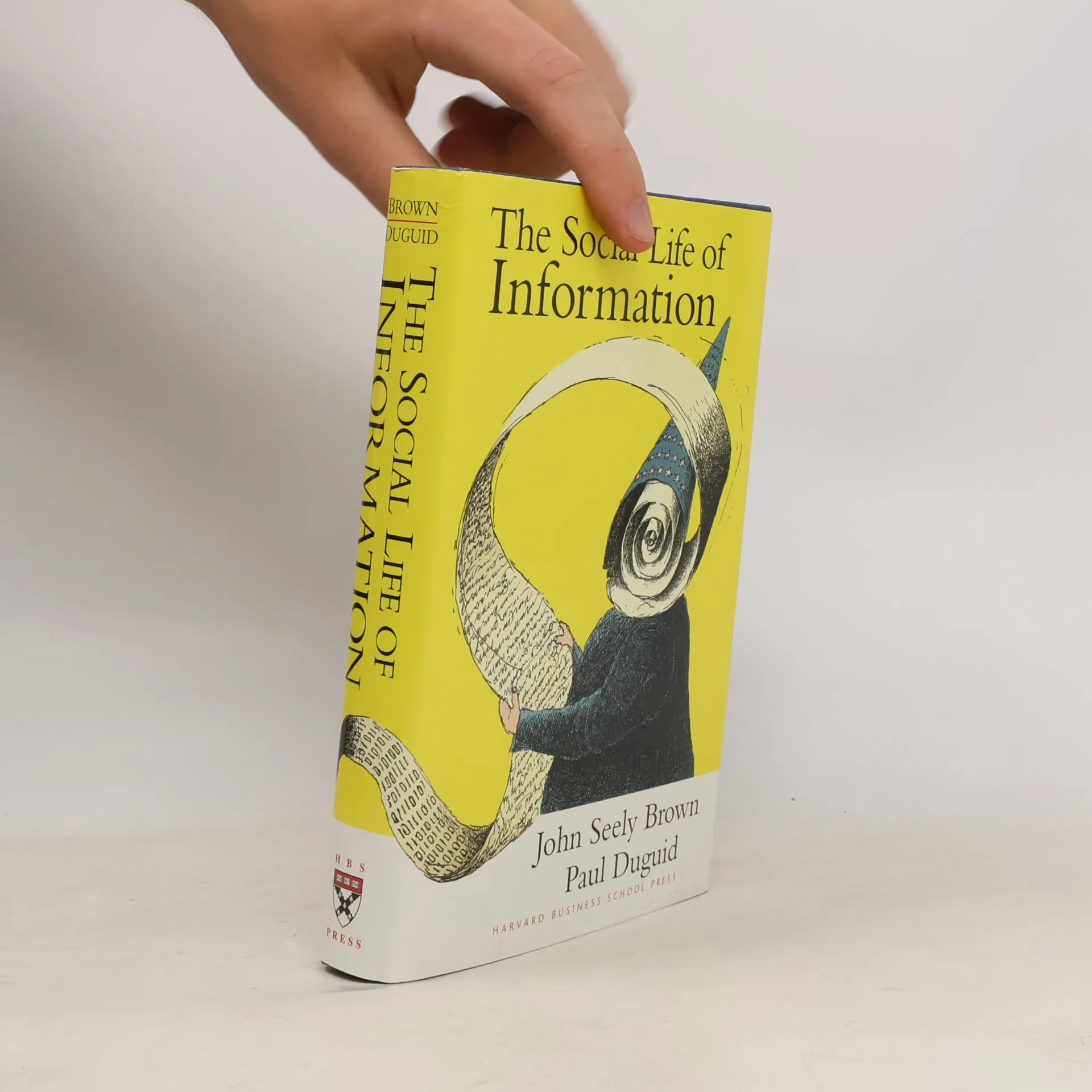
The Social Life of Information, John Seely Brown, Paul Duguid
- Jazyk

- Rok vydání
- 2000
- Vazba
- (pevná)
Nikdo zatím neohodnotil.
- Titul
- The Social Life of Information
- Jazyk
- anglicky
- Autoři
- John Seely Brown, Paul Duguid
- Vydavatel
- Harvard Business Review Press
- Rok vydání
- 2000
- Vazba
- pevná
- Počet stran
- 336
- ISBN10
- 0875847625
- ISBN13
- 9780875847627
- Série
- Kategorie
- Štítky
- Byznys, Věda, USA, Technologie, Sociální aspekty, Knihovnictví, knihověda, Informační společnost
- Anotace
- To envision the future shaped by information technology, it’s essential to consider the social context that gives it meaning. While many have predicted that technology will eliminate the need for traditional structures—such as travel, supermarkets, and social interactions—individual users remain skeptical. Overwhelmed by information overload and frustrated by unreliable systems, they struggle to grasp the digital revolution's true potential. John Seely Brown and Paul Duguid illuminate the disconnect between the optimistic visions of tech enthusiasts and the pessimism of everyday users, attributing it to the 'tunnel vision' fostered by information-centric technologies. This narrow focus often overlooks the importance of social networks. The authors draw on experiences from Xerox PARC and examples from IBM and California's 'Virtual University' to challenge the sweeping predictions of futurists. They argue that many tools and organizations deemed obsolete actually serve vital social functions that people value. Instead of discarding these 'relics,' we should explore how emerging technologies can learn from and enhance them. By emphasizing the significance of human sociability, the authors provide an optimistic perspective that recognizes the contributions of communities and institutions, ultimately guiding us toward a richer integration of technology in our work and daily lives.