

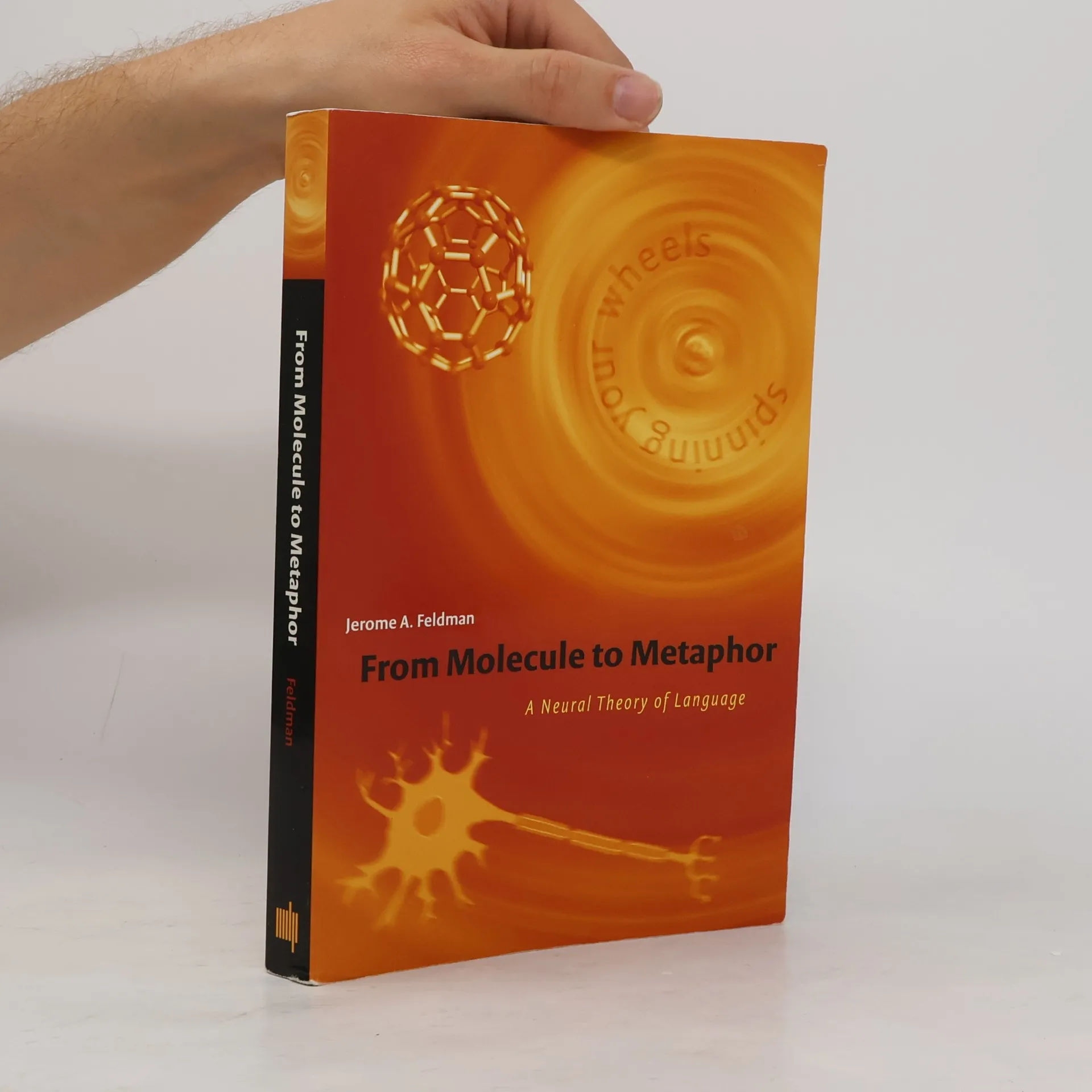
From Molecule to Metaphor
A Neural Theory of Language
Autoři
Parametry
- 378 stránek
- 14 hodin čtení
Více o knize
In *From Molecule to Metaphor*, Jerome Feldman presents a theory of language and thought as a biological ability rooted in brain function, akin to vision and motor control. He describes this theory as a bridging framework that connects extensive knowledge across various fields to elucidate the causal links involved. Despite advancements in cognitive sciences revealing aspects of how our brains produce language, the precise mechanisms of word understanding remain elusive. Feldman employs computer simulations and formal models to explore how language and thought might manifest in the brain. By integrating insights from biology, computer science, linguistics, and psychology, he constructs a cohesive theory supported by programs that exhibit the necessary behaviors while aligning with interdisciplinary findings. The book covers essential topics such as language acquisition, the development of abstract and metaphorical concepts, narrative comprehension, and grammar, including debates on the innate aspects of human grammar. Feldman’s work is accessible and comprehensive, providing readers with an intuitively plausible theory of language that aligns with existing scientific data, offering valuable insights into how our brains generate thought and language.
Nákup knihy
From Molecule to Metaphor, Jerome A. Feldman
- Jazyk

- Rok vydání
- 2008
- Vazba
- (měkká)
Doručení
Platební metody
Nikdo zatím neohodnotil.
- Titul
- From Molecule to Metaphor
- Podtitul
- A Neural Theory of Language
- Jazyk
- anglicky
- Autoři
- Jerome A. Feldman
- Vydavatel
- MIT Press
- Rok vydání
- 2008
- Vazba
- měkká
- Počet stran
- 378
- ISBN10
- 0262562359
- ISBN13
- 9780262562355
- Série
- Kategorie
- Štítky
- Historické téma, Příroda, Dobrodružství, Psychologická tématika, Filosofická tématika, Umění, Architektura, Spiritualita a duchovno, Věda, Zdraví, Magie, Války, Vzdělávání & školství, Lingvistika, Historie Evropy, Rodičovství, Duševní zdraví, Kultura, 21. století, Neurověda, Mozek, Vědomí, Lidská přirozenost, Neurobiologie, Psycholingvistika
- Anotace
- In *From Molecule to Metaphor*, Jerome Feldman presents a theory of language and thought as a biological ability rooted in brain function, akin to vision and motor control. He describes this theory as a bridging framework that connects extensive knowledge across various fields to elucidate the causal links involved. Despite advancements in cognitive sciences revealing aspects of how our brains produce language, the precise mechanisms of word understanding remain elusive. Feldman employs computer simulations and formal models to explore how language and thought might manifest in the brain. By integrating insights from biology, computer science, linguistics, and psychology, he constructs a cohesive theory supported by programs that exhibit the necessary behaviors while aligning with interdisciplinary findings. The book covers essential topics such as language acquisition, the development of abstract and metaphorical concepts, narrative comprehension, and grammar, including debates on the innate aspects of human grammar. Feldman’s work is accessible and comprehensive, providing readers with an intuitively plausible theory of language that aligns with existing scientific data, offering valuable insights into how our brains generate thought and language.