

Parametry
- 352 stránek
- 13 hodin čtení
Více o knize
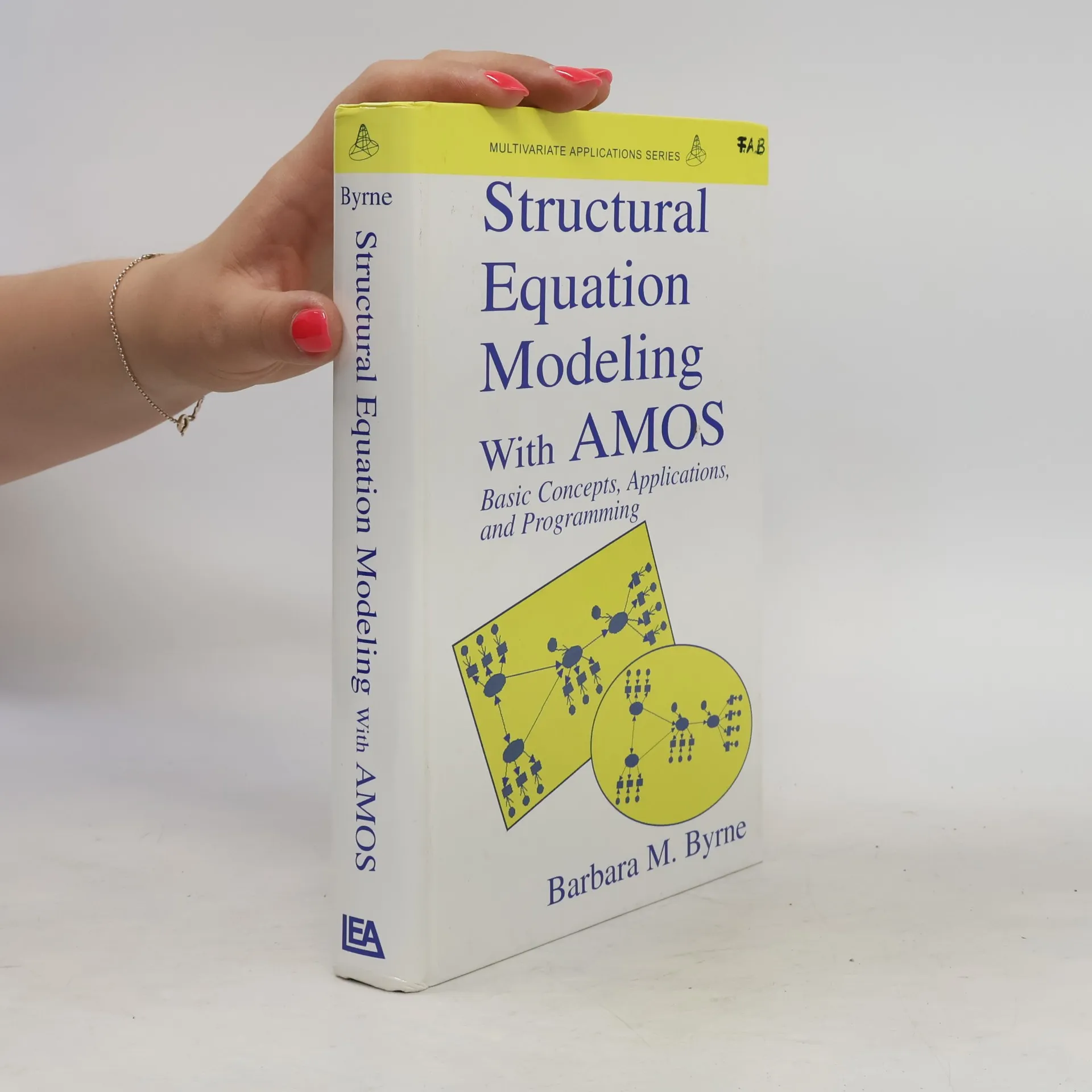
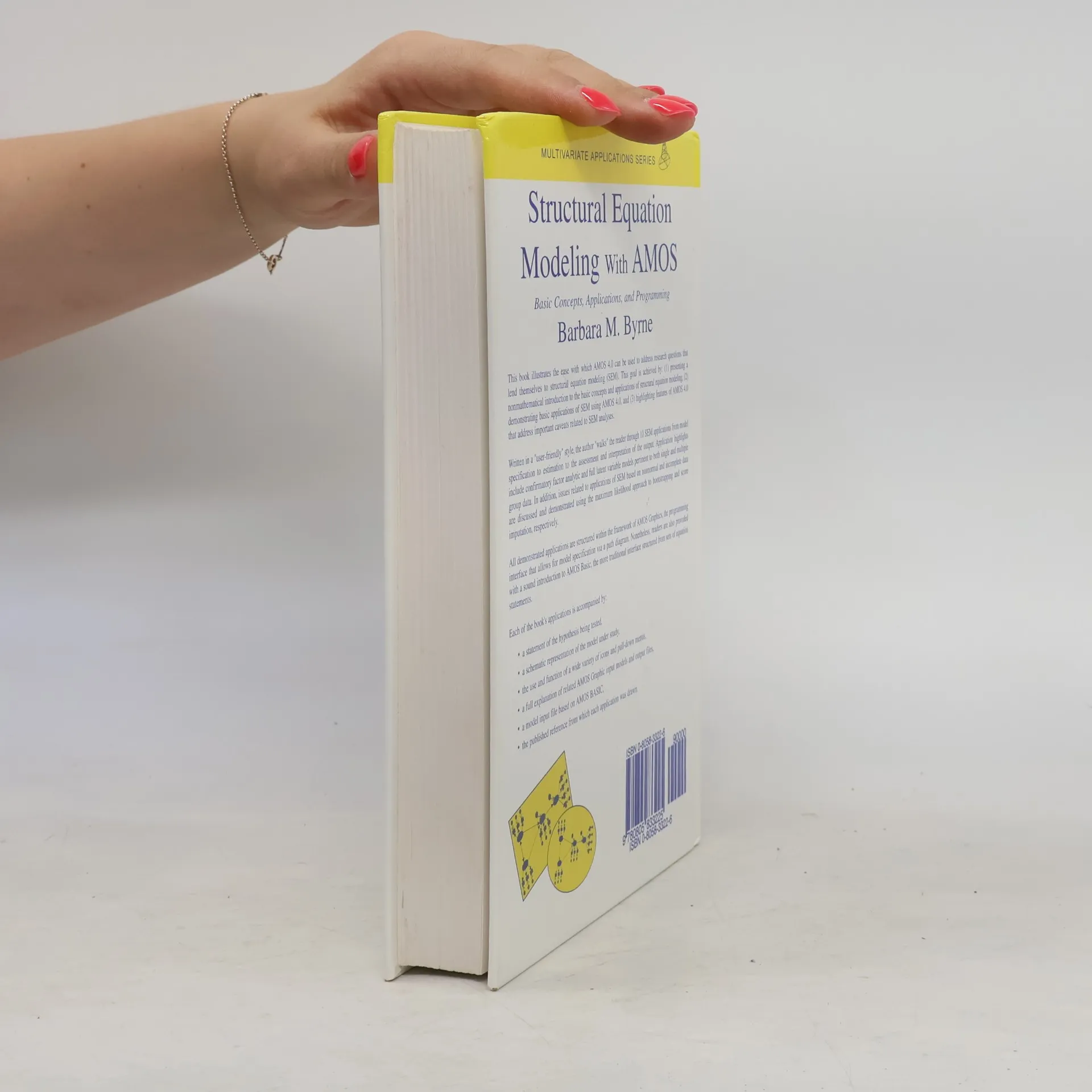
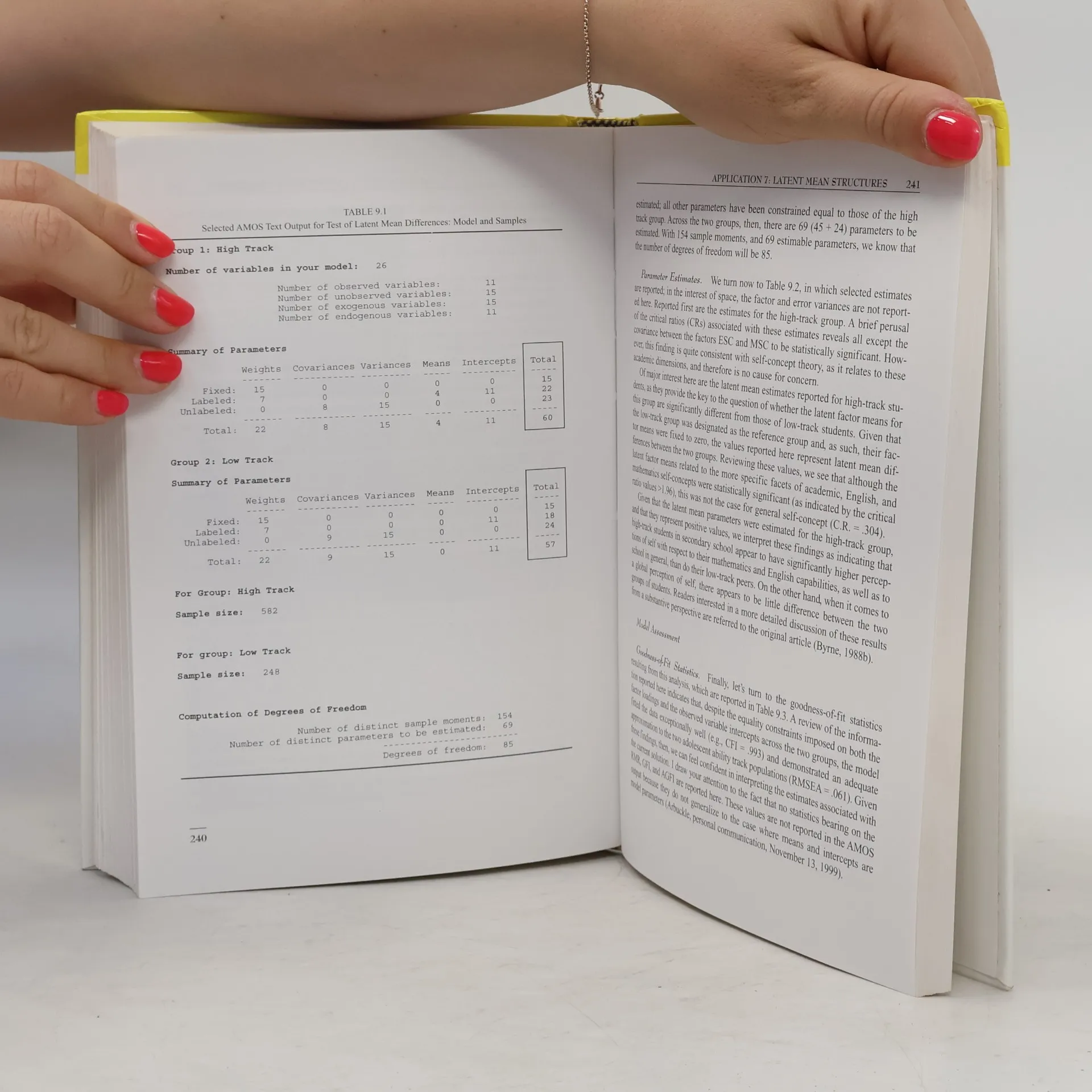
This book illustrates the ease with which AMOS 4.0 can be used to address research questions that lend themselves to structural equation modeling (SEM). This goal is achieved by: 1) presenting a nonmathematical introduction to the basic concepts and applications of structural equation modeling; 2) demonstrating basic applications of SEM using AMOS 4.0; and 3) highlighting features of AMOS 4.0 that address important caveats related to SEM analyses. Written in a "user-friendly" style, the author "walks" the reader through 10 SEM applications from model specification to estimation to the assessment and interpretation of the output. Each of the book's applications is accompanied by: a statement of the hypothesis being tested; a schematic representation of the model under study; the use and function of a wide variety of icons and pull-down menus; a full explanation of related AMOS Graphic input models and output files; a model input file based on AMOS BASIC; and the published reference from which each application was drawn.
Nákup knihy
Structural Equation Modeling with Amos, Barbara M. Byrne
- Jazyk

- Rok vydání
- 2001
- Vazba
- (pevná),
- Stav knihy
- Dobrá
- Cena
- 169 Kč
Nikdo zatím neohodnotil.
- Titul
- Structural Equation Modeling with Amos
- Podtitul
- Basic Concepts, Applications, and Programming
- Jazyk
- anglicky
- Autoři
- Barbara M. Byrne
- Vydavatel
- Psychology Press
- Rok vydání
- 2001
- Vazba
- pevná
- Počet stran
- 352
- ISBN10
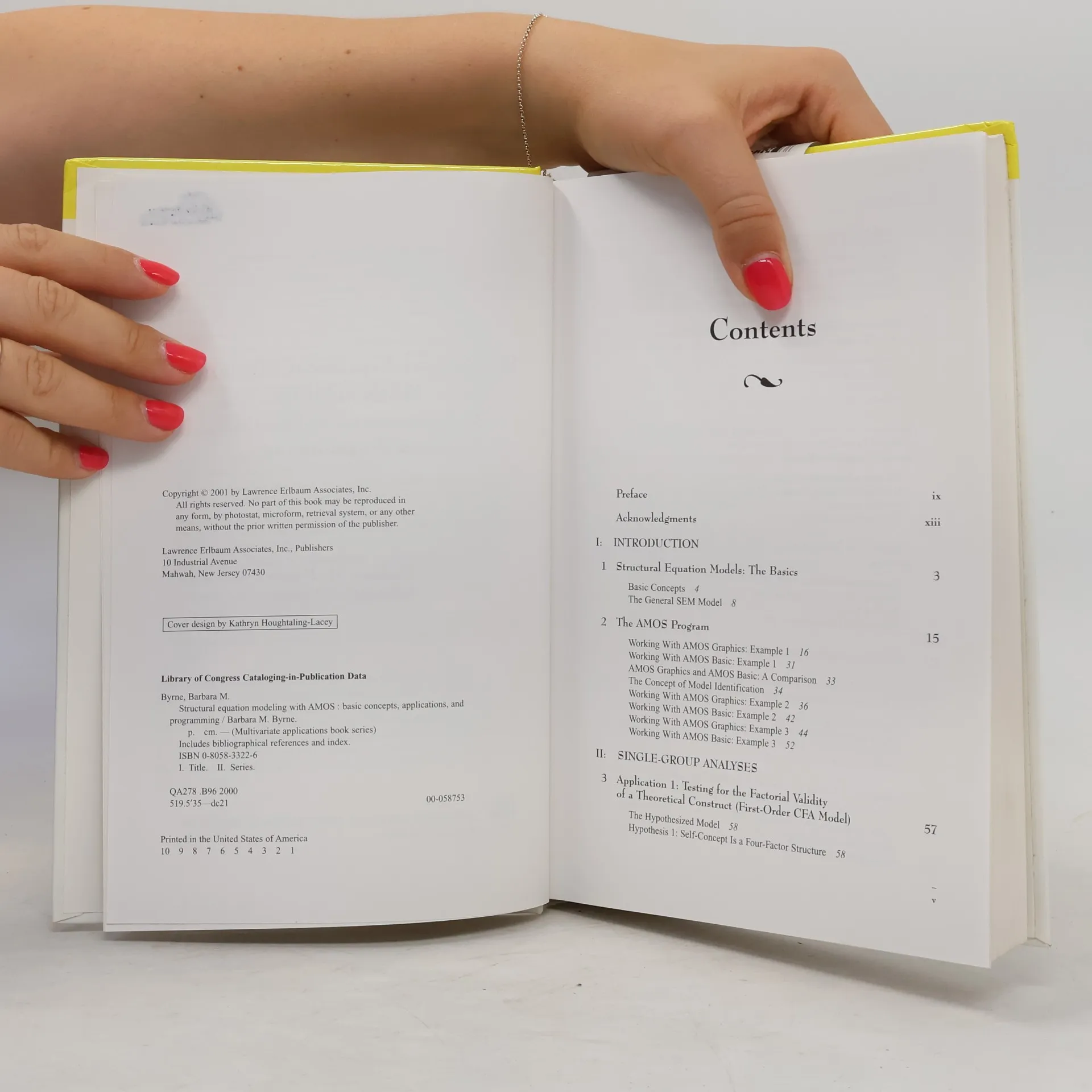
- 0805833226
- ISBN13
- 9780805833225
- Série
- Kategorie
- Štítky
- Psychologická tématika, Příručky a návody, USA, Vzdělávání & školství, Pedagogická psychologie
- Anotace
- This book illustrates the ease with which AMOS 4.0 can be used to address research questions that lend themselves to structural equation modeling (SEM). This goal is achieved by: 1) presenting a nonmathematical introduction to the basic concepts and applications of structural equation modeling; 2) demonstrating basic applications of SEM using AMOS 4.0; and 3) highlighting features of AMOS 4.0 that address important caveats related to SEM analyses. Written in a "user-friendly" style, the author "walks" the reader through 10 SEM applications from model specification to estimation to the assessment and interpretation of the output. Each of the book's applications is accompanied by: a statement of the hypothesis being tested; a schematic representation of the model under study; the use and function of a wide variety of icons and pull-down menus; a full explanation of related AMOS Graphic input models and output files; a model input file based on AMOS BASIC; and the published reference from which each application was drawn.